

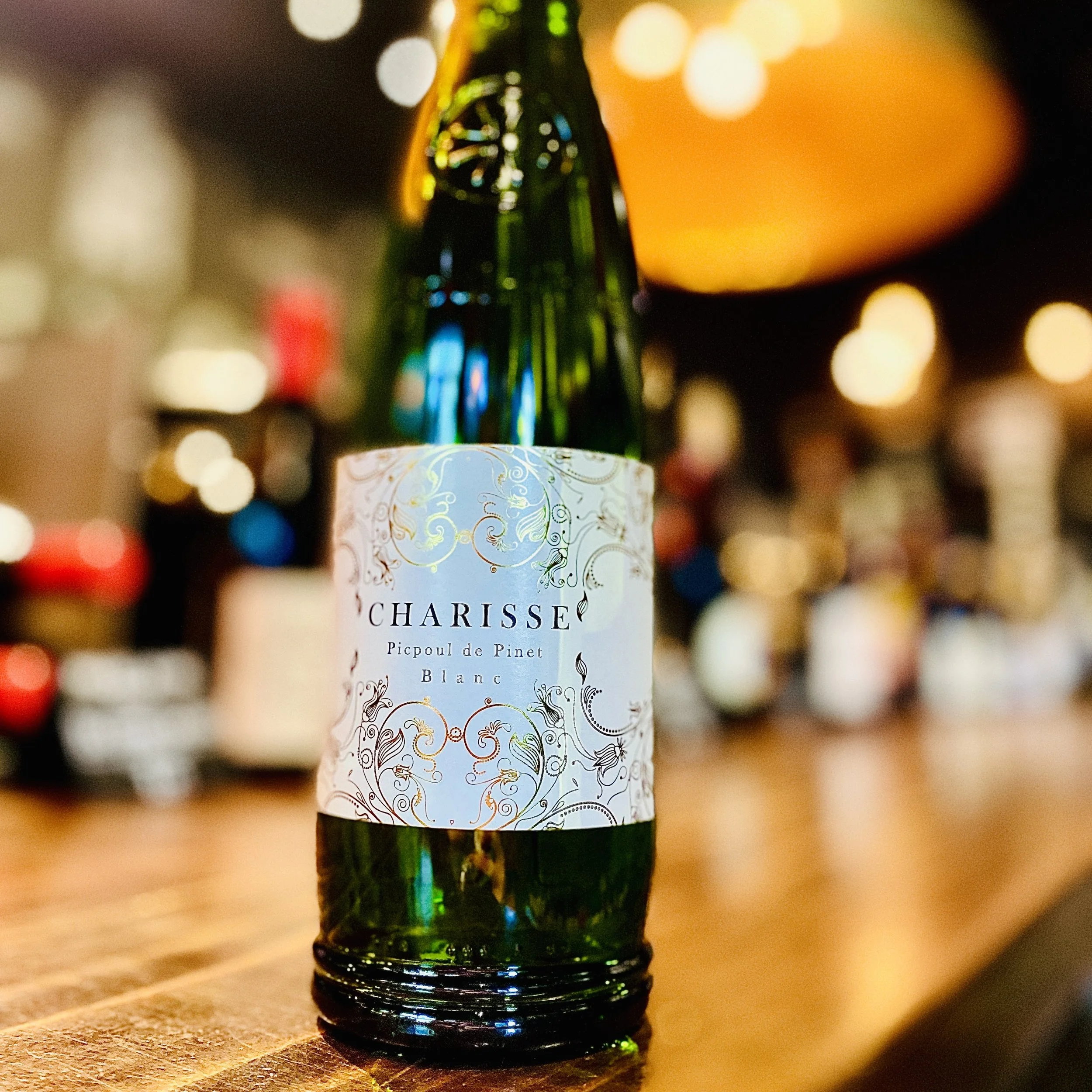
Charisse Picpoul
Grape 100% Picpoul
Place Pinet, France
Process Sustainably Farmed. Native Yeast Fermentation. Stainless Steel Fermentation.
Picpoul translates to lip-smacker.
Family The Allies family has grown vines for several generations in Pomerols, along the northern edge of the Bassin de Thau. This large inland sea, on the southern part of the Pinet appellation, has a microclimate significantly influenced by cooling sea breezes, which accounts for the particular expression of freshness in these whites. The soils are composed of clay and limestone.
Bottle: $25 | Glass: $11
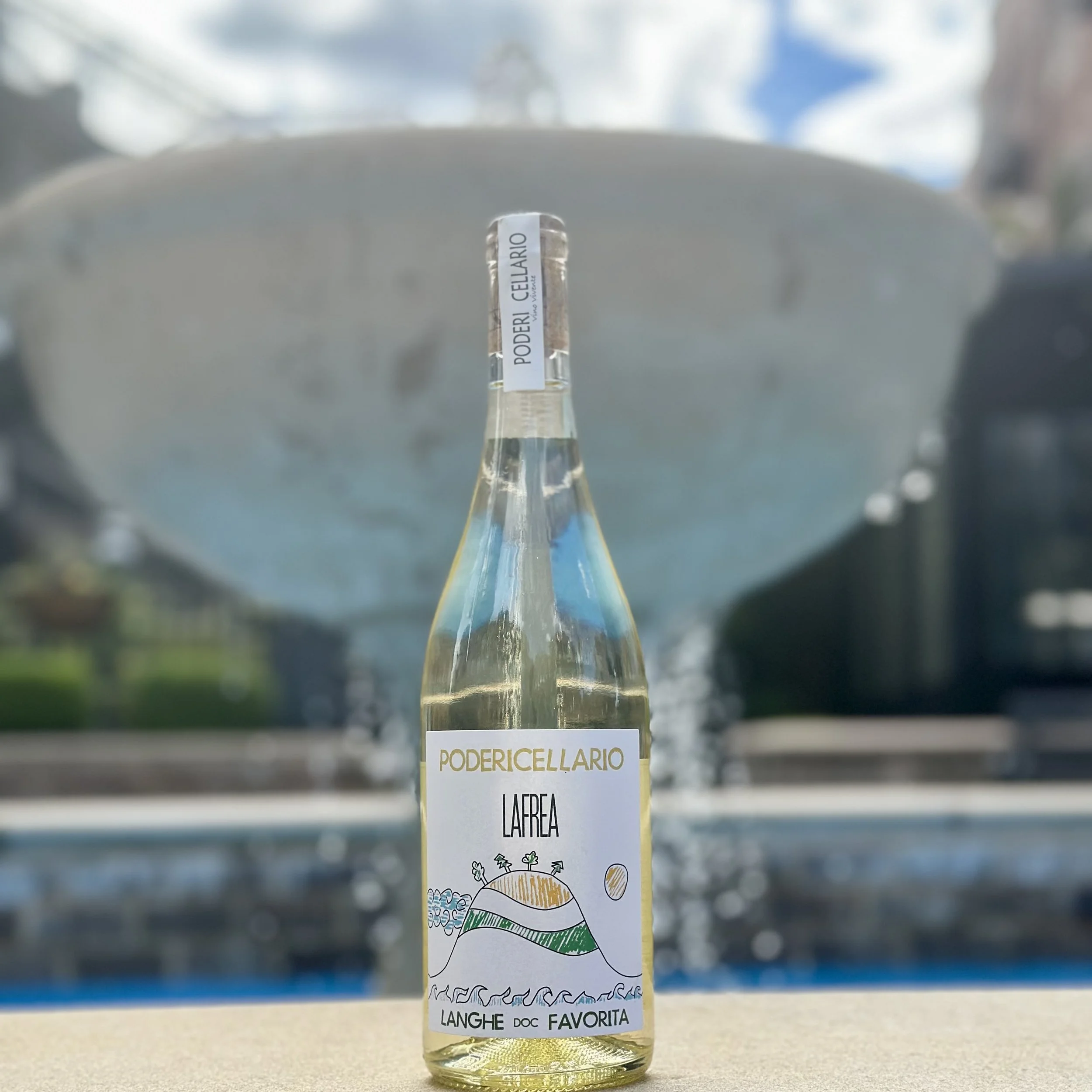
Poderi Cellario ‘Lafrea’
Grape 100% Favorita (Vermentino)
Place Piedmont, Italy
Process La Favorita is an old native vine of Langhe and Roero, which adapts well to poor soils, preferably sandy. It is called this because it was once said to be a favored grape, in particular the favor was given to it by King Vittorio Emanuele II. Straw yellow wine, the bouquet is fruity and floral: hay, fresh flowers and banana; on the palate it is fresh and soft, well-balanced.
Family Fausto and Cinzia Cellario are 3rd generation winemakers in the village of Carru` on the western outskirts of the Langhe. The family believes in only working with local, indigenous Piemontese grape varieties and fiercely defends local winemaking traditions both in the vineyard work and the cellar practices. The Cellario vineyard holdings cover some 30 ha between 5 different vineyard sites covering the southern Langhe. With holdings in Novello and Monforte, the Dogliani plot is arguably the family’s most prestigious land and I would consider them Dolcetto specialists. Vineyard work is organic (soon to be certified) and all the fermentation take place with indigenous yeasts. Sulfur is only added in tiny quantities at bottling if necessary (a practice not common with a winery in this mid-size range).
Bottle $25 | Glass: $11
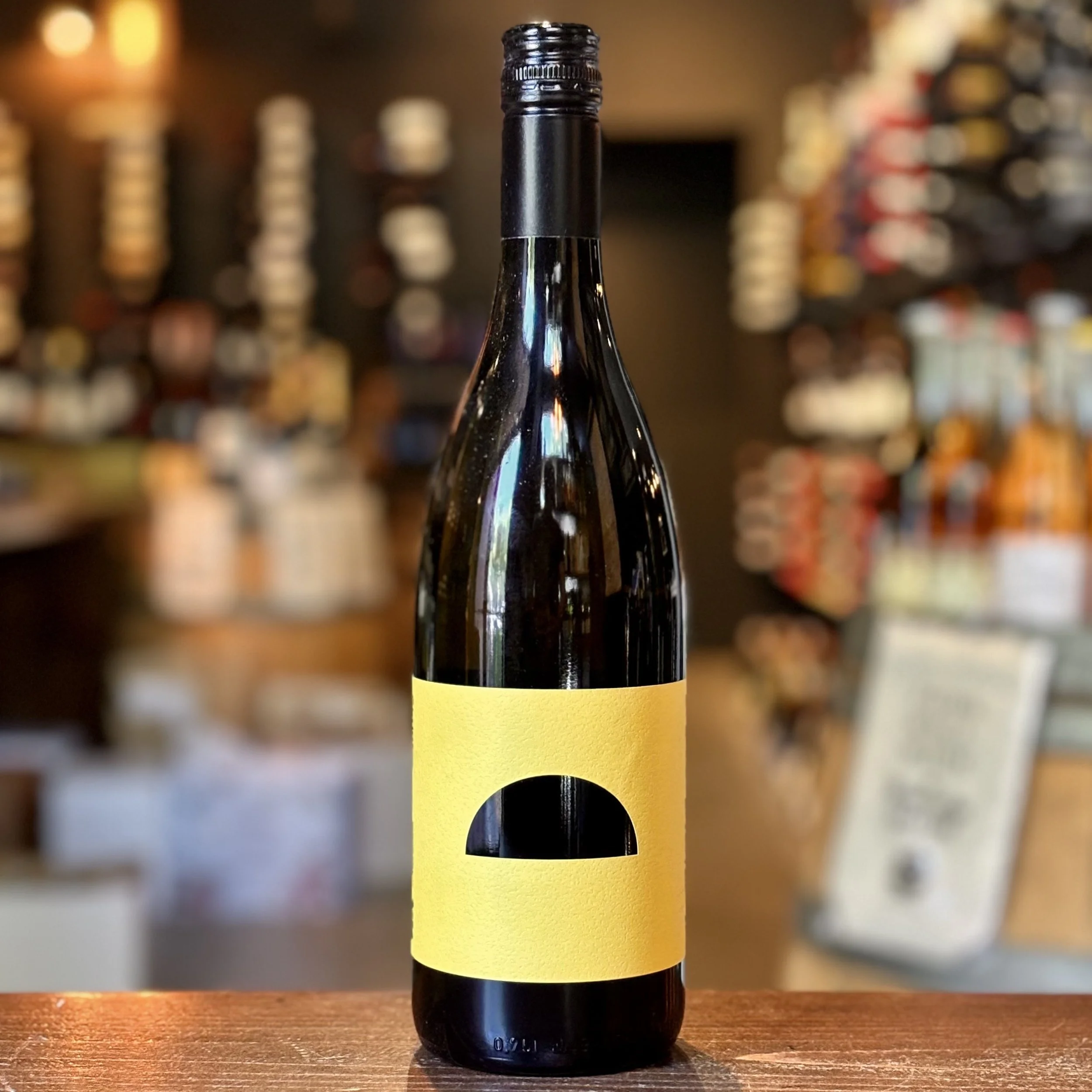
VK Škrlet
Grapes 100% Škrlet
Place Moslavina, Croatia
Process All grapes are harvested by hand in the early morning hours in order to start vinification as coldly as possible. Pressing occurs quickly in stainless steel and once the must has naturally precipitated, fermentation is started exclusively with native yeasts. The wines are aged in stainless steel tanks until they are bottled.
All grapes are farmed using organic principles.
Family Voštinić — Klasnić is located on a small hill near Ivanić Grad, in the region of Moslavina, far away from the stress and city hustle of Zagreb, a beautiful and humble estate surrounded by vineyards and orchards. The family has been making wine since 1936 when Tomislav's great grandfather planted the first vines of Škrlet in this area, some of which are still growing in the vineyards today and some of the oldest living Škrlet vines in existence.
Now run by Tomislav Voštinić (aka Tomba aka the Young Prince of Škrlet), the winery bears the surname of the winemaker Tomislav, as well as an ode to his great grandfather Klasnić from whom he inherited the vineyard as well as his love for winemaking and the Škrlet grape. He set the stage to be Škrlet crusaders, and for the family to have an old cellar with a modern winery, that applies a perfect blend of authenticity, tradition, and modern winemaking.
Bottle: $27 | Glass: $12
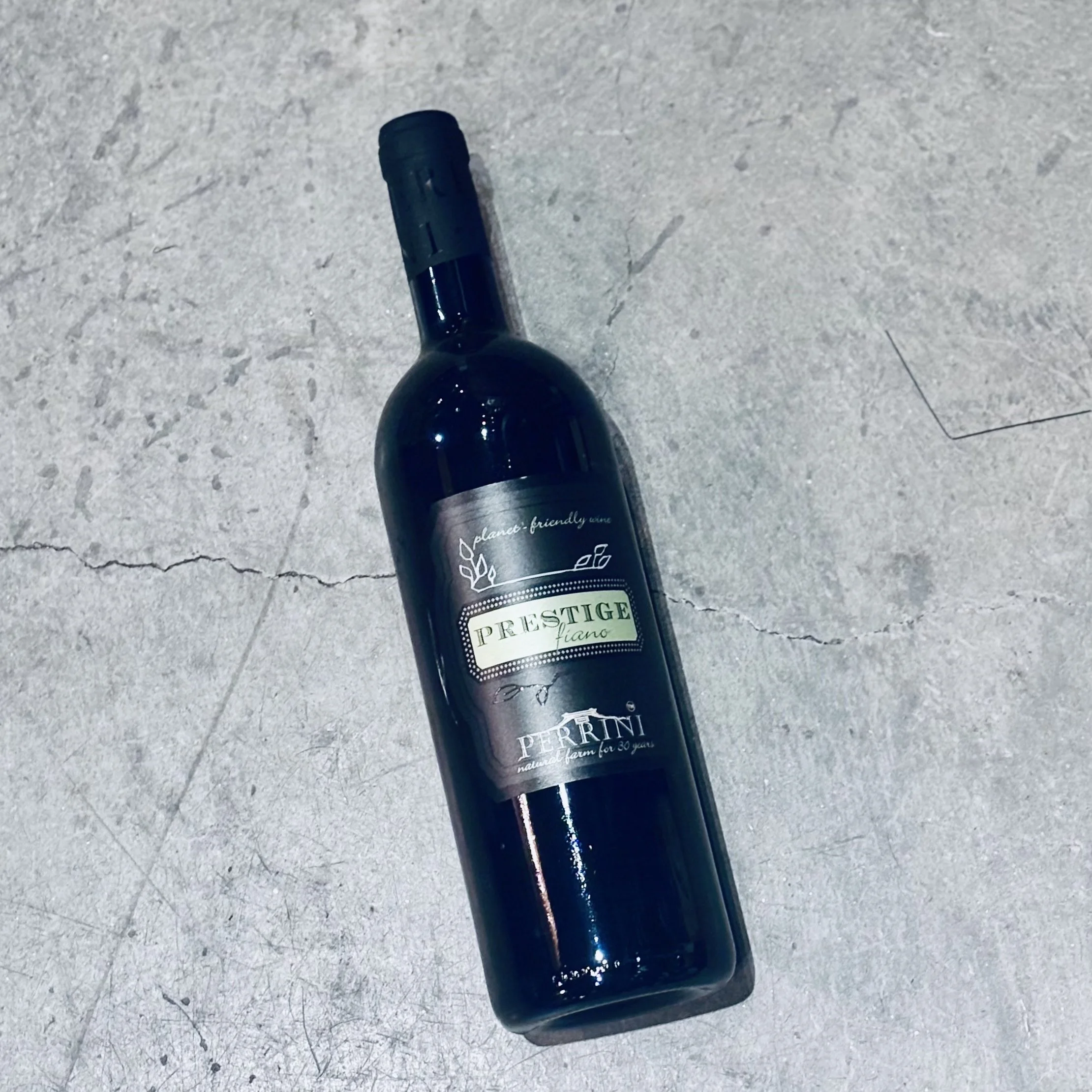
Perrini Family Farm ‘Prestige’
Grapes 100% Fiano
Place Puglia, Italy
Process 100% Minutolo, aka Fiano in Puglia. From 2.5 hectares of certified-organic, 20-year-old vines on Perrini's 50-hectare, polycultural estate in Castellaneta, Puglia. The bunches are harvested by hand and destemmed and pressed; the juice is fermented spontaneously with indigenous yeasts over a period of 8-10 days with temperature control in stainless steel tanks. The wine is also aged in tank.
Family In the southernmost part of the heel of the "Italian boot", otherwise known as the Salento Peninsula of the Puglia region, the Perrini family has been growing grapes and making wine for generations. For many years, most of their fruit was sold off to négociants, as the means and finances to estate-bottle were prohibitive. Current generation Vito and his sister Mila Perrini set about changing that in the 1990's, building an underground cellar and converting their fifty hectares to certified-organic viticulture--neither of these steps being the norm for a bulk-production-oriented region accustomed to heavy-handed, high-alcohol red wines. Their vines average 30-35 years of age at this point, spread amongst several zones in the hills around Castellaneta near Taranto on a mix of sand, limestone and clay soils. The vineyards are plowed in the spring, and yields are kept to around 55hl/ha, modest for the region and the warm, easy-ripening climate. Most unusual for Puglia are an underground cellar; manual harvest; and natural yeast fermentation. Perrini wines are remarkably balanced, light-handed and savory compared to the usual Puglian fare, especially at their very modest price level.
Bottle: $35 | Glass: $15