
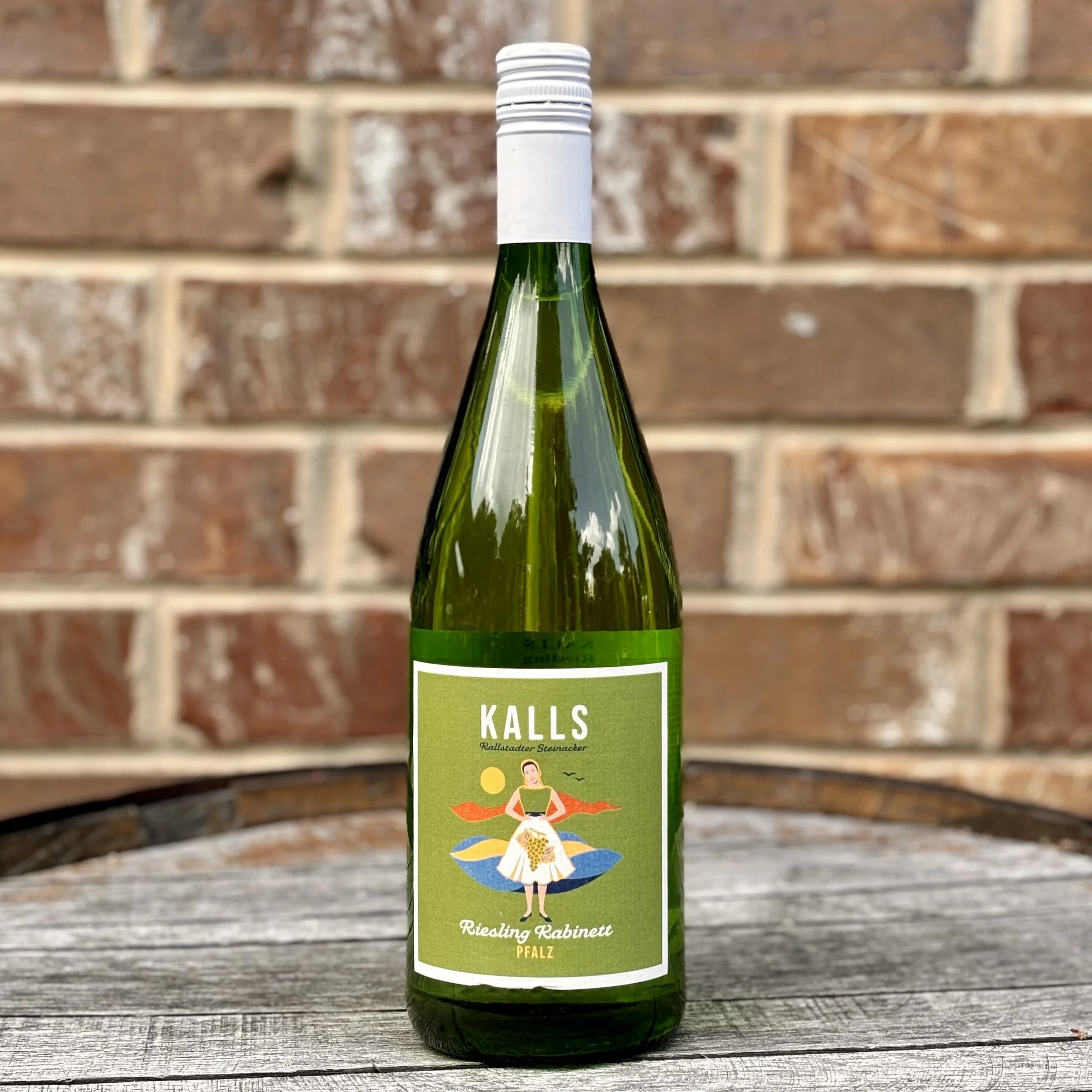
Kalls Kabinett
Grape 100% Riesling
Place Pfalz - Germany
Process Wild Fermentation, Stainless steel, Off-Dry. Single Vineyard.
Family Kalls focuses on traditional craftsmanship to create elegant wines with a sense of place. The vineyards are protected by the Palatinate Forest and the soils are rich in lime-marl, loess and gravel, thousands of years old in age.
All wines are Single Vineyards, the Riesling Kabinett is made with grapes grown on the rugged cliffs of the Steinacker vineyard. The Sank Laurent is made with grapes grown on the Kobnert Vineyard.
The Steinacker Vineyard has been giving grapes since 1270. The Kobnert Vineyard has been in production for over 800 years with tax records documenting it!. All the wines bear the insignia of the Lion of Kallstadt.
Bottle: $25 | Glass: $11
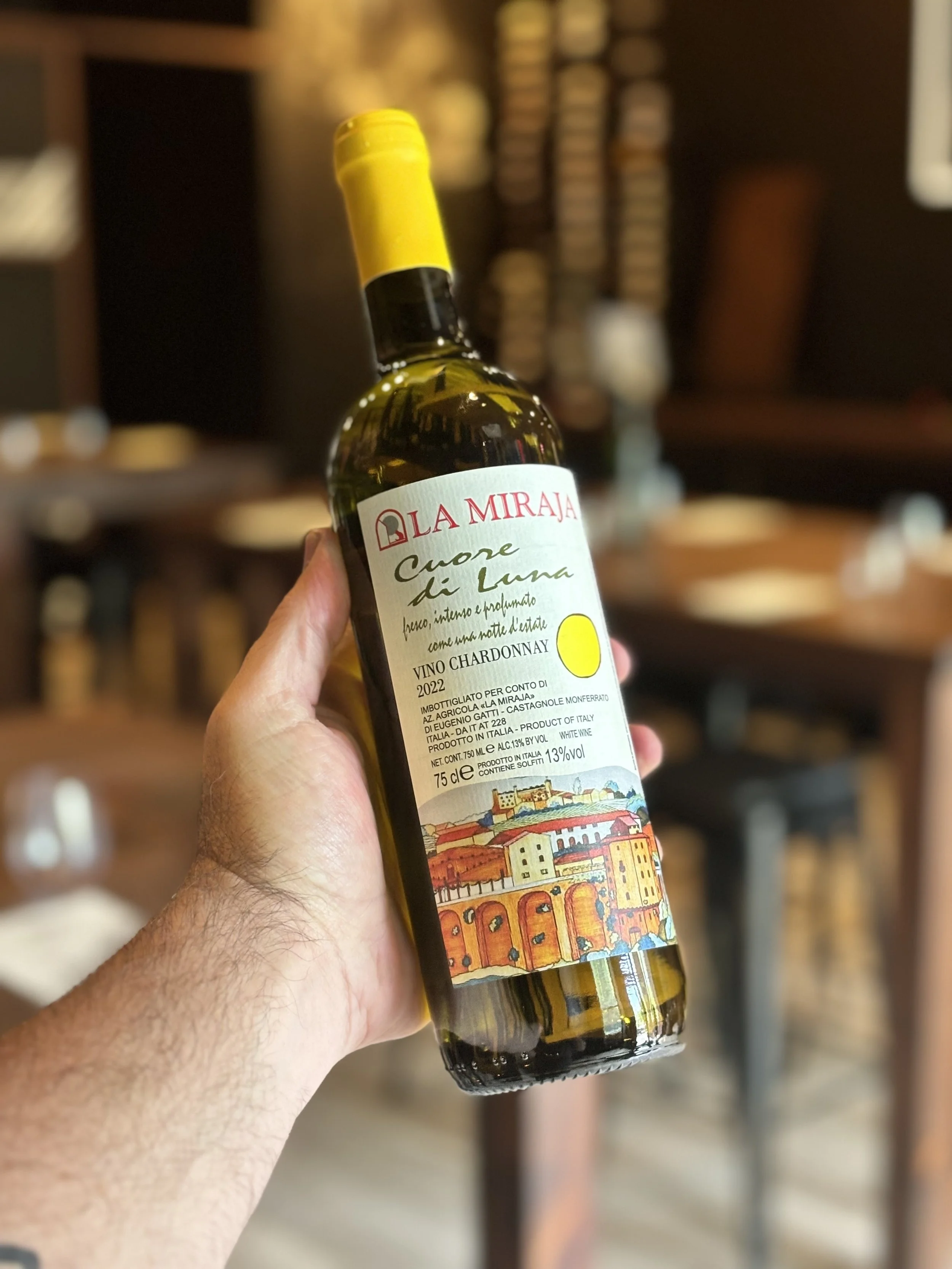
LA MIRAJA ‘CUORE DI LUNA’
Grapes 100% Chardonnay
Place Piedmont - Italy
Process
Estate fruit from the Calosso vineyard situated 250 meters above sea level. Southwest exposure.Calcareous-clay soils. These vines were planted to Chardonnay in 1995 with 5,000 vines per hectare trained in the guyot style.
Hand-harvested fruit is destemmed and then crushed by basket press into stainless-steel tanks,where native fermentation occurs. This Chardonnay does not undergo malolactic fermentation. After 3 months in tank on the fine lees, the wine rests for an additional 4 months in bottle prior to release.
People
Nestled within the original castle of Castagnole Monferrato, La Miraja was constructed as an armory in the 11th century, only to be retrofitted as a cellar in the 1400s. In this armory-turned-cellar, Eugenio Gatti, a seventh-generation viticulturist, turns out Barbera, Grignolino, Freisa, and his fabled Ruché. His oldest Ruché plantings are located in the famed Majole vineyard, one of the first sites in Castagnole Monferrato where the grape was planted with the intention of producing single-varietal wines. Majole was replanted in the 1970s, and its Ruché vines rank among the oldest in the world. This has long been considered the top site of Castagnole Monferrato—the epicenter of Ruché production and the first of seven villages granted permission to produce single-varietal Ruché under the DOCG. La Miraja (pronounced “me-rye-uh”) is tiny by any measure, comprising less than 4 hectares under vine. It is here that Eugenio devotes his life’s work to producing roughly 2,500 transcendent cases of wine each year. Harnessing his years of working in wineries and distilleries across Italy, he imbues his wines with a haunting purity and a simple elegance.
Bottle: $25 | Glass: $11
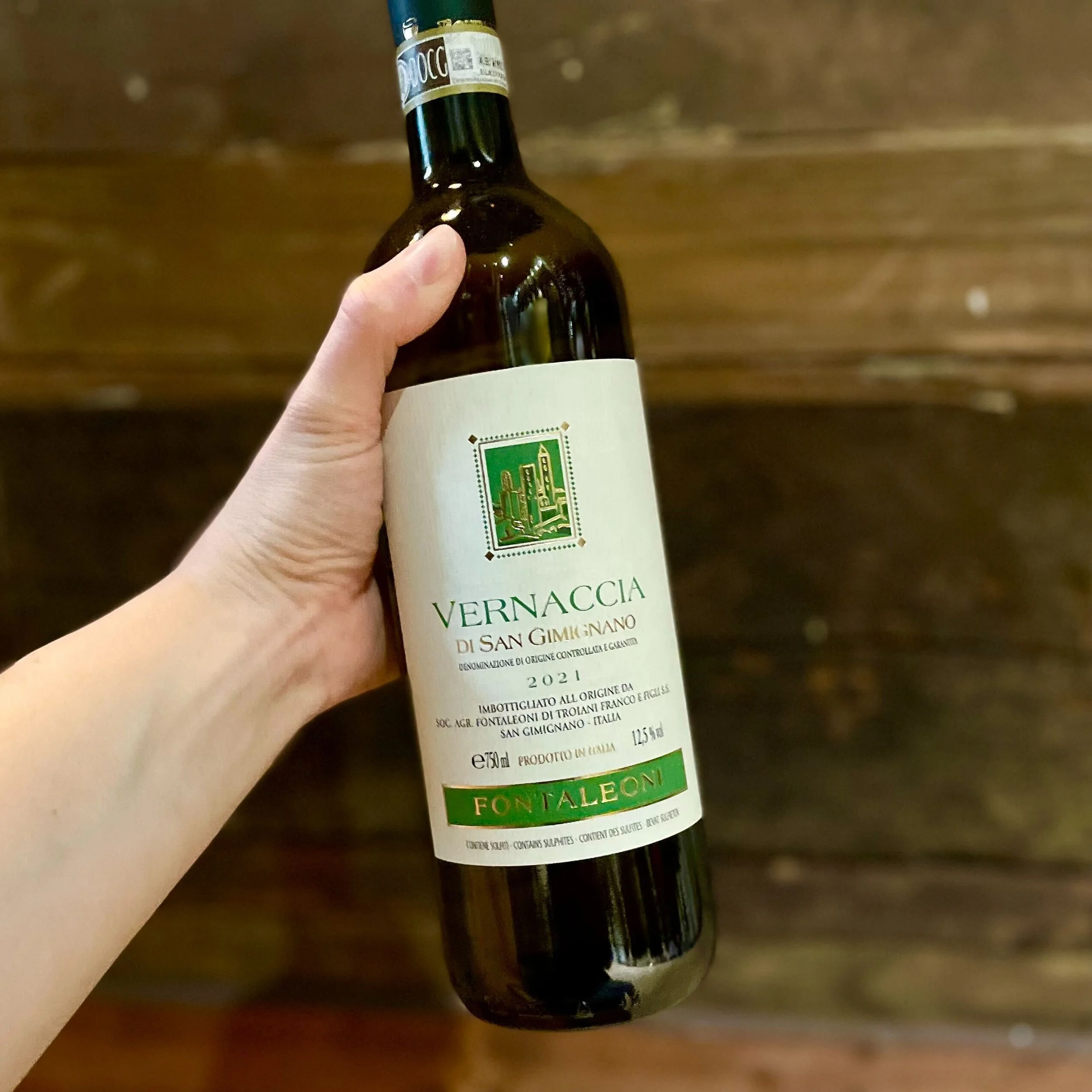
Fontaleoni
Grapes
100% Vernaccia
Place
San Gimignano - Tuscany - Italy
Process
Hand-harvested fruit with Fermentation and ageing in stainless steel tanks.
35+ year old vines
100-300 mt above the sea level
5000 cases produced
Family
Fontaleoni is a small estate whose vineyards are located at 200 meters above sea level, the ideal altitude for growing the Vernaccia varietal. Low yields of grapes, careful harvest and pressing of this fragile grape, along with conscientious winemaking, have produced Vernaccia wines that continue to grow in quality and fame. Fontaleoni’s Vernaccia di San Gimignano is a lively dry white wine!
Bottle: $21 | Glass: $8
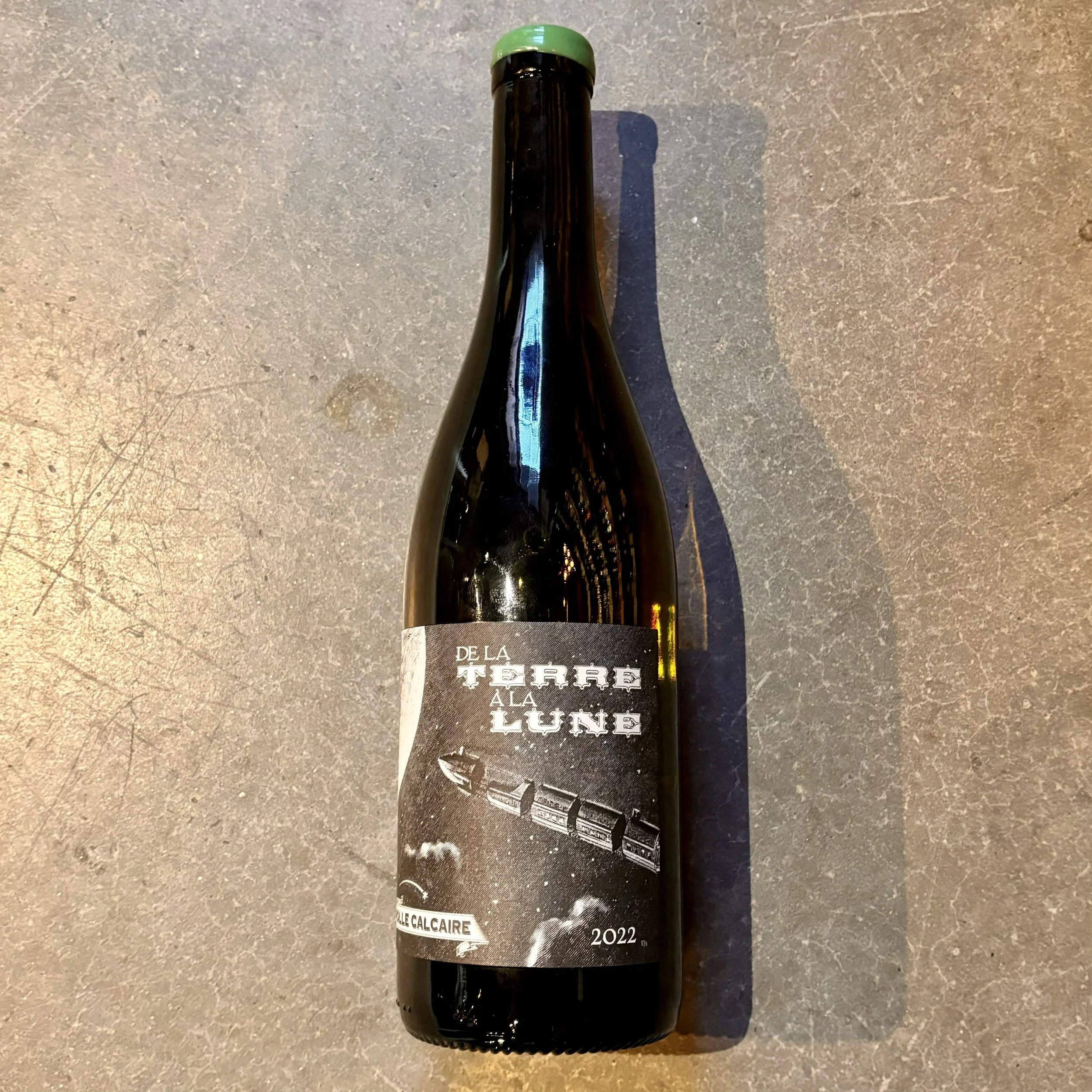
Combel La Serre
Grape Vermentino
Place Cahors - France
Process Direct-press, fermented and aged in stainless steel. S02 additions are up to 1.5 grams per hectoliter on the harvested grapes and 1.5 grams after malolactic fermentation.
People Julien Ilbert is a young, charismatic vigneron with a fresh perspective on his native Cahors. Vines have been in the Ilbert family for generations, though grapes had always been sold to the local cave coopérative. In 1998, Julien decided to break off and start his own estate. Things didn't exactly go according to plan, and a chance meeting with Mathieu Cosse at a rugby match quickly led to a seven year relationship, with Julien being Mathieu's main source for high quality Auxerrois (aka Malbec, aka Côt).
After an amicable split in 2005, Julien was back on track to producing his own wines: Château Combel-la-Serre was born. 25 hectares of Auxerrois are planted on a diverse amount of terroirs, all within 5 kilometers of the cellar. Though a Cahors wine only needs to be 70% Auxerrois to get the appellation, Julien believes it is the only grape suitable for what he's trying to accomplish. In such he has consciously avoided planting the traditional Negrette and Tannat and completely eschewed the more recent trend of planting Bordeaux varietals.
Bottle $43 | Glass: $19