
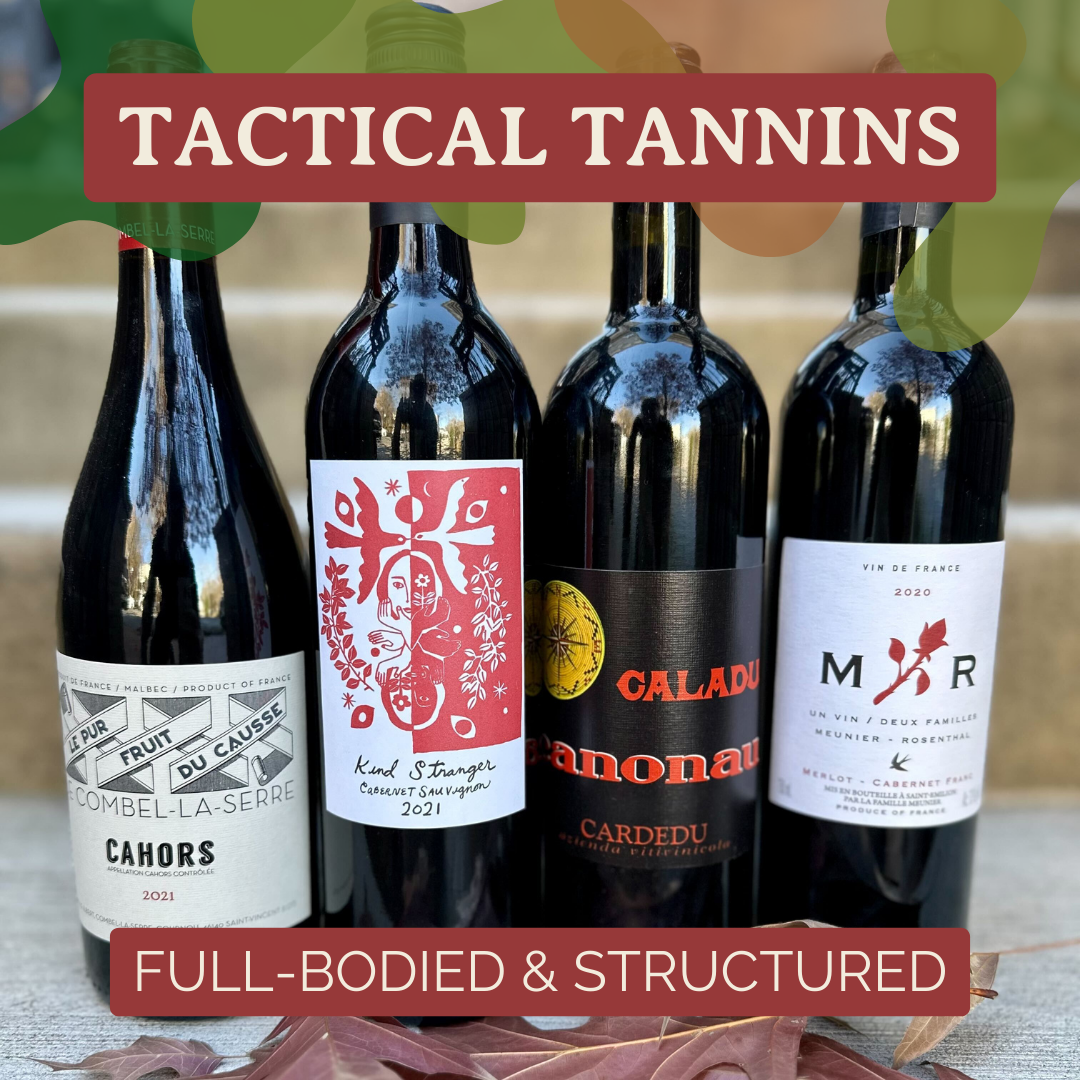
Tactical Tannins
Do you like tannins or are they a newer part of wine for you? Try these four delicious wines with large gripping tannin.
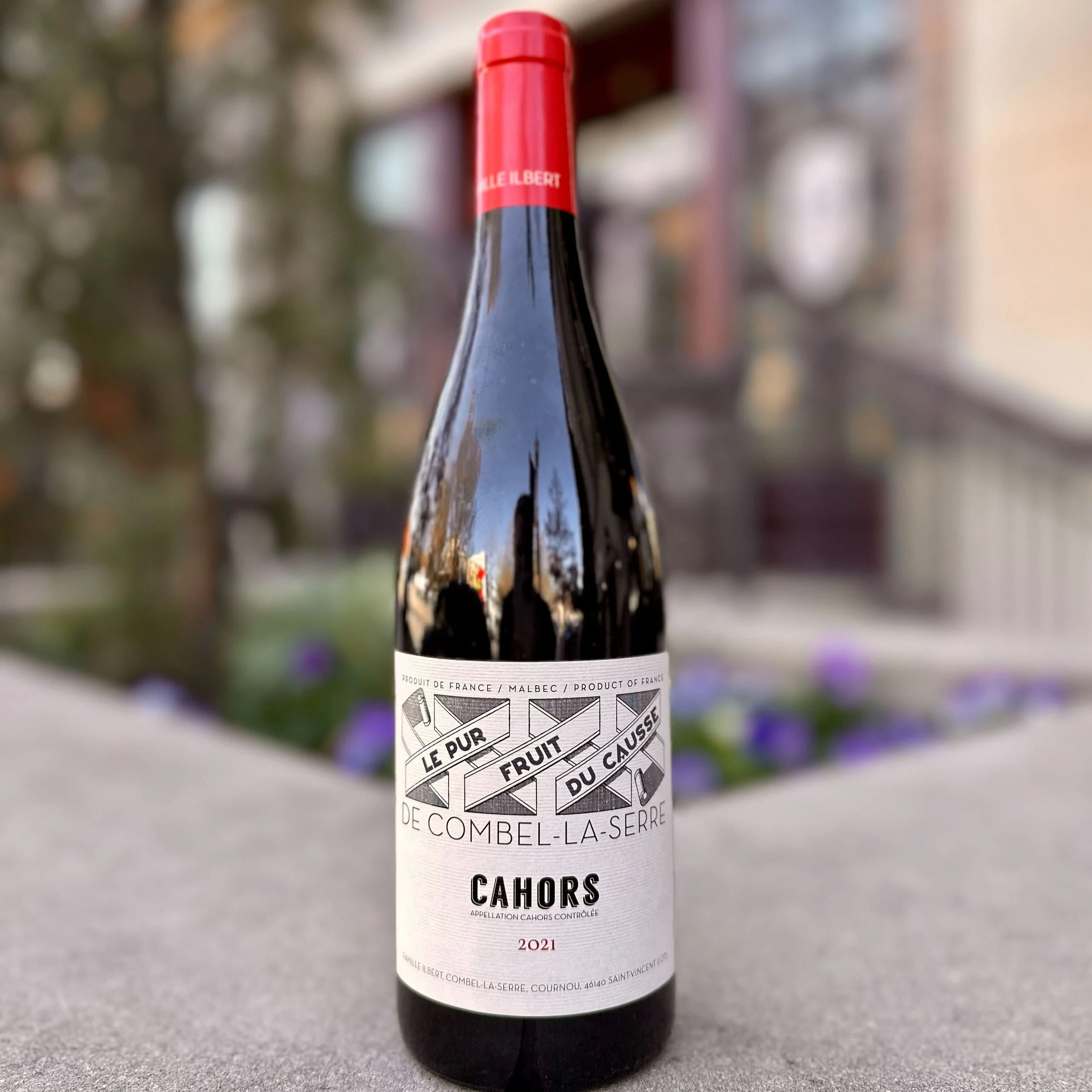
Grapes: 100% Auxerrois (Malbec)
Place: Cahors - France
Process: The fruit for the entry-level Pur comes from seven different Combel sites totalling 8.5 hectares around their home village of Cournou, which lies on the Causse Calcaire, a limestone plateau in Cahors at 320-350 meters in elevation. Planted on clay-limestone soils, the vines are certified-organic (in conversion to biodynamic farming), average 30 years old and are kept to a modest 40 hl/ha yield. The bunches are hand-harvested and mainly destemmed but with up to 20% directly pressed as whole clusters; the juice ferments at cool temperatures with indigenous yeasts in cement and steel tanks with around two week of maceration. The wine is aged on its lees in cement through the winter and bottled unfiltered in the spring. Sulfur throughout vinification and aging is minimal.
Family: Julien Ilbert is a young, charismatic vigneron with a fresh perspective on his native Cahors. Vines have been in the Ilbert family for generations, though grapes had always been sold to the local cave coopérative. In 1998, a chance meeting with Mathieu Cosse at a rugby match quickly led to a seven year relationship, with Julien being Mathieu's main source for high quality Auxerrois (aka Malbec, aka Côt).
After an amicable split in 2005, Julien was back on track to producing his own wines: Château Combel-la-Serre was born. 25 hectares of Auxerrois are planted on a diverse amount of terroirs, all within 5 kilometers of the cellar. Though a Cahors wine only needs to be 70% Auxerrois to get the appellation, Julien believes it is the only grape suitable for what he's trying to accomplish.
The estate is certified organic as of the 2015 vintage, but chemicals have not touched the vineyards for quite some time. Everything was conventionally farmed from the advent of such technology, but the death of Julien's grandfather from Parkinsons deeply affected the family's agricultural philosophy. Convinced that the chemicals he'd openly exposed himself day in and day out were at the root of his illness (on top of the vines, an additional 40 hectares of cereals were worked by the family at the time), the Ilbert stopped using these products on their land.
Bottle: $25 | Glass: $11
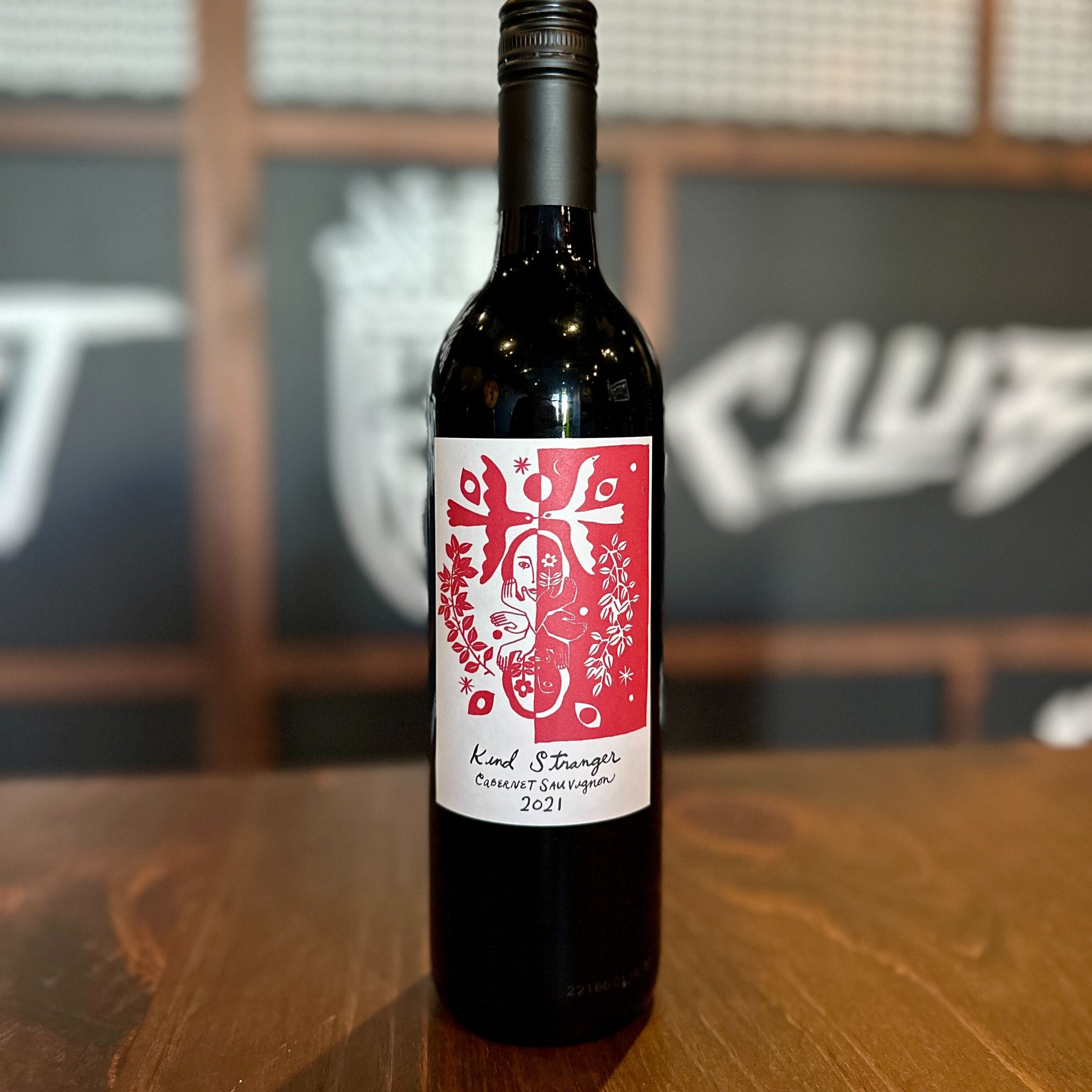
Latta Wines ‘Kind Stranger’
Grapes: 85% Cabernet Sauvignon, 15% Malbec
Place: Columbia Valley, Washington
Process: Washington Cabernet vines grown in basalt derived gravel on the shoulders of Red Mountain give excellent depth, intense fruit and ample structure from this awesome site. The Weinbau Vineyard's 30 year old Malbec vines pile on the concentration and spice notes. Fermented whole berry with indigenous yeasts, then macerated an average of 28 days between the lots. Basket pressed to barrel for 20 months, 15% new French oak mostly 500L.
Family: Latta Wines puts uncommon varietals from the most unique vineyards in Washington State on center stage. Years of scouring the geologically diverse soils of Eastern Washington led to an initial release of two very special wines, then four and so on. The extremely small production, mostly Rhone offerings are put forward from sustainable vineyard sites after fermentation with native yeast and aging in mostly neutral french barrique and puncheon.
Latta Wines was founded in 2011 by winemaker and owner Andrew Latta. It is the product of years of sweat equity, a gamut from cellar hand to winemaker at a Washington winery of note. Andrew is now proud to share his personal wines. He was born and raised in Kentucky, the restaurant world his path to wine. A similar trajectory up from the basement as a busser to a Sommelier working in Thailand exposed him to the wines of world. While developing award-winning wine programs, Washington State stood out among all the emerging and traditional wine-growing regions. So, sight unseen, fifteen years ago he jumped into his first harvest in Walla Walla and year after year Washington still delivers.
Bottle: $25 | Glass: $11
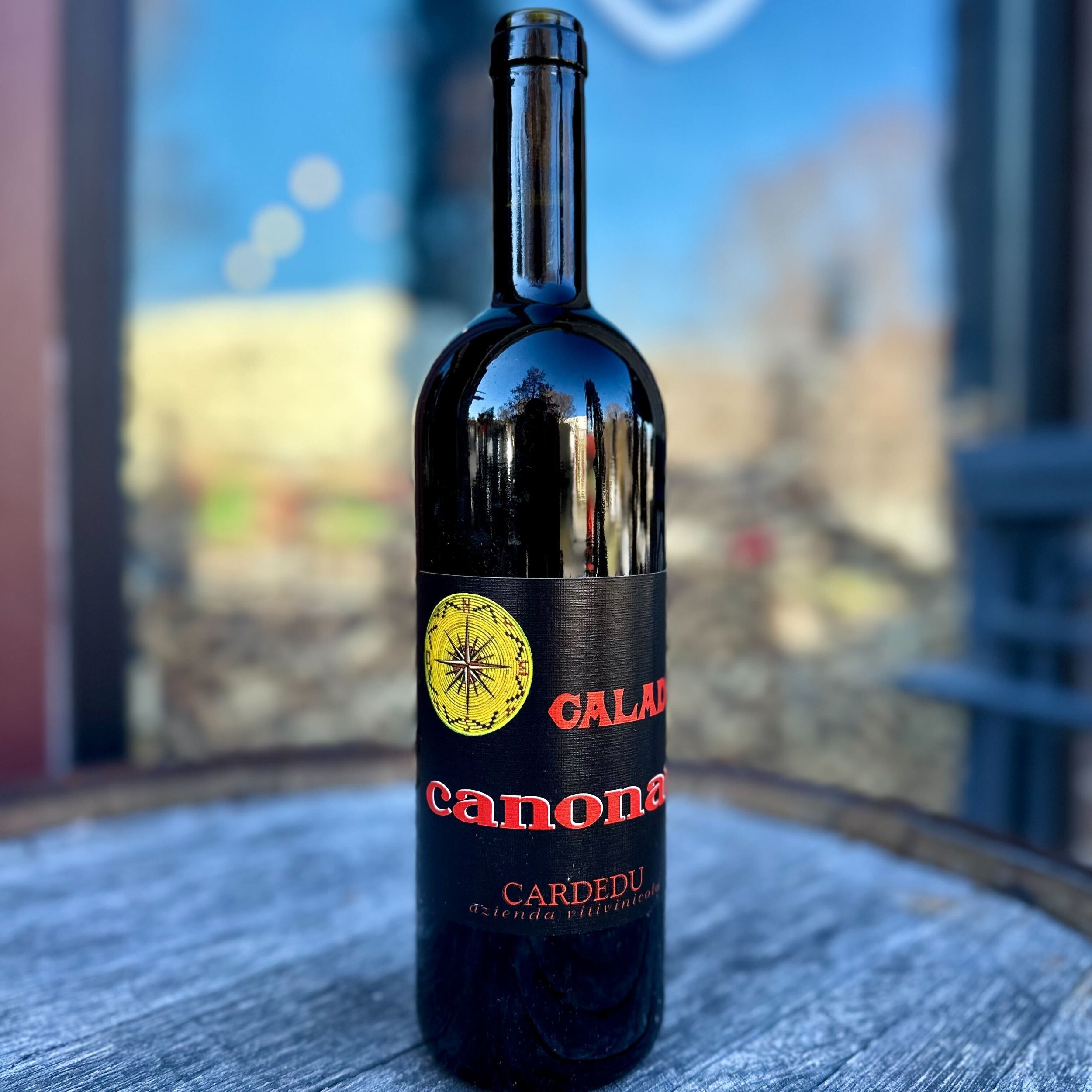
Cardedu ‘Caladu’ Cannonau
Grapes : Cannonau (Grenache)
Place : Sardegna - Italy
Process : Native yeasts fermentation done in stainless steel for 14 days. Aged partly in concrete and large botti (Slovinian Oak). Unfined and Unfiltered with 20mg/l of Sulphur added at bottling.
Family : The vineyards of Cardedu (car-DAY-do) are in the area of Ogliastra, the most mountainous and least populous province on the island; a land of turquoise shimmer and ragged-dry cliffs. Here on the southeast coast of Sardegna the Loi family grows and makes wines from the native varieties Vermentino, Cannonau, and Monica. Cardedu is one of the island’s better known traditional producers. The Loi family doesn’t think of itself as a natural wine producer; they are not in that hipster giro / circle. Yet they dry farm without the use of herbicides or pesticides, and all wines ferment with native yeasts.
Bottle: $23 | Glass: $10
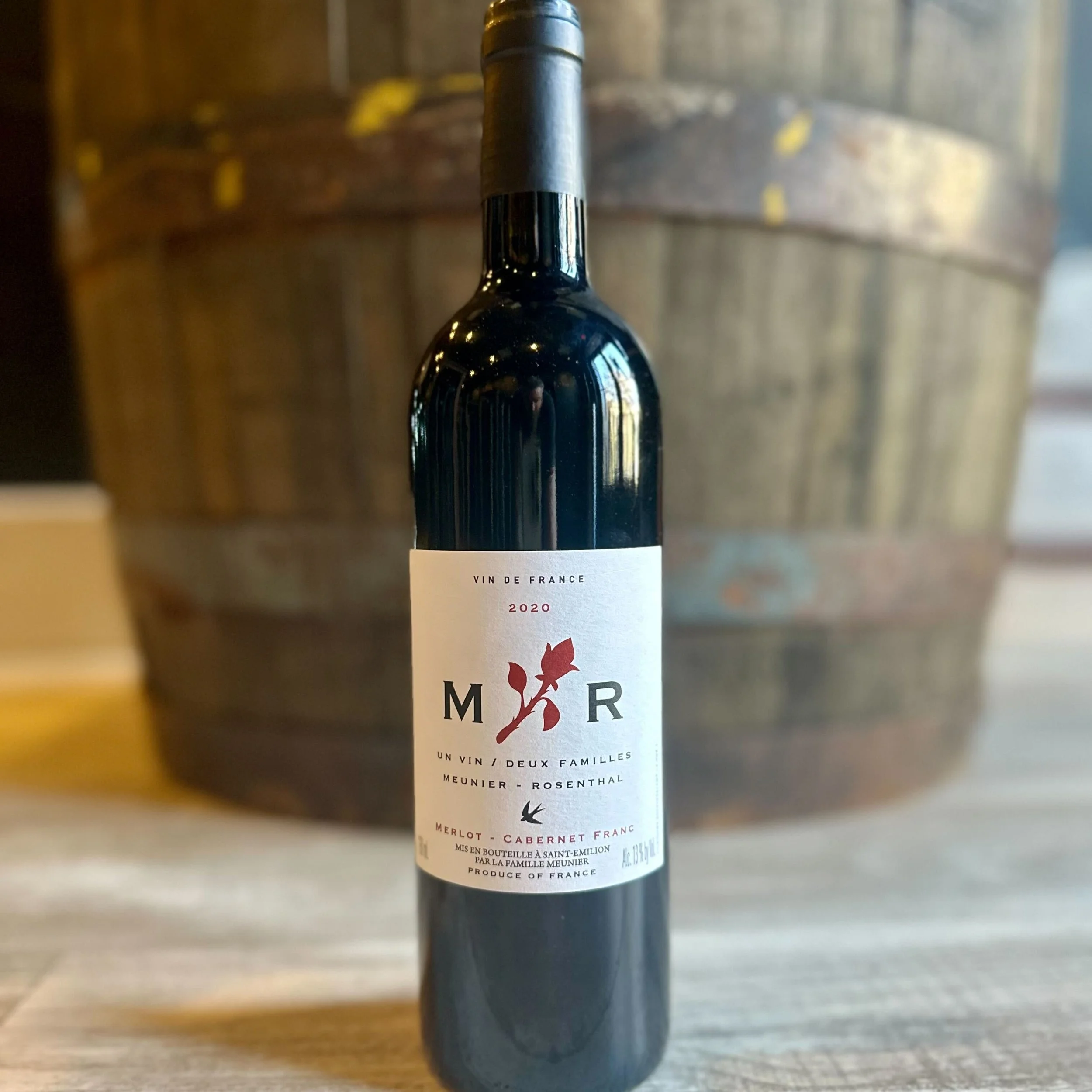
Domaine Meunier Vin de France
Grapes: 50% Merlot, 50% Cabernet Franc
Place: Bordeaux - France
Process: “M-R” comes from a 1.5-ha parcel of sandy clay-limestone in the nearby commune of St-Christophe-des-Bardes, planted equally to Cabernet Franc and Merlot. Instead of folding it into their flagship Saint-Emilion—a viable option given the vineyard’s location within the appellation—they decided to produce something more youthfully accessible to complement their range. Thus, “M-R” undergoes a fermentation and aging in stainless steel, and is labeled simply as a Vin de France. Despite its gentler extraction and breezier personality, it still offers lifted, floral aromas, a depth of black, plummy fruit and a fresh mineral snap with finely rendered tannins that underline its origin in a great terroir.
Family: -MR- is a collaboration between Meunier of Haut Segottes and Rosenthal wine merchant.
The Château Haut-Ségottes is owned and operated by Danielle Meunier. Mme. Meunier, “vigneronne extraordinaire”, is the fourth generation of her family to oversee this nine hectare estate situated in the heart of the Saint Emilion appellation. Mme. Meunier’s great-grandfather purchased the estate around 1860 and had earned gold medals for his wine as early as 1912 at the Concours Agricole in Paris. In 1959, the estate began to bottle its wine in earnest. In 1972 Madame Meunier took the reins of production
Bottle: $29 | Glass: $13