
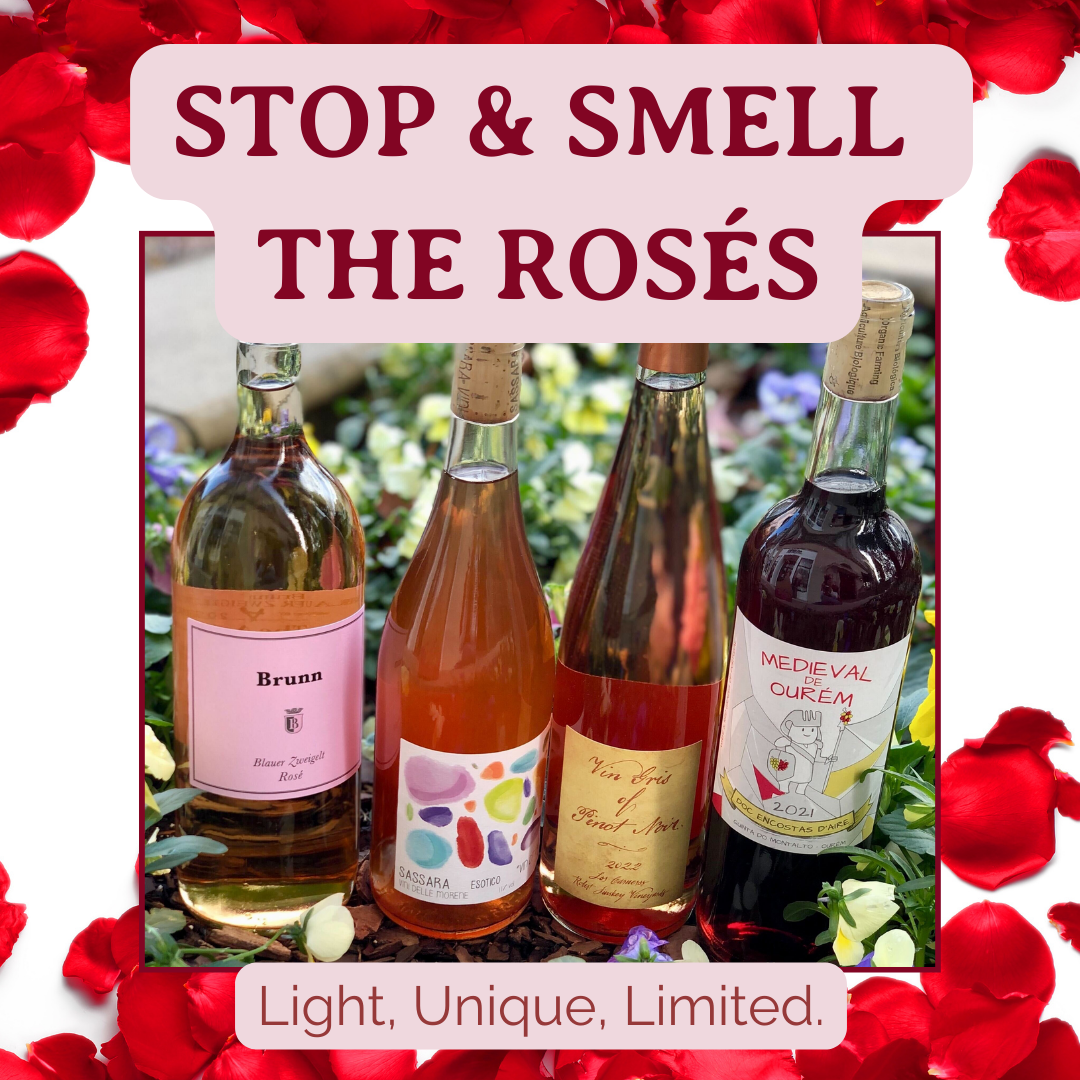
Stop & Smell The Rosés
Whoever said rosés are for the Summer time?! Come try some absolutely delicious rosés that were hand-picked for the cooler seasons!
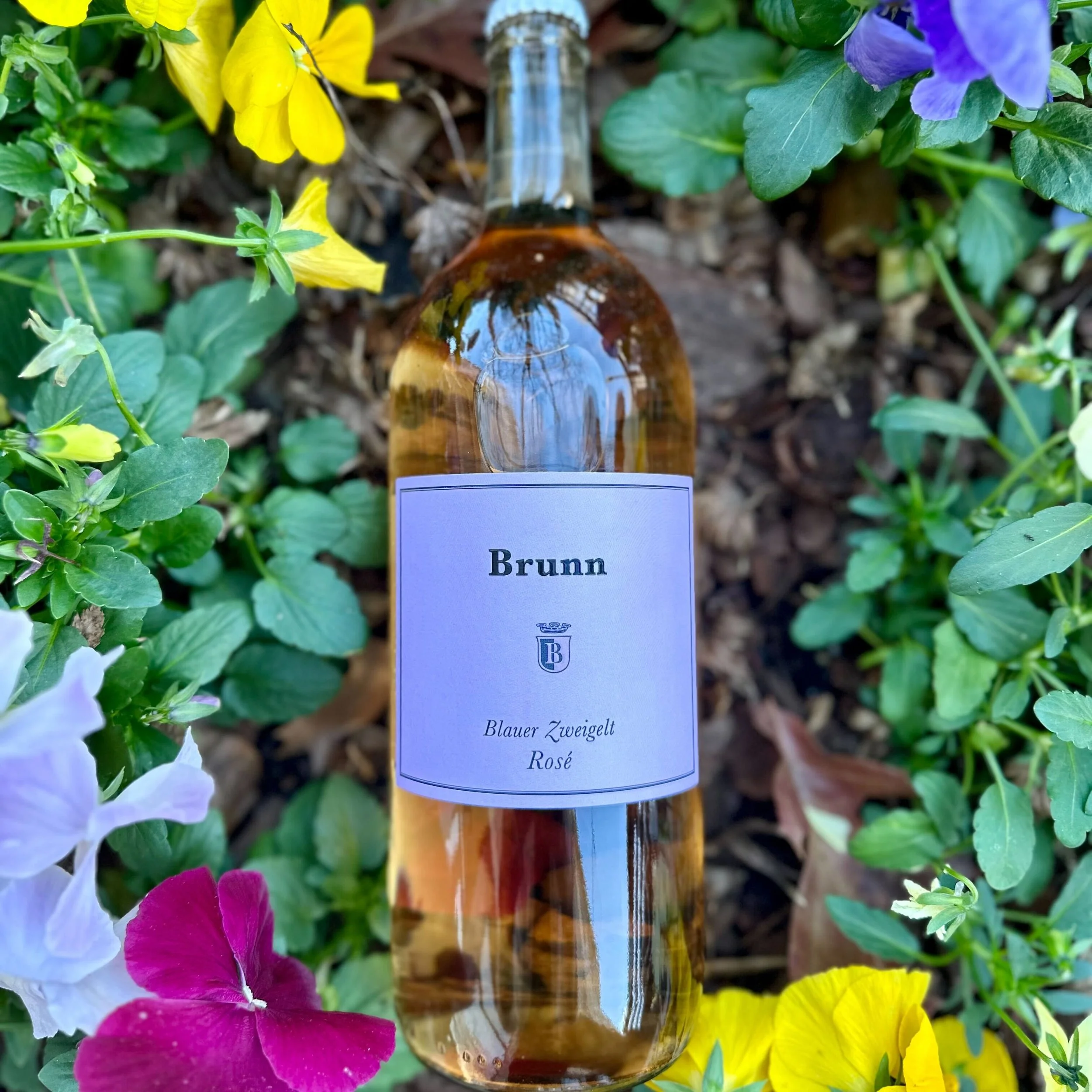
Brunn
Grapes: 100% Blauer Zweigelt
Place: Niederösterreich - Austria
Process: Winemaker Karl Steinschaden and his family are dedicated to traditional practices, completing the harvest 100% by hand in small cases. The old estate vines produce low yield with very high quality grapes. The character of the wine is defined by the soil of the vineyard and the climate of the region. An optimal climate leads to wines of elegance while preserving the unique flavors of the grapes.
Brunn practices traditional fermentation in small tanks using native yeasts to enhance the beautiful typicity of its vineyards. Below the winery lies an old, historic subterranean cellar where the wines mature in perfect conditions. Both oak barrels and large neutral vats are used to avoid the wood overpowering the wine.
Family: Just north of the Danube, in Kamptal, resides the small family owned and run winery producing Brunn. The winery owns the oldest traditional basket press in this part of Europe, dating back to 1564 A.D and originally used by the Benedictine Abby of Gottweig near Krems.
Bottle: $21 | Glass: $9
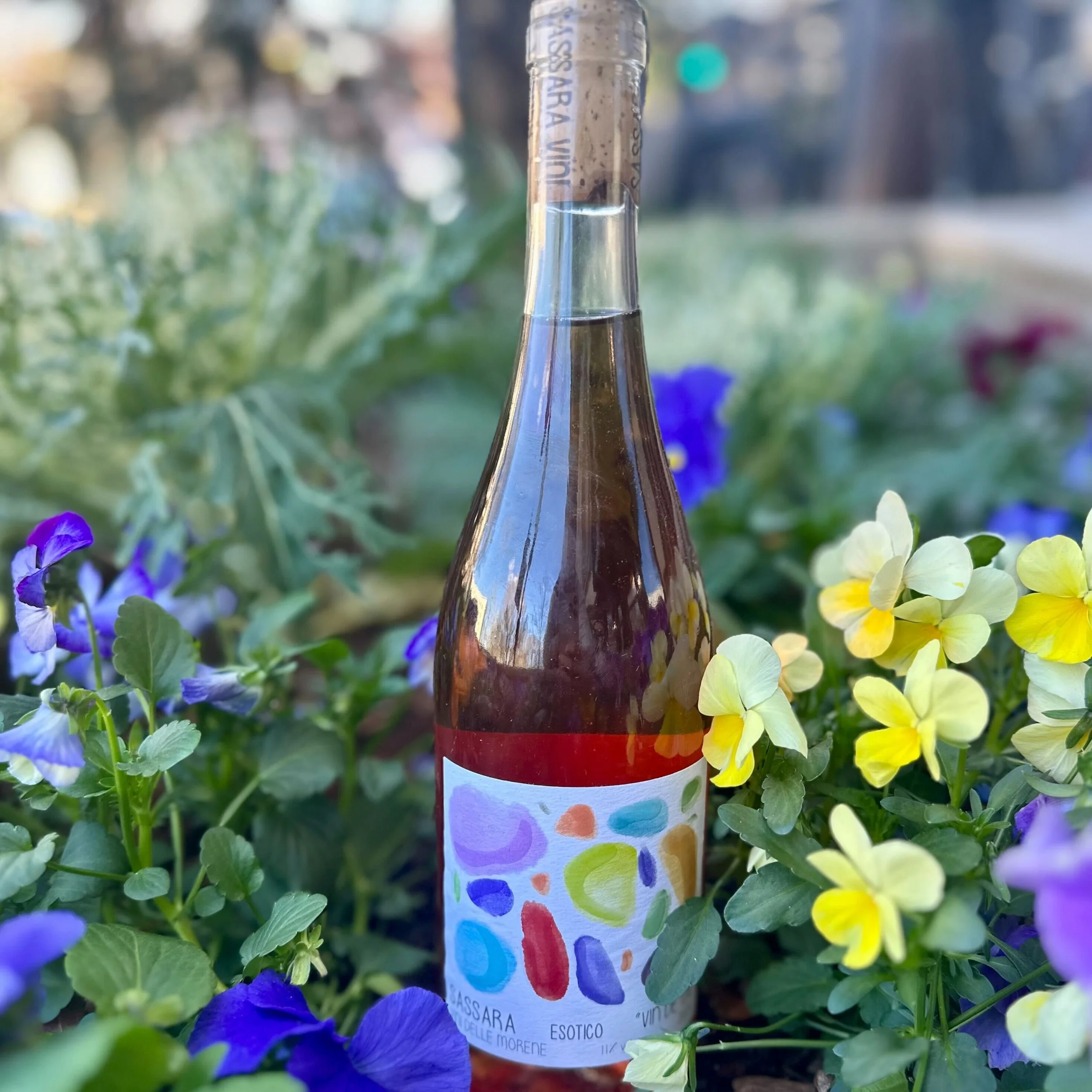
Sassara “Esotico”
Grapes: 30% red, 70% white
Place: Veneto - Italy
Process: Is it red? Is it pink? Is it orange? Who cares?! 30% red grapes (Corvina, Rossanella, Rondinella, Molinara) and 70% white grapes (Fernanda, Moscato, Trebbianello, Trebbiano, Garganega, Tocai), all from old vines. Hand harvested and spontaneously co-fermented with 10 days of skin maceration and without temperature control. Aged in stainless steel. No filtering or fining and minimal added sulfur as necessary. With 14 hectares, ten of them are dedicated to vines, while the other four are made up of woodlands and olive groves.
Family: This is the passionate work of Alessia Bertaiola and her husband, Stefano, a 3rd generation winemaker whose family has had this property for more than 50 years. Alessia and Stefano represent the 4th generation to work the morainic hill of Monte Mamaor. They took over the property in 2007, and with Alessia's strong background in agricultural research and development, quickly converted each plot to biodynamic farming. They have been making certified organic wine during that time, but due to a lack of inspiration, they took the plunge into producing a more naturalistic expression of their incredible fruit and soil, greatly inspired by the likes of Danillo Marcucci and others.
The area was once an ancient sea, and the hills were shaped by later glacial activity which left the soils rich in marine deposits and a complexity of morainic sediment. Alessia and Stefano are blessed with mostly big, thick, sturdy old vines roughly 60 to 70 years old, with some younger vines they have planted themselves. Vine training is what's known as a "Veronese double arch", a variation on the double guyot. They grow all autochthonous grapes with red varieties such as Corvina, Rossanella, Rondinella and Molinara; and white grapes like Fernanda, Moscato, Trebbianello, Trebbiano, Garganega and Tocai.
Bottle: $31 | Glass: $14
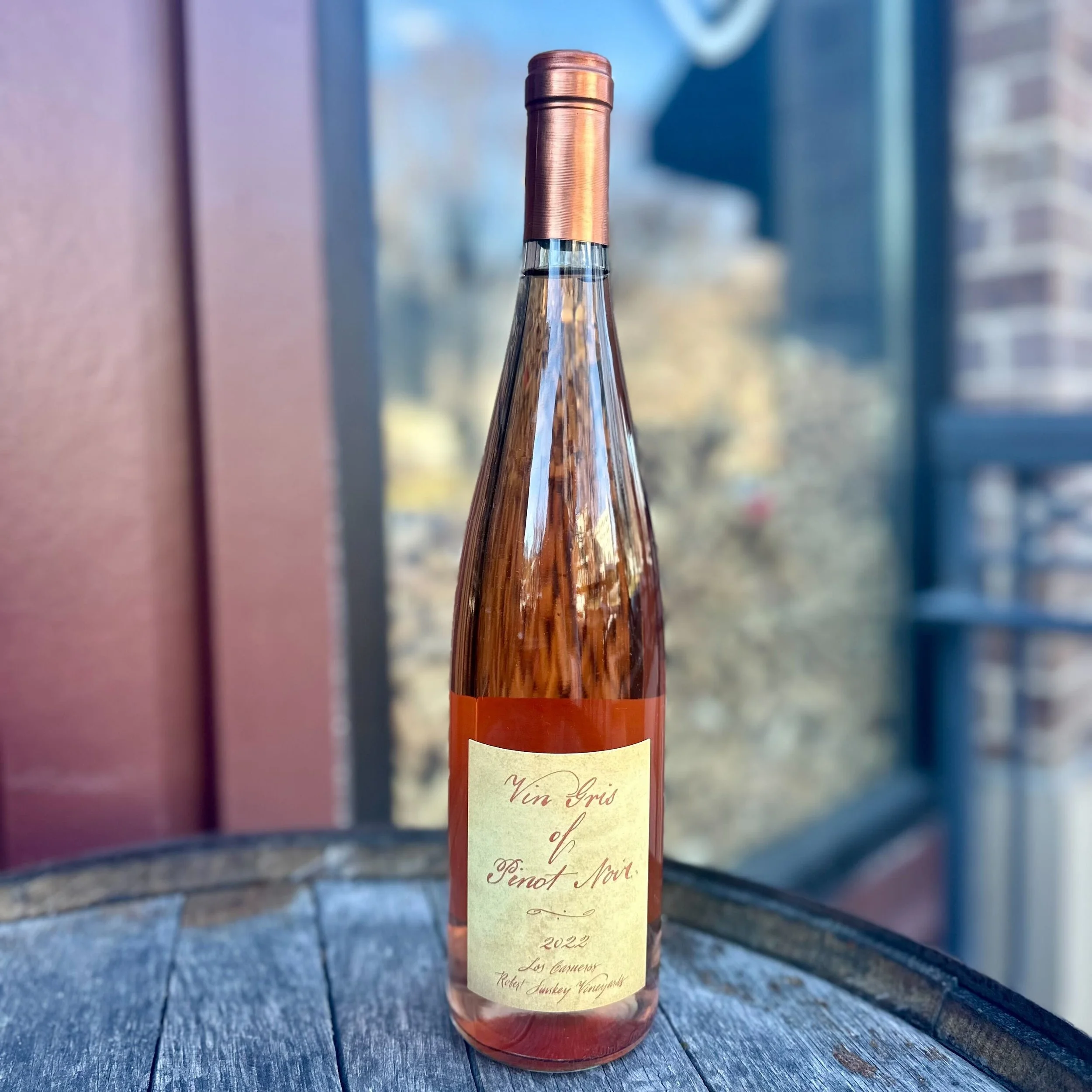
R.S.V “Vin Gris”
Grapes: 100% Pinot Noir
Place: Carneros - California
Process: Stunningly beautiful, prime, organically farmed Pinot Noir grown on RSV’s “Carneros estate” vineyards are night-picked by hand, delivered to the cellar door kissed by the morning dew where it is delicately whole-cluster pressed. Only the delicious “free-run” juice (no skins, stems or seeds) is cold fermented. That is it! No manipulation, no blend back of other juices for color; this wine is grown well, handled delicately and fermented for purity. It is an honest rosé. Very limited production - dependent on the vintage’s yield.
Family: Sinskey was founded by Dr. Robert Sinskey, a prominent cataract surgeon in 1986. Dr. Sinskey (died in 2015) who collected wines for many years before becoming a winery owner made his mark on the world of ophthalmology from his home base in Los Angeles. His contributions to the industry were significant. Long involved in research, his early studies involved examining the eyes of Hiroshima bomb survivors from 1951 to 1953 while working in both Hiroshima and Nagasaki. He began teaching at UCLA in 1955 and opened their eye services center. Later he invented and patented several important surgical devices including a modified J-loop IOL (intraocular lens) used during cataract surgery and what is known as the Sinskey IOL Hook, which is still very much in use today.
In 1971 Sinskey founded a mobile surgery center, performing eye surgery in an outpatient environment rather than at hospitals. He also founded the Assil Gaur Eye Institute of Los Angeles; two locations continue to serve the city, one in Santa Monica and the other in Beverly Hills.
Bottle: $45 | Glass: $20
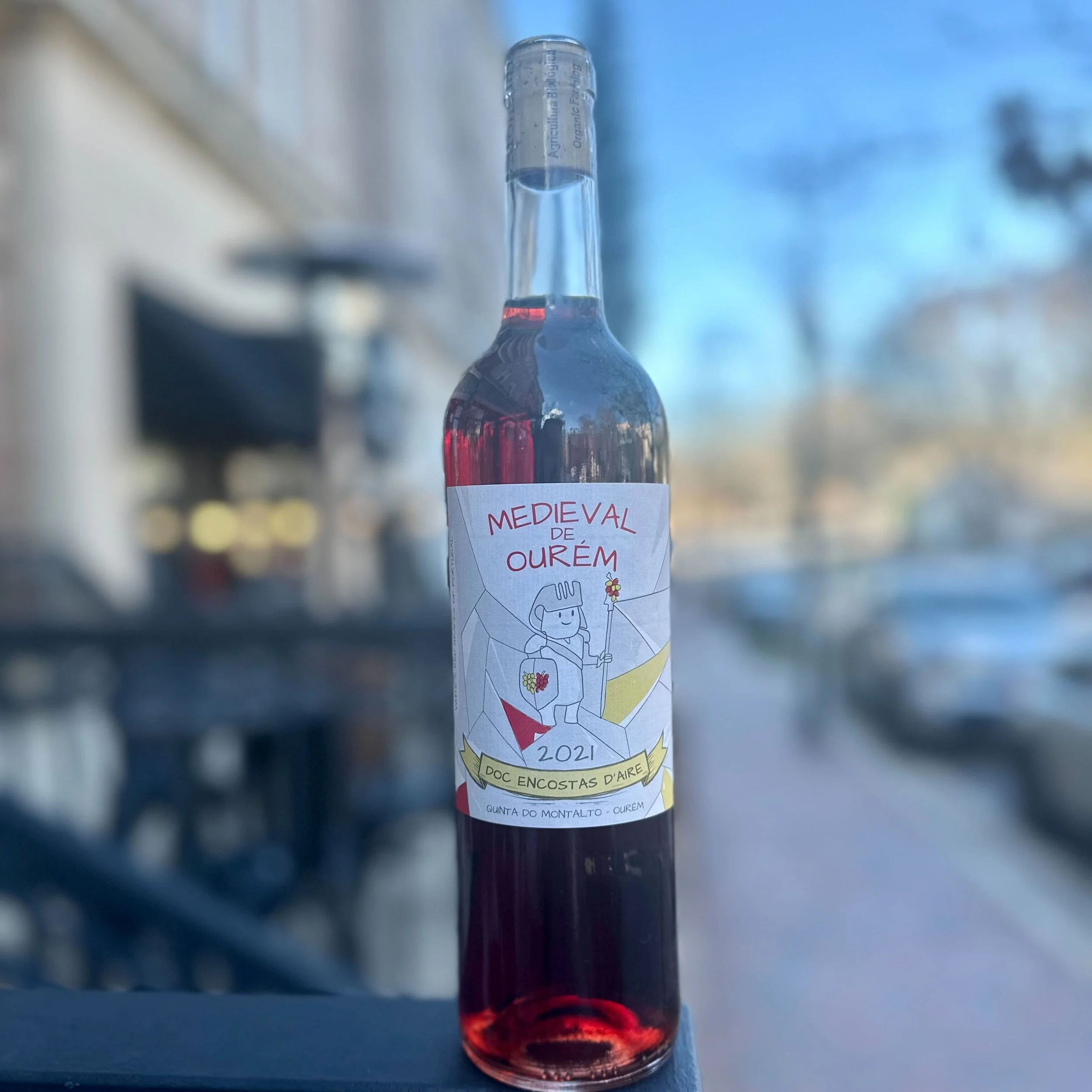
Medieval de Ourém
Grapes: Fernão Pires (white), Trincadeira (red)
Place: Ourém - Portugal
Process: The white grapes are pressed and the resulting must is used to fill wooden barrels up to 80% of their capacity, where the fermentation will start. Subsequently, the red grapes are de-stemmed with a “ciranda” directly to wooden vats called “dornas” (less frequently in stone “lagares”) and the fermentation lasts for four to ten days with the maceration of the skins of the grapes. At least twice a day the cap is sunk with a wooden tool called “rodo” in order to obtain a red must.
Almost at the end of the fermentations of both musts, the red one (20%), not pressed and with the skins, is poured directly into the wooden barrels where the white must (80%) is fermenting in order to fill up its remaining free capacity and to develop a joint final fermentation of both musts. When this final joint fermentation is complete, the cap will sink to the bottom of the barrel, helping filtering naturally the wine.
Although white grapes are predominant, the Medieval wine is “red”. A soft but yet strong wine with a full, sharp and complex mouth is obtained. It is a unique nectar with white wine aromas, that change according to the grapes maturity, but also with red wine aromas, usually mulberries, raspberries and strawberries.
Family: The farm of Montalto, owned by the same family along five generations, has an extension around fifty hectares covering vineyards, olive yard, orchards and forest, which, altogether, appear as a magnificent mosaic in the landscape.
Being part of the wide viticultural region of Lisbon, the 15,5 hectares of vineyards planted in clayey-chalky soil and benefiting from an excellent solar exposure, enable the production of wines classified as DOC Encostas D’Aire.
Bottle: $29 | Glass: $13