
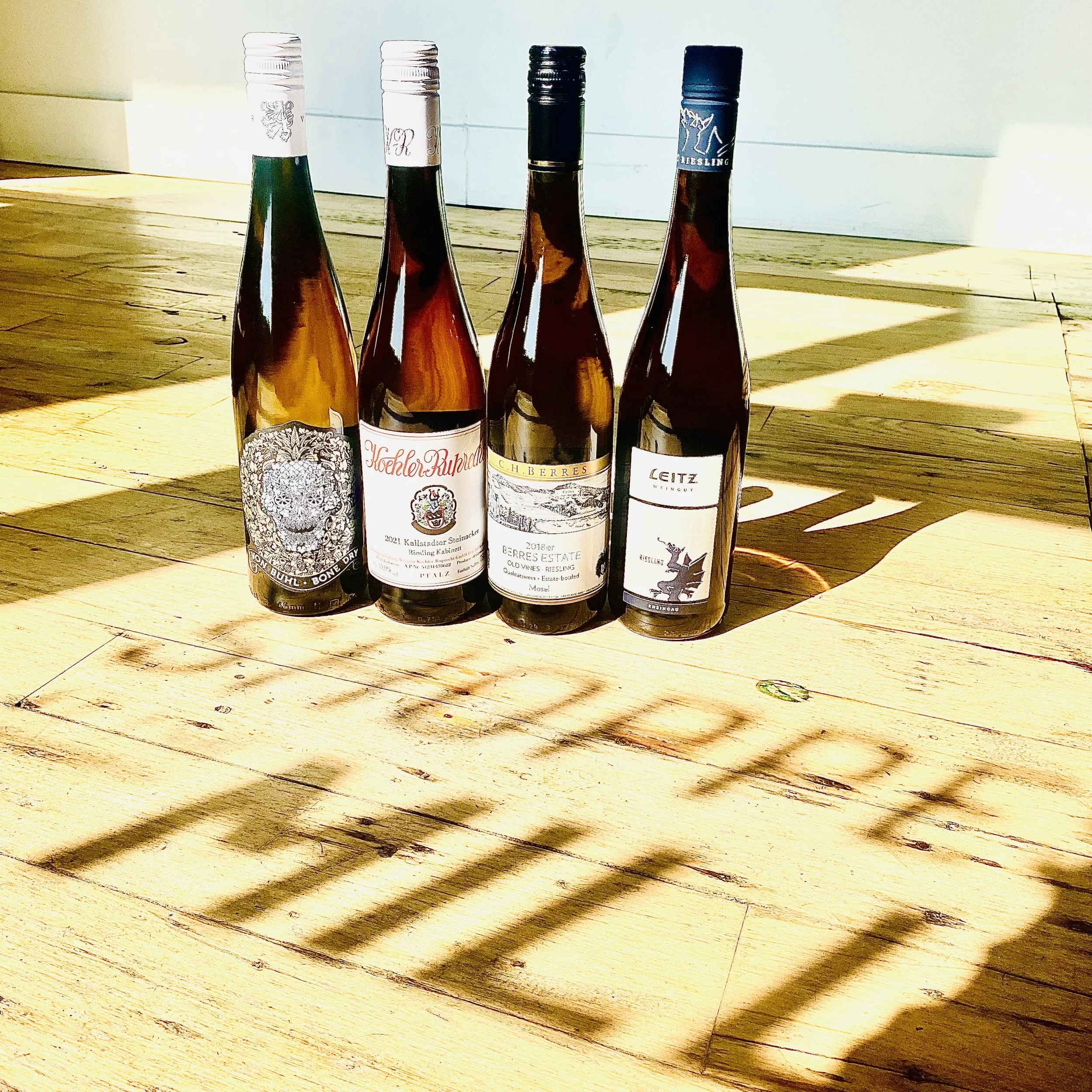
Rays of Riesling
Riesling is an amazing grape! Contrary to popular belief it is NOT always sweet. On this flight we highlight different levels of sweetness. From Bone Dry (no sugar) to Off Dry (slightly sweet) to Fully Sweet. Find your preferred level of sugar in riesling.
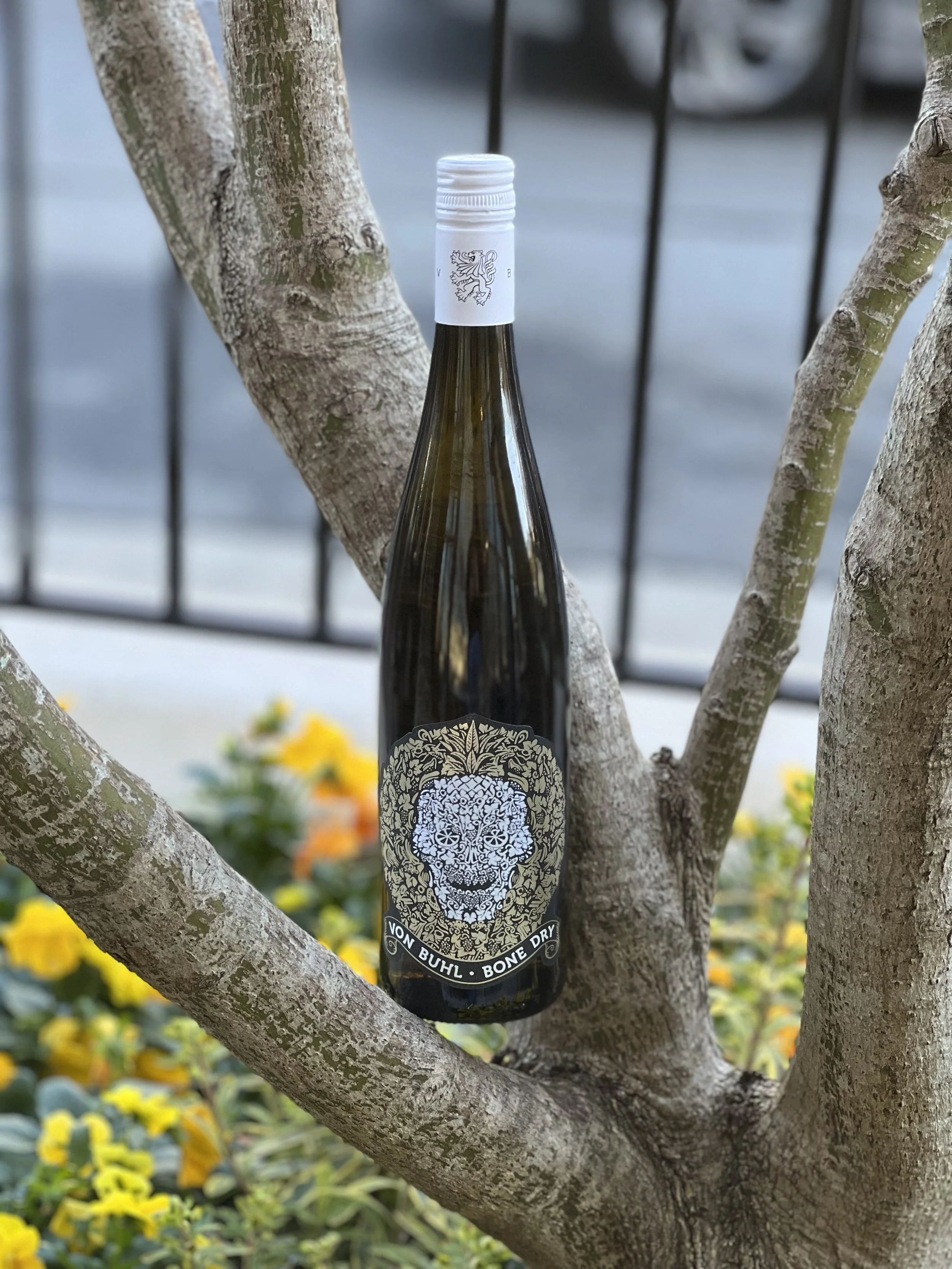
Von Buhl Bone Dry
Grapes: 100% Riesling
Place: Pfalz, Germany
Process: Carefully fermented and aged in stainless steel on full yeast without any fining.
Family: Reichsrat von Buhl has been a family-owned winery for more than 150 years, and has belonged to the circle of the most prestigious wineries in Germany for just as long. Since it was founded in 1849, Reichsrat von Buhl has made its wines in a terroir-dominated, timeless style that has never been oriented to fashion, but always to the grapes’ origins in the best soils of Deidesheimer and Forster. Reichsrat von Buhl is certified organic, and is an active ambassador of both natural, sustainable viticulture and of the best German wines. Since 2013, it has been led by a new team and technical director Mathieu Kauffmann. Long term viticultural manager Werner Sebastian remains responsible for the vineyards.
Bottle: $29 | Glass: $13
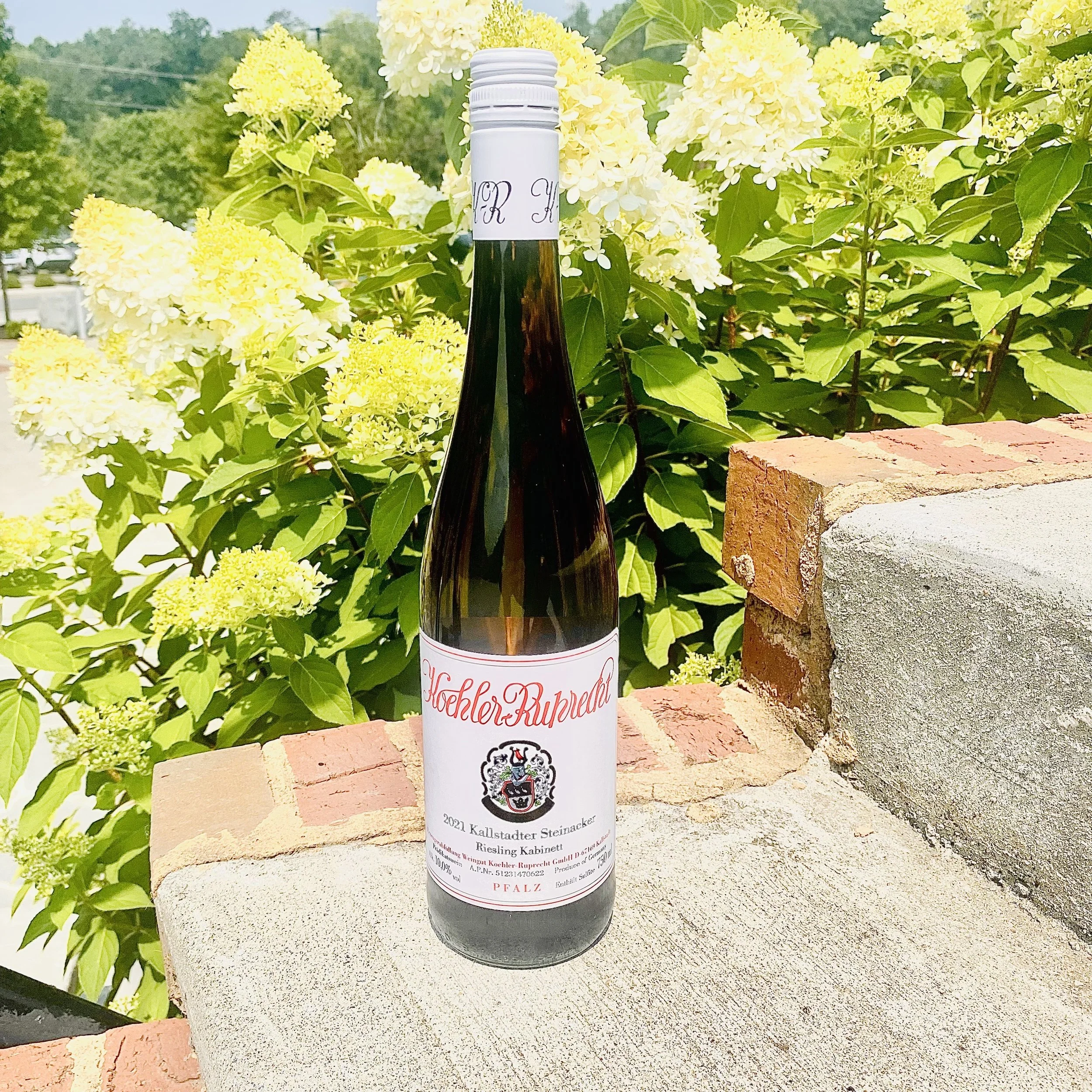
Koehler-Ruprecht
Grapes: 100% Riesling
Place: Pfalz - Germany
Process: RS 6,9 this village wine was made from different plots in Kallstadt including some Saumagen this year. Dry but not "bone-dry," with the rounder style of the vintage illustrated in a light and delicious Kabi.
Family: One of the founding fathers of dry cellarable German Rieslings, late release wines are not just what Koehler-Ruprecht does, it is who they are. Among aficionados, even the name can elicit a nearly mythic devotion to the twin deities of tradition and time.
This historic estate, long managed by the legendary and larger-than-life Bernd Philippi, was purchased in 2009 and since 2011 has been in the dedicated hands of Dominik Sona. He and his cellar master Franziska Schmitt are intensely hard-working and strictly honor the arch-traditional style of this beautiful, centuries-old cellar.
Koehler-Ruprecht is known for broad, rich and minerally Rieslings, Pinots and Chardonnays sourced from three locations in Kallstadt:
Bottle: $31 | Glass: $13
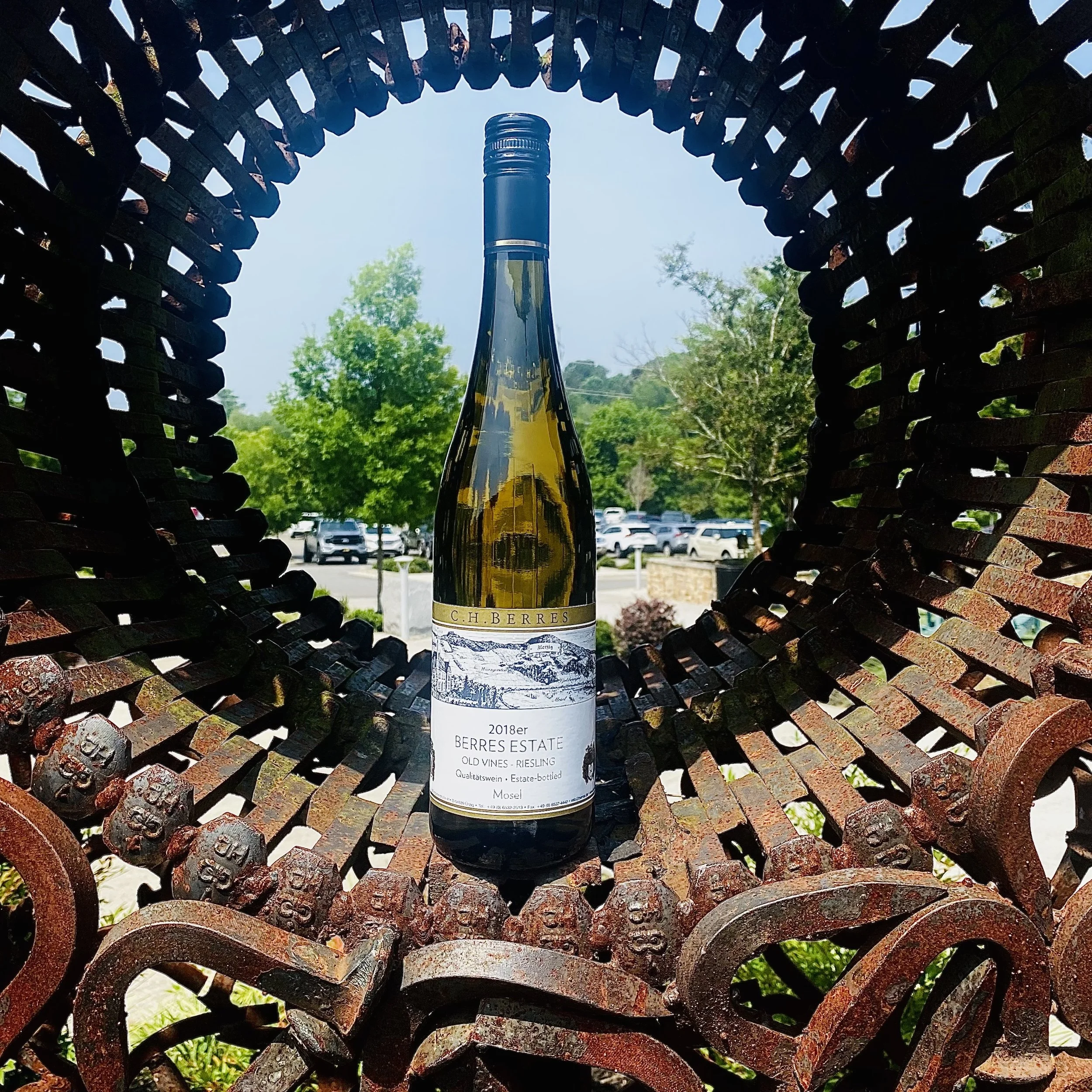
C.H. Berres
Grapes: 100% Riesling
Place: Mosel - Germany
Process: Hand harvested and then fermented 3 – 4 weeks in temperature controlled stainless steel tanks. This handmade Riesling combines the richness of the over 90 year old Wehlener Klosterberg vineyard with the extract of Kinheimer Hubertuslay and the complexity of Erdener Herrenberg sites. Stone fruit and white flowers balanced with juicy acidity.
Aged 4 months on lees in tank
Family: he Berres family is recorded to have resided and worked in the vineyards of Ürzig since the year 1510. Markus Berres, 21st generation, has taken the helm of this prestigious Mittel Mosel estate beginning with the 2004 vintage, and is in the process of effecting one of the most significant renaissances in recent German wine history. Upon secularization of the Mosel by Napoleon, one of the first great private wine estates to be established was that of Peter Nicolay in Ürzig, including the finest sites in Ürzig, Erden, Wehlen, Graach and Zeltingen.
Bottle: $25 | Glass: $11
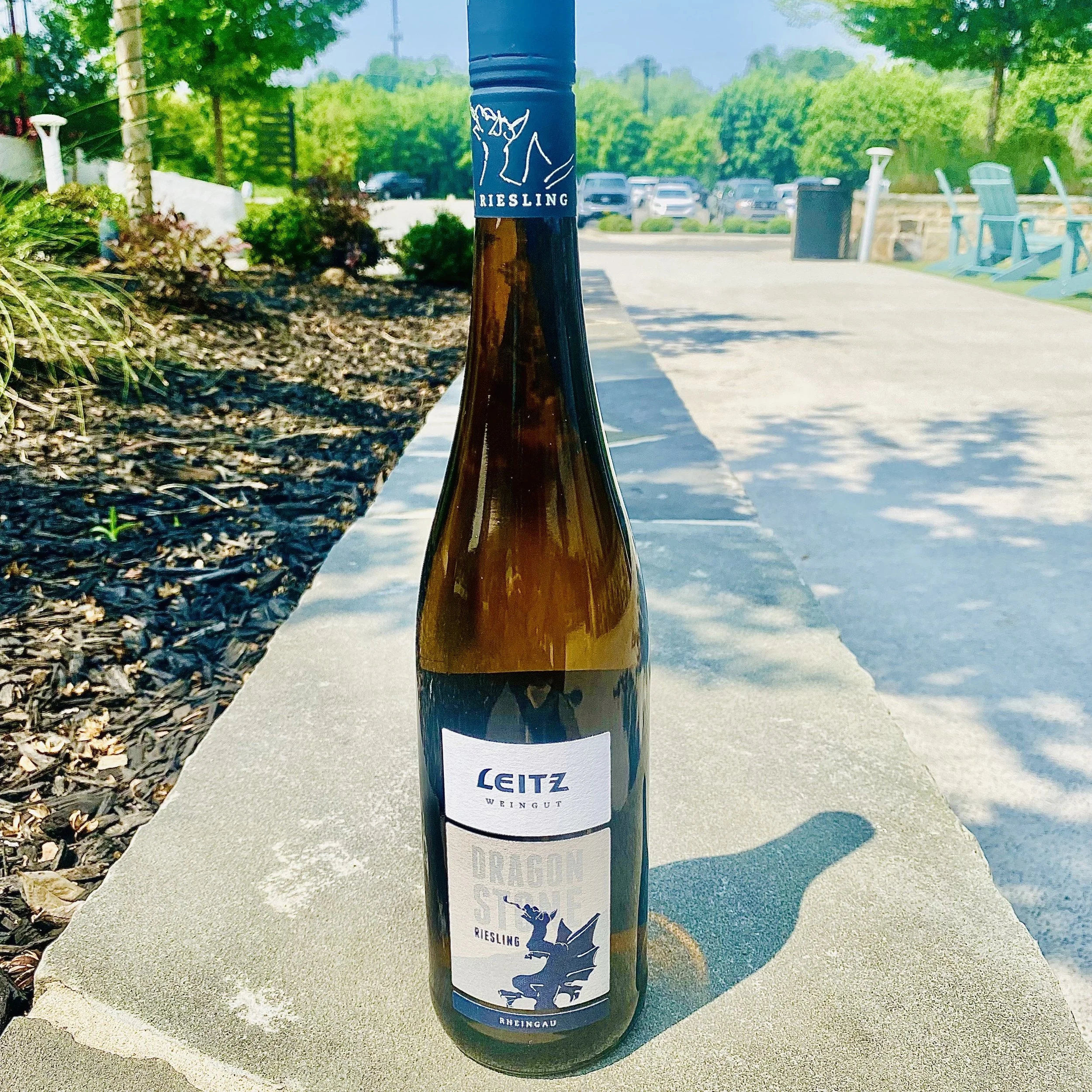
Weingut Leitz Dragon Stone
Grapes: 100% Riesling
Place: Rheingau
Process: Residual Sugar: 35.5 g/L
Johannes Leitz crafts this delicious Riesling from the 'Drachenstein' vineyard, translating to Dragonstone, so called for the fossils and dinosaur tracks found in the slate that makes up the vineyard soil.
Hand Harvested. Traditional Vinification
Family: There are recorded documents linking the Leitz family winemaking history all the way back to 1744.
Johannes Leitz was born much later, in 1964 in Rüdesheim. His Grandfather, Josef Leitz re-built the winery, which has been completely destroyed after a bombing raid during the Second World War. His father, Antonius Leitz had briefly taken ownership of the winery before his premature death in 1966. This left his wife, with her flower shop, a household and of course the family winery to run. So, it wasn’t until 1985 when Johannes took over the winery that it once again became a primary focal point of attention.
After taking hold of the family business, he has managed to raise the estate from 2.9 hectares to the 140 hectares that we see today. Over the years, Johannes has gained national and international recognition for his outstanding wines. Internationally, his major markets include Norway, Sweden, the UK and USA.
Bottle: $27 | Glass: $13