
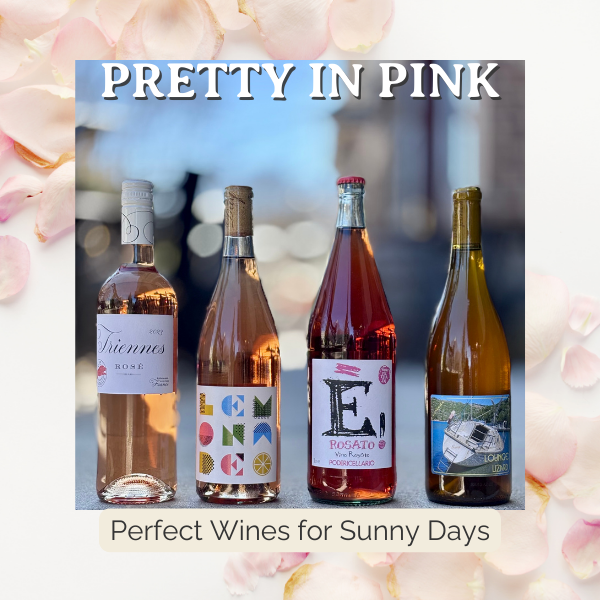
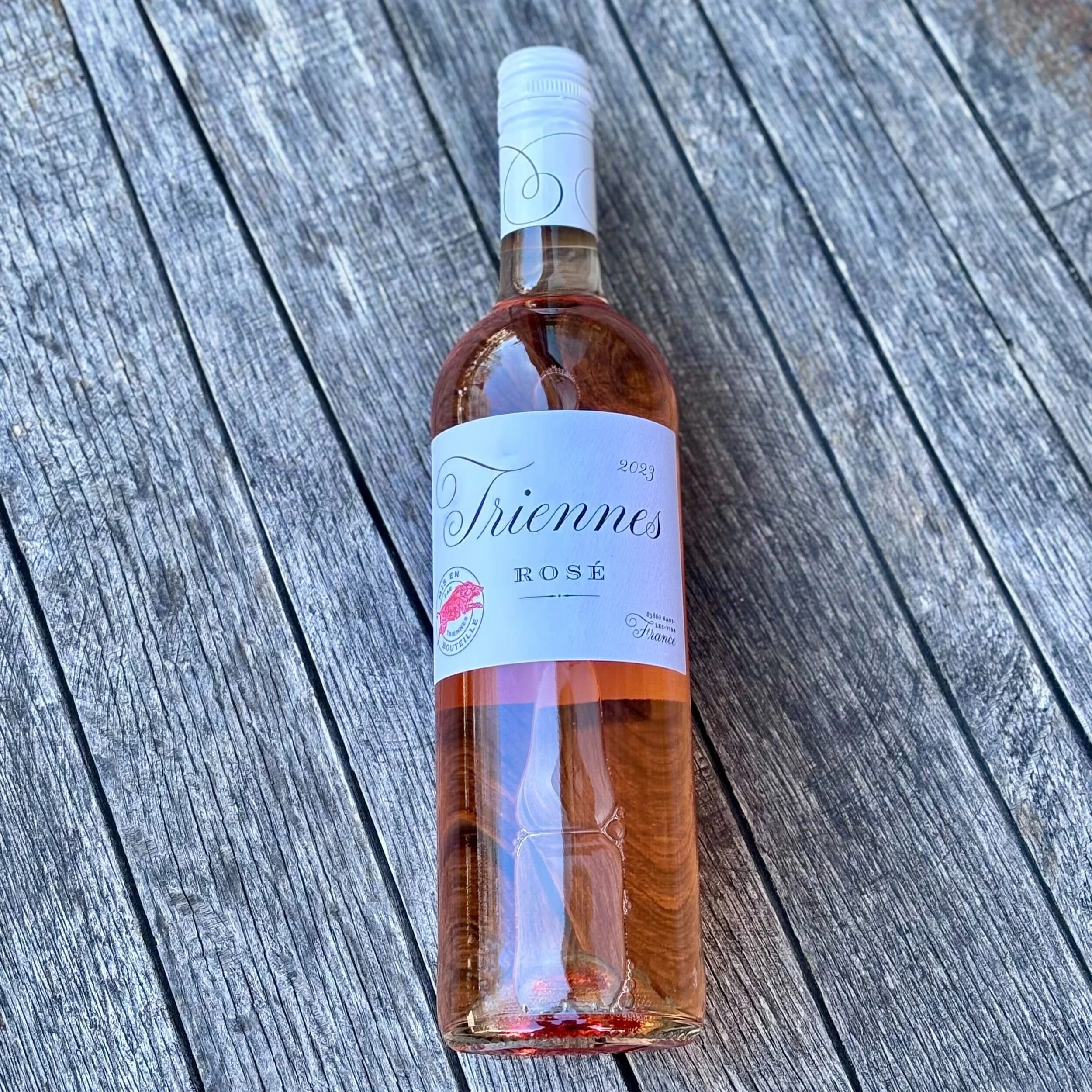
Triennes
Grapes Cinsault, Grenache, Syrah, Merlot
Place Provence, France
Process Cinsault with Grenache, Syrah and Merlot; alcohol: 13%; vineyards in Var facing Massif de la Sainte Baume; clay and limestone soil; grapes harvested at night to ensure cool temperature at cellar; pressed after few hours skin contact; fermented at low temperature in stainless steel tanks until dry.
Family Two of Burgundy’s greatest names – Jacques Seysses, founder of Domaine Dujac, and Aubert de Villaine, co-owner of Domaine de la Romanée-Conti – are the partners behind this pioneering property in Provence, northeast of Marseille and due east of Aix-en-Provence. Over the years, they have transformed this stunning 113.7 acre (46 hectare) site into one of the top wine estates in Southern France.
Bottle: $25 | Glass: $11
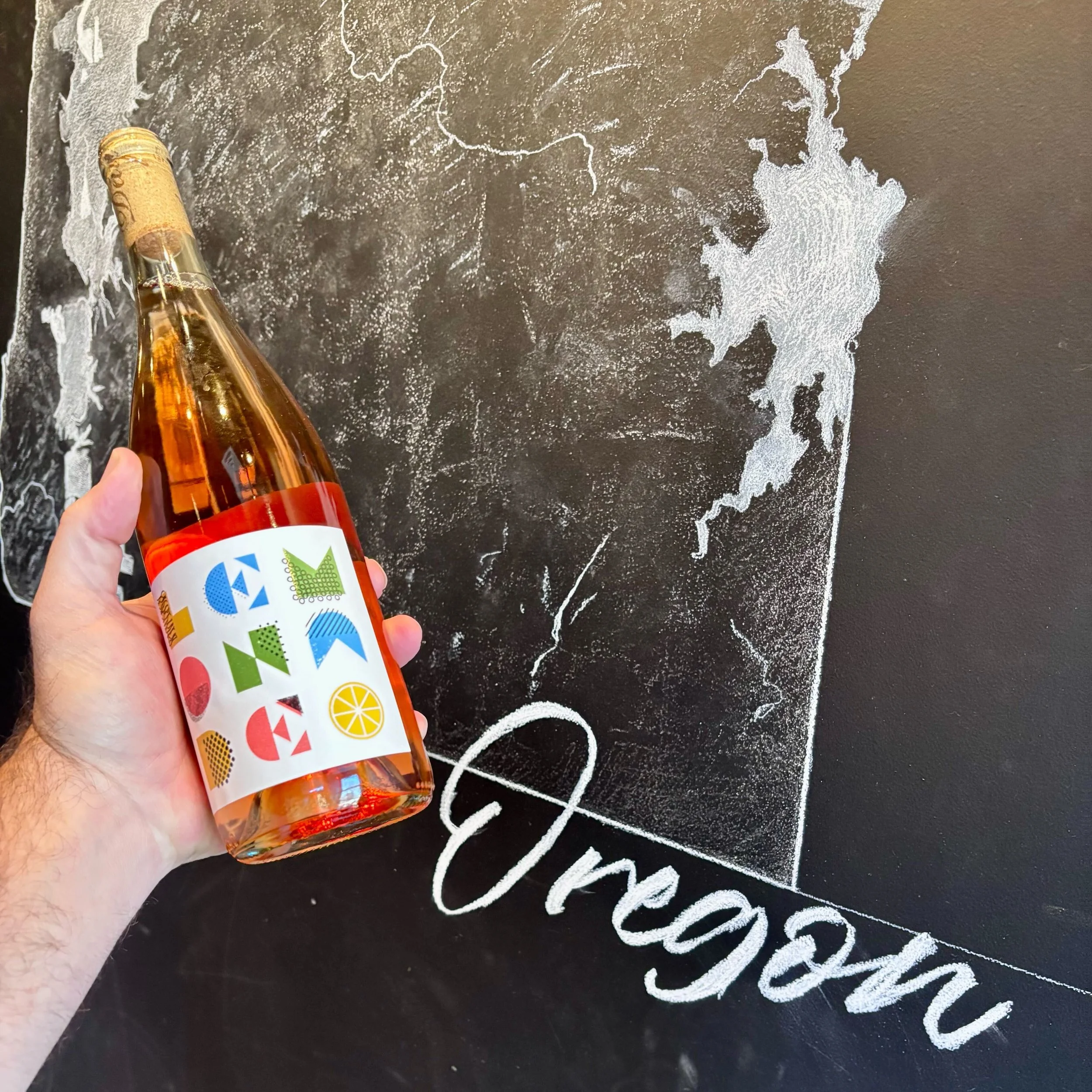
Day Wines ‘Lemonade‘
Grapes 88% Pinot Noir, 12% Gamay
Place Willamette Valley, Oregon
Process Grapes were gently pressed whole cluster, and juice was cold settled to remove heavy lees. It was racked the next day to stainless where it was compiled and began native fermentation. Each lot was racked 4 or 5 times and bleneded through racking. After primary fermentation is completed and the malo fermentation reached a level of 1.21 g/L of malic acid remaining, the wine was cold stabilized, and the sulfured, filtered, and bottled.
Family Founded by winemaker and owner Brianne Day in the 2012 vintage, Day Wines is a producer of boutique, artisanal bottlings made from fruit sourced exclusively from a small group of Oregon growers who utilize Biodynamic, Organic and/or Sustainable vineyard practices. To create distinct expressions of our corner of the world, we focus on fruit harvested from the esteemed Willamette Valley to exotic varietals found in Southern Oregon’s Applegate Valley AVA.
Bottle: $27 | Glass: $12
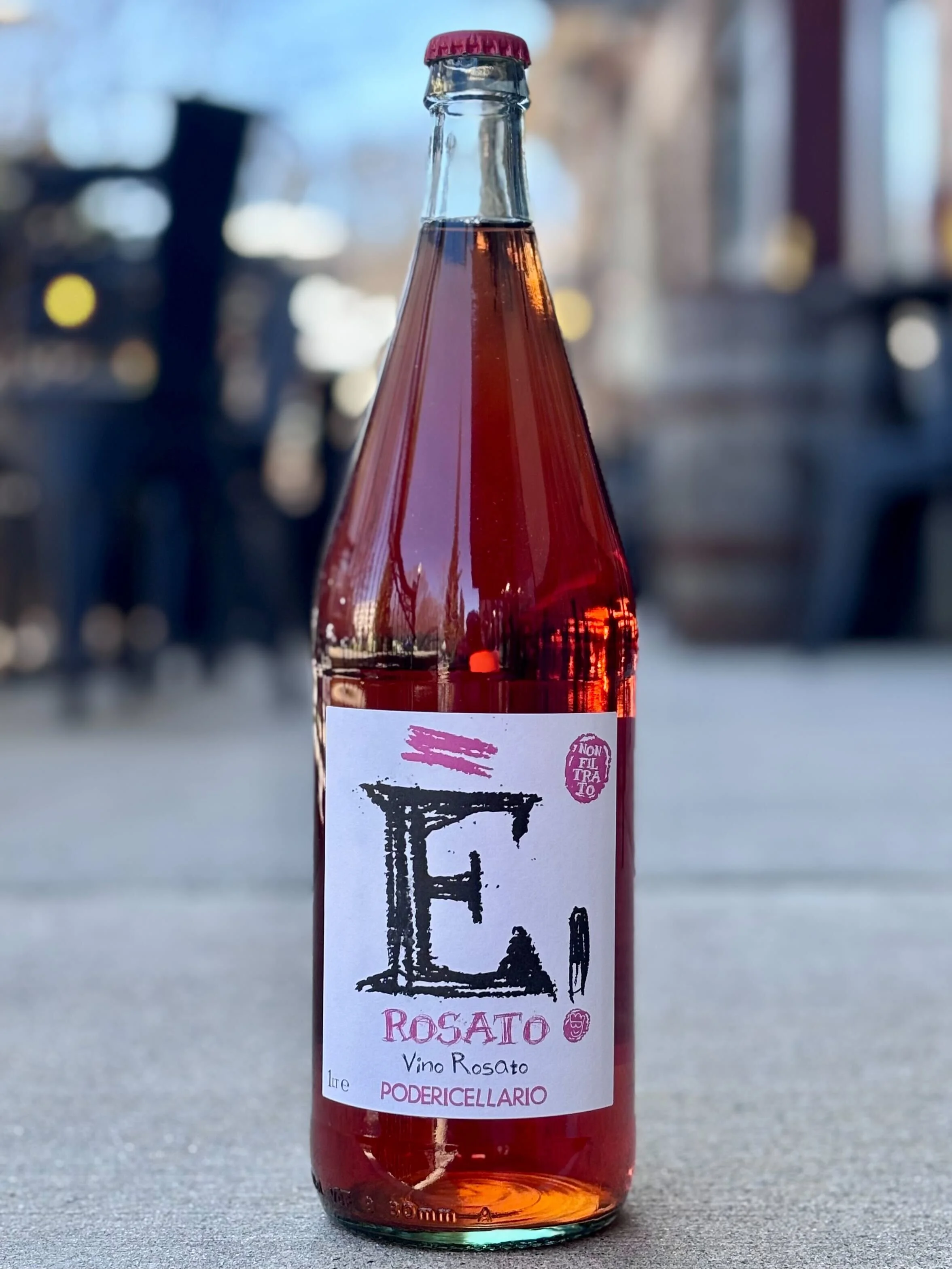
Podericellario
Vino Rosato “E”
Grapes Dolcetto and Nebbiolo
Place Langh, Piedmont, Italy
Process Dolcetto (San Luigi Vineyard) & Nebbiolo (Galli Vineyard). Hand-harvested into small bins. Pneumatic direct press. Spontaneous fermentation. Aged in Stainless Steel for 6 to 8 months until bottling. Bottled with minimal sulphur (~10ppm) and without sterile filtering or fining.
Family Fausto and Cinzia Cellario are 3rd generation winemakers in the village of Carru` on the western outskirts of the Langhe. The family believes in only working with local, indigenous Piemontese grape varieties and fiercely defends local winemaking traditions both in the vineyard work and the cellar practices. The Cellario vineyard holdings cover some 30 ha between 5 different vineyard sites covering the southern Langhe. With holdings in Novello and Monforte, the Dogliani plot is arguably the family’s most prestigious land and I would consider them Dolcetto specialists. Vineyard work is organic (soon to be certified) and all the fermentation take place with indigenous yeasts. Sulfur is only added in tiny quantities at bottling if necessary (a practice not common with a winery in this mid-size range).
Bottle: $27 | Glass: $12
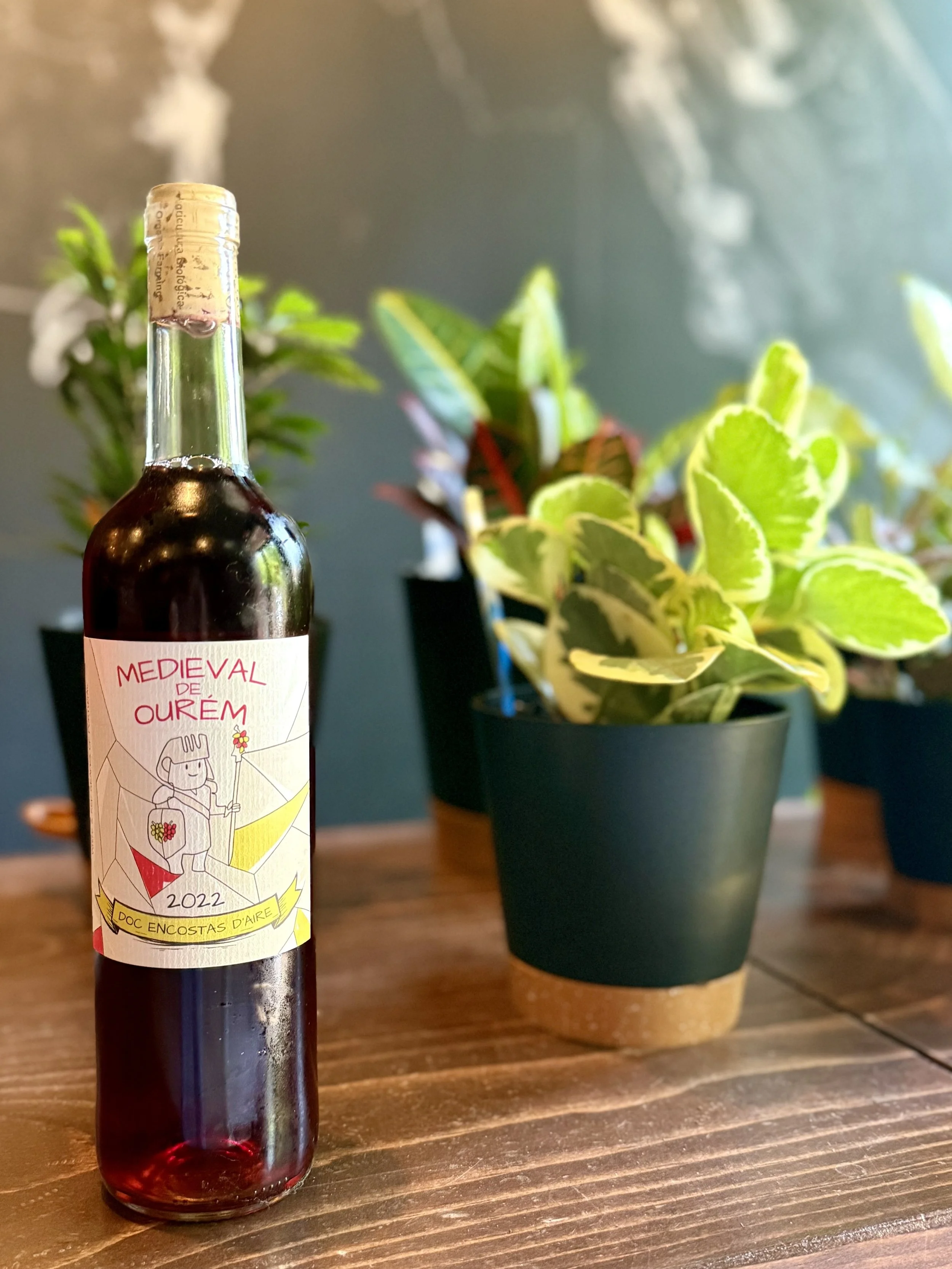
Quinta do Montalto ‘Medieval de Ourem’
Grapes 80% Fernao Pires, 20% Trincadeira
Place Lisboa, Portugal
Process The white grapes are harvested by hand and removed from the skins in an old basket press where the must is then collected into large and old chestnut barrels after passing through a simple basket for filtering. The barrels are filled 80% full with the Fernao Pires, and waited for a few days until the red grapes were hand de-stemmed and fermented for 4 days in a large tub, pulled off of the skins, and put into barrels. The wine spends 2 months in said barrels.
Family Quinta do Montalto not only dates back to the year 1880 (five generations) but is one of very few wineries that makes a beautiful local wine from the 1100s in the same traditional way it has always been made. Now, this wine lies within the DOC of Medieval de Ourém Encostas d'Aire. In general, their wines are labeled Vinho Regional Lisboa, because they are in farthest-north area of Lisboa (previously Estremadura), between the villages of Ourém and the famed Fátima (where the Blessed Virgin Mary was said to appear to three children in 1917). Montalto is perched in the middle of 50 hectares of certified organic land, and just 15 hectares are vineyards--the rest is dedicated to fruit, gardens, and forest. All of their native varieties are beautifully illustrative of the grapes and area, as they use native yeasts for the fermentation of their Medieval and red wines, very neutral oak, and light filtering methods. Montalto wines are pure, expressive, an incredible value, and a wonderful representation of what the region is known for.
Bottle: $29| Glass: $13