

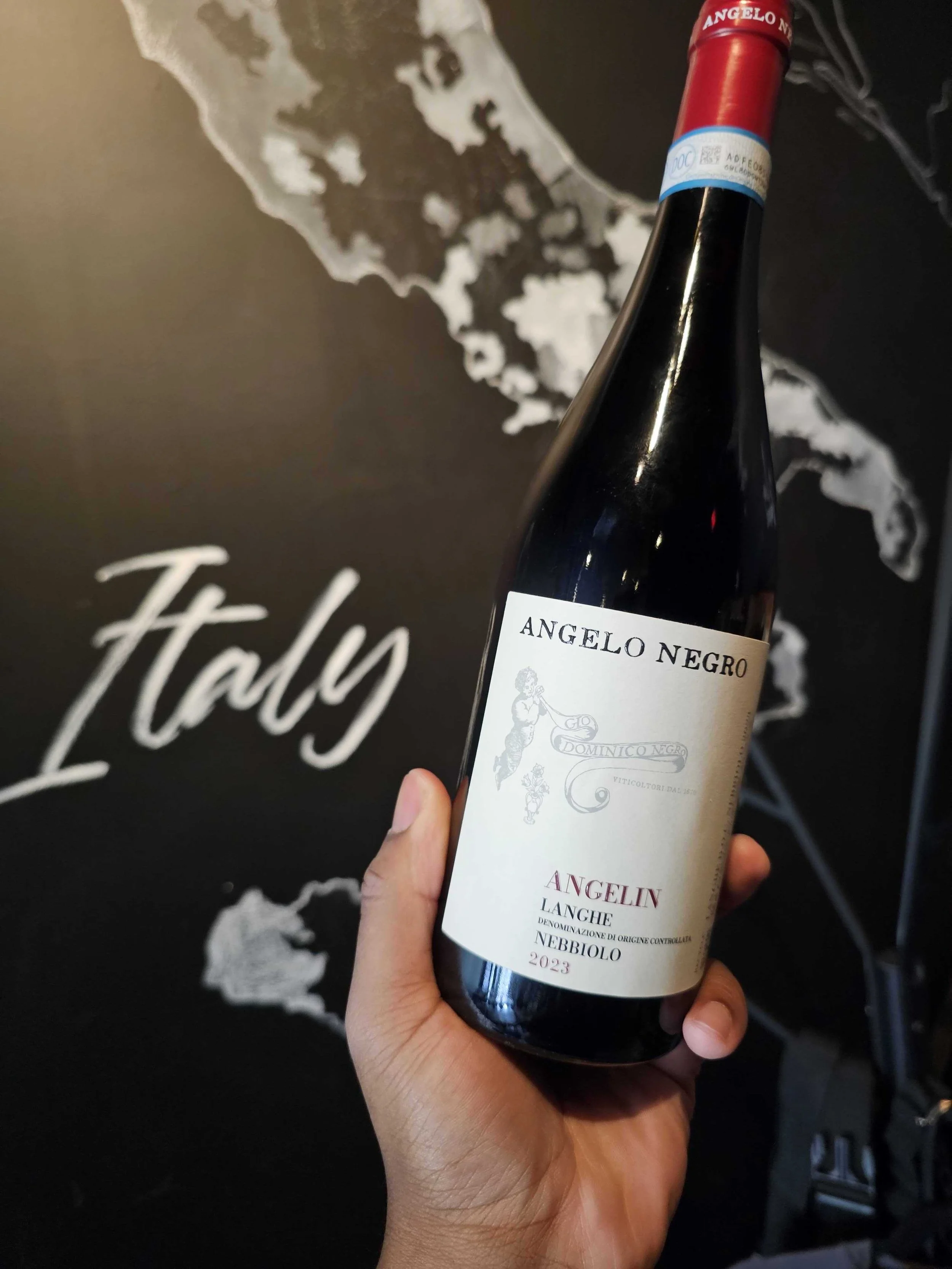
Angelo Negro ‘Angelin‘
Grapes 100% Nebbiolo
Place Piedmont, Italy
Process Grapes are hand-picked into large, 20kg boxes. Macerated and fermented in stainless steel tanks for 15 - 18 days. Aged in stainless steel for 12 months.
Family Since 1670, the Negro family has been cultivating vineyards in the hills of the Roero and realizing the viticultural potential of this relatively undiscovered subregion of Piedmont. In that same year, two of the estate’s most cherished vineyards—Perdaudin and Prachiosso—were first planted. Boasting some of the most desirable vineyard sites in the Roero, Negro in an indisputable legend of the area. In fact, Giovanni Negro, the estate’s proud patriarch, vinified the first dry Roero Arneis on record in 1971. The current winemaker, Angelo Negro, produces wines exclusively from the native grapes of the region, offering a remarkable range of Arneis and Nebbiolo, among other varietals. The family’s sandy, fossil-laden vineyards in the village of Monteu Roero coupled with their meticulous work in the vineyard and the cellar give rise to precise, soulful wines. Today, the estate observes organic practices while managing a staggering 70 hectares under vine.
Bottle: $27 | Glass: $12
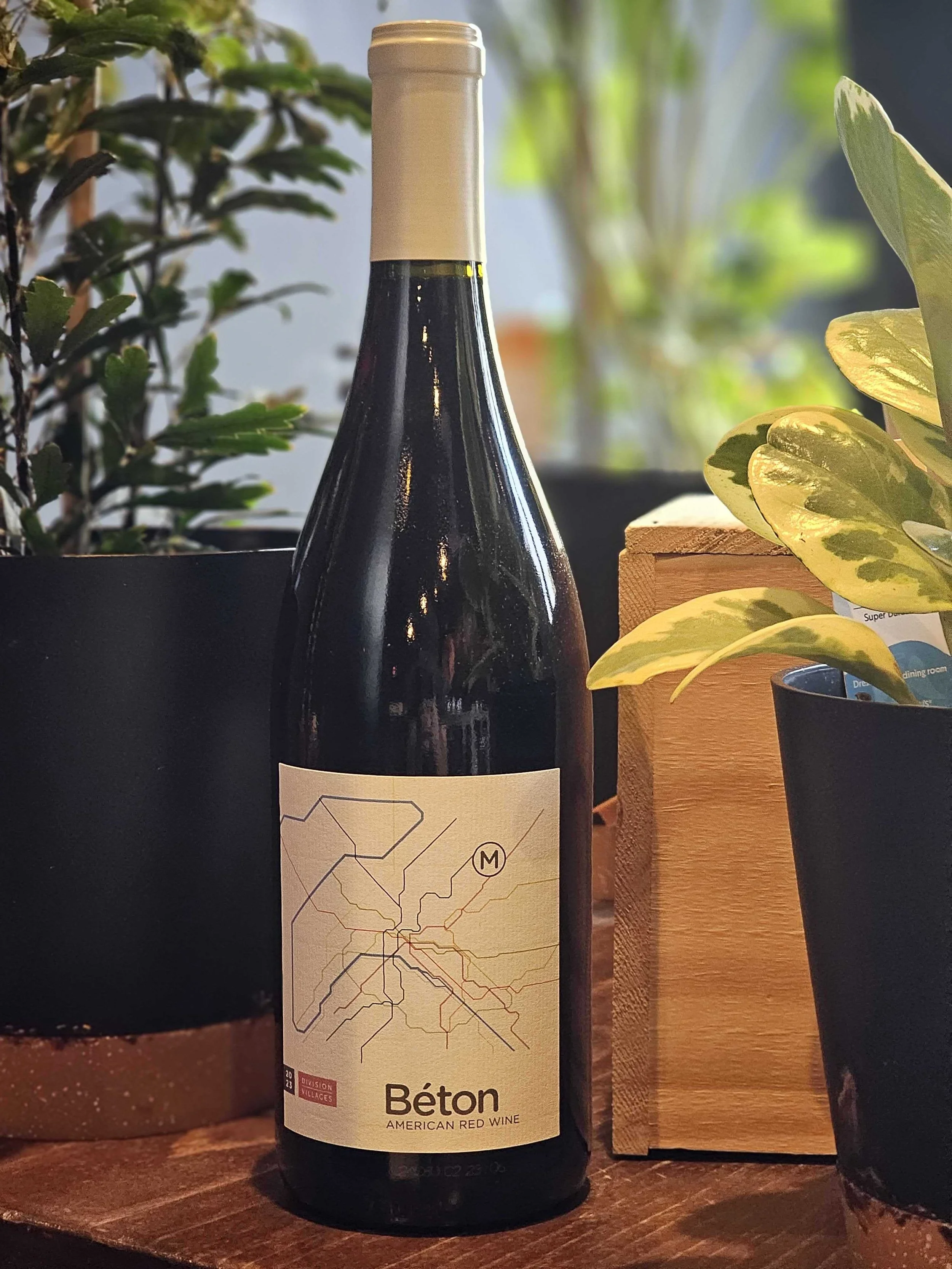
Division Wine Making Co. ‘Beton’
Grapes 46% Cab Franc, 37% Côt(Malbec), 14% Gamay 2% Pinot Noir, 1% Syrah
Place Willamette Valley, Oregon
Process Organically grown grapes are picked and fermented as whole clusters with native yeasts. Aged for 5-6 months in a combination of concrete (Beton = concrete translated from French), and neutral oak.
Family Division Wine Company is part of the new guard of wine making with low-intervention wines from organic, terroir-driven vineyard sites in Oregon and Washington State. Kate and Tom moved to France to work in the Loire Valley, Beaujolais, and Burgundy. Inspired by these wines, they moved to Oregon in 2010 to start Division to produce wines with modest alcohol, bright acidity, less extraction, and minimal manipulation.
Bottle: $35 | Glass: $15
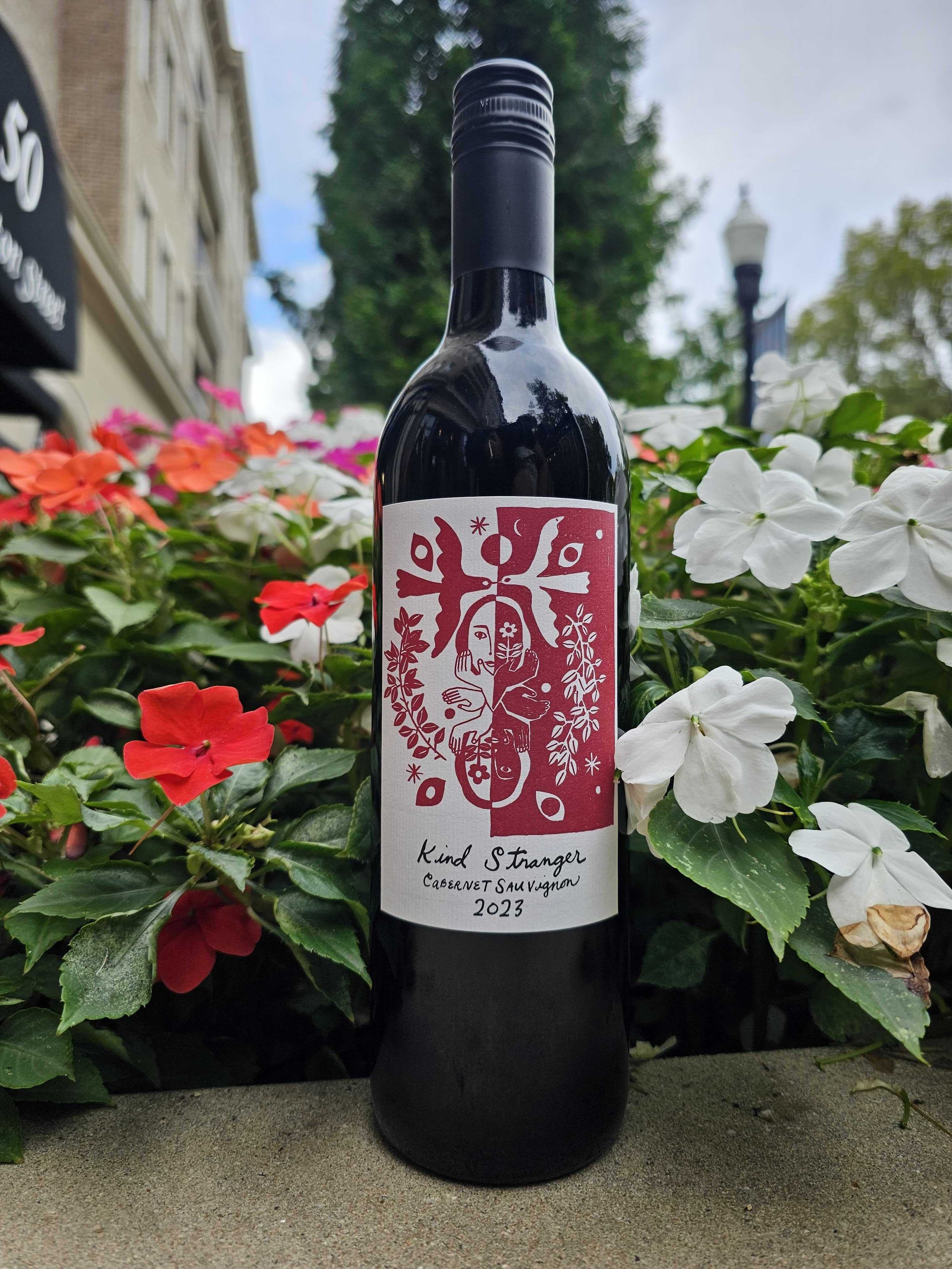
Latta Wines ‘Kind Stranger‘
Grapes Cabernet Sauvignon, Malbec
Place Seattle, Washington
Process Washington Cabernet vines grown in basalt derived gravel on the long rise of Royal Slope give excellent depth, intense fruit and ample structure from this awesome site. Weinbau’s 30 year old Malbec vines pile on the concentration and spice notes. This stunner was fermented whole berry with indigenous yeasts, then macerated an average of 28 days between the lots. Basket pressed to barrel for 15 months, 15% new french oak barrels.
Family Latta Wines was founded in 2011 by winemaker and owner Andrew Latta. Andrew came to wine through years of restaurant work, from bussing tables in his home state of Kentucky all the way to a Sommelier position in Thailand, directing one of the finest wine programs in the country. Those restaurant years still give tremendous context to the way our wines are made and presented. Leaving that world behind, Andrew dove head first into production in Walla Walla almost 20 years ago. A ten year odyssey from harvest hand to Winemaker at a notable Washington Winery set the stage for the launch of Latta Wines
Latta Wines puts uncommon varietals from the most unique vineyards in Washington State on center stage. Years of scouring the geologically diverse soils of Eastern Washington led to an initial release of two very special wines, then four and so on. The extremely small production, mostly Rhone offerings are put forward from sustainable vineyard sites after fermentation with native yeast and aging in mostly neutral french barrique and puncheon
Bottle: $25 | Glass: $11
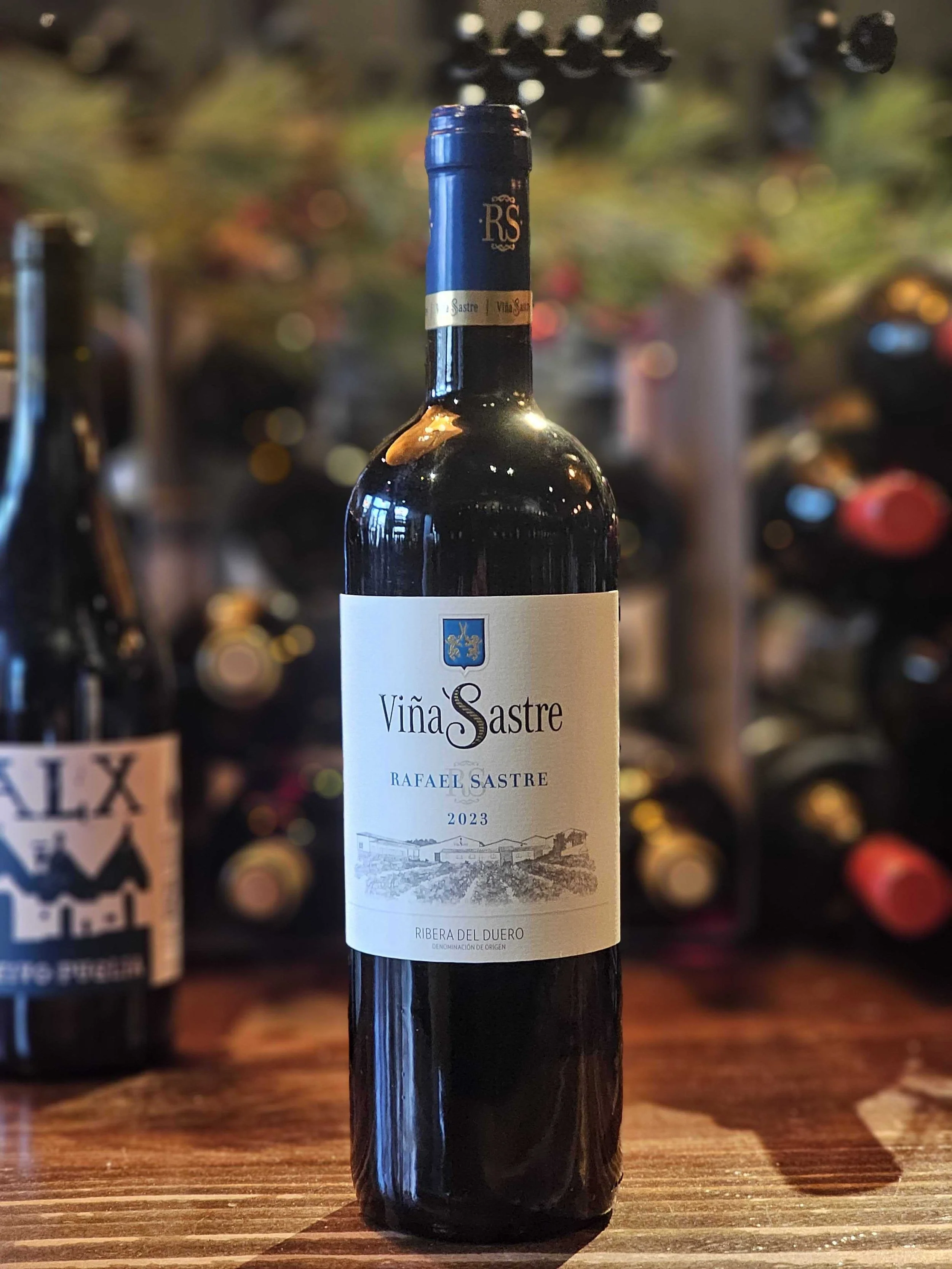
Viña Sastre Roble ‘Rafael Sastre’
Grapes 100% Tempranillo
Place Ribera del Duero, Spain
Process Following a manual harvest, the wine is fermented with native yeasts and undergoes a long maceration on the skins. The wines are cold stabilized naturally by moving the wine from the barrel room to separate tanks in a part of the winery whose temperature is naturally regulated by the outdoor winter temperatures. It’s then racked into one, two, and three-year-old French and American oak barrels and aged eight months before being bottled unfined and unfiltered.
Family Vina Sastre is an iconic, family-run winery located in the heart of the Ribera del Duero, near Burgos in the town of La Horra, which is one of the most respected villages in the D.O. The village of La Horra is famous for making the powerful, distinctively structured reds from old vine tempranillo, grown near the Duero River.
Jesús Sastre is the winemaker and vineyard manager whose intuitive philosophies and winemaking talents have been a driving force of the winery since 2002, following the passing of his brother Pedro. The Sastre family have been grape growers in La Horra at least since their great-grandfather’s days, giving Jesús an unparalleled knowledge of the vineyards in his region. Jesús’ grandfather, Severiano, was a founding member of the local Asunción cooperative, and his father, Rafael, started the Sastre winery in 1992 at the urging of sons Pedro and Jesus, making 1992 the first vintage of Viña Sastre.
The family-owned vineyards are mostly in the villages of La Horra and Roa, with the average vine age being more than 60 years, all trained in the traditional goblet method. Only vineyards planted prior to 1960 are considered old by the family and are destined for the single-vineyard wines. Although he does not identify himself with any particular dogma, Jesús Sastre is committed to organic farming and biodynamic agriculture principles and he has never used chemical fertilizers or pesticides in his vineyards in his 30 years at the winery. Sastre works in a naturally privileged area for organic farming, with Ribera del Duero’s low temperatures in the winter and at night, and characteristic high altitudes (around 800m) providing large temperature variations between day and night. Pruning is done in accordance with moon cycles as it has always been done in his area. He also rarely uses copper in the vineyard because it is not good for earthworms.
Bottle: $43 | Glass: $19