
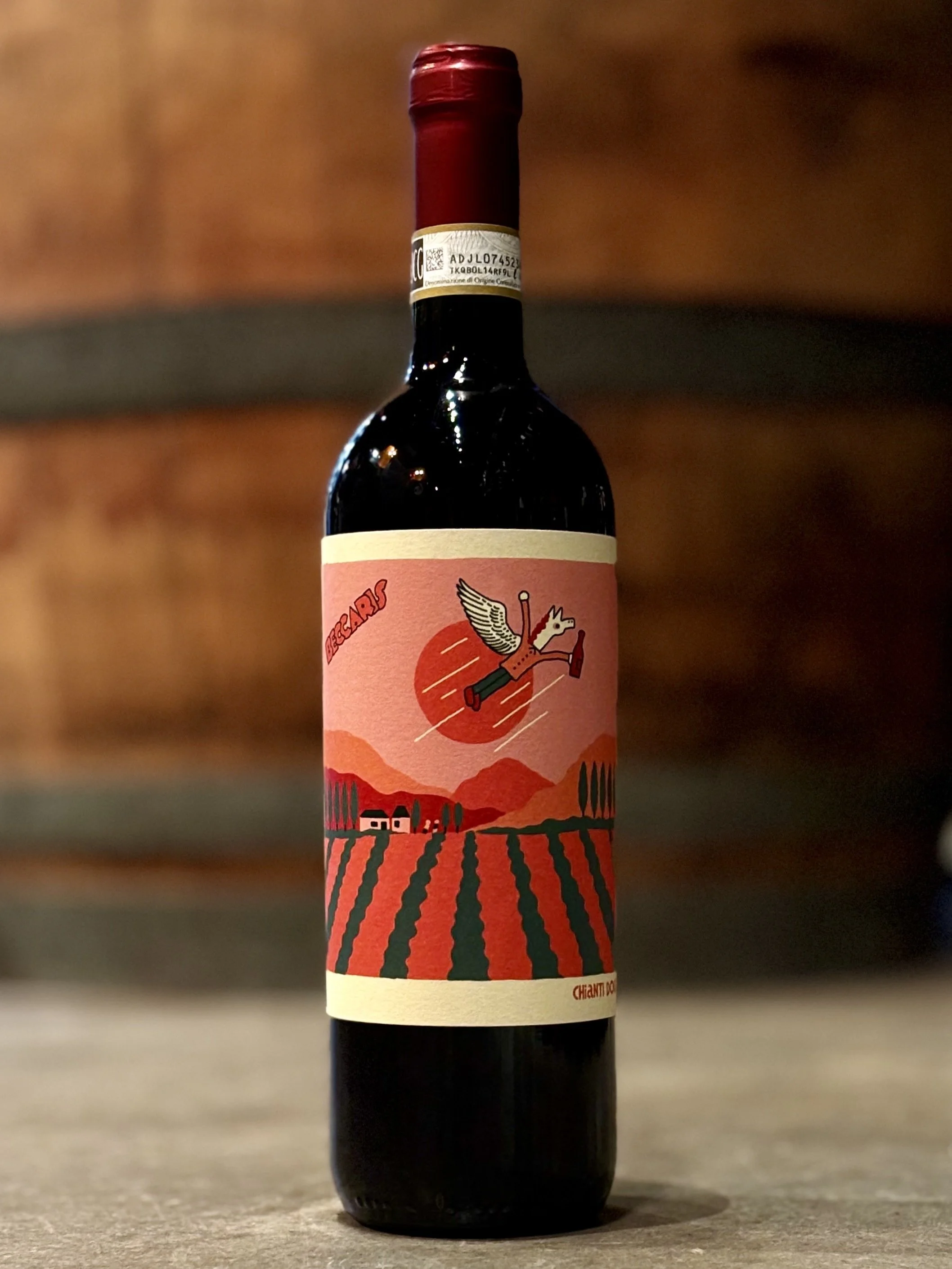
Beccaris Chianti
Grapes 100% Sangiovese
Place Chianti - Tuscany - Italy
Process Sustainably grown, dry farmed. Careful de-stemming and selection after a manual havest. Wild fermentation in stainless steel tanks.
Family Located between Siena and Arezzo, our vineyards lie mainly on gently rolling hills ranging in altitude between 900 and 1600 ft. The soils consist mainly of marine sediments, clay and silt. The climate is typically Mediterranean, with little rainfall in the summer months. We strive to keep tradition alive and promote ethics and sustainability in the vineyard, with parts of the vineyard already converted to organic production. Our goal is to produce excellent wines with an authentic heart.
Winemaker Lorenzo Landi was born and raised in Toscana and wine was always his passion. In 2004 he received the “ Vini di Toscana” award from the Tuscany Region and in 2017 he was chosen Winemaker of the year by La Guida Essenziale ai Vini d’ Italia. The emblem of Beccaris is a rampant Pegasus – an ancient mythological symbol which evokes the long history of our region.
Bottle: $21 | Glass: $9
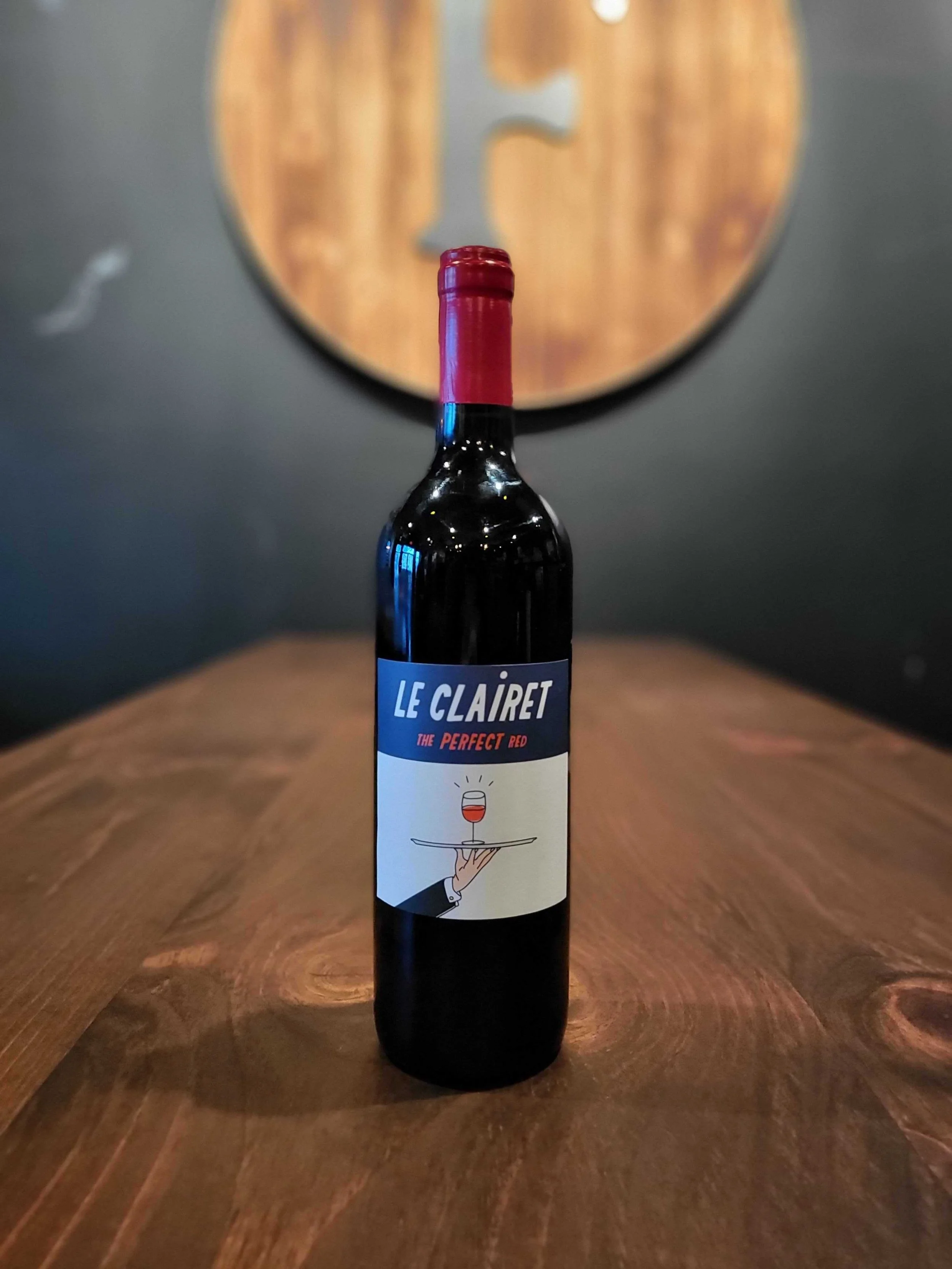
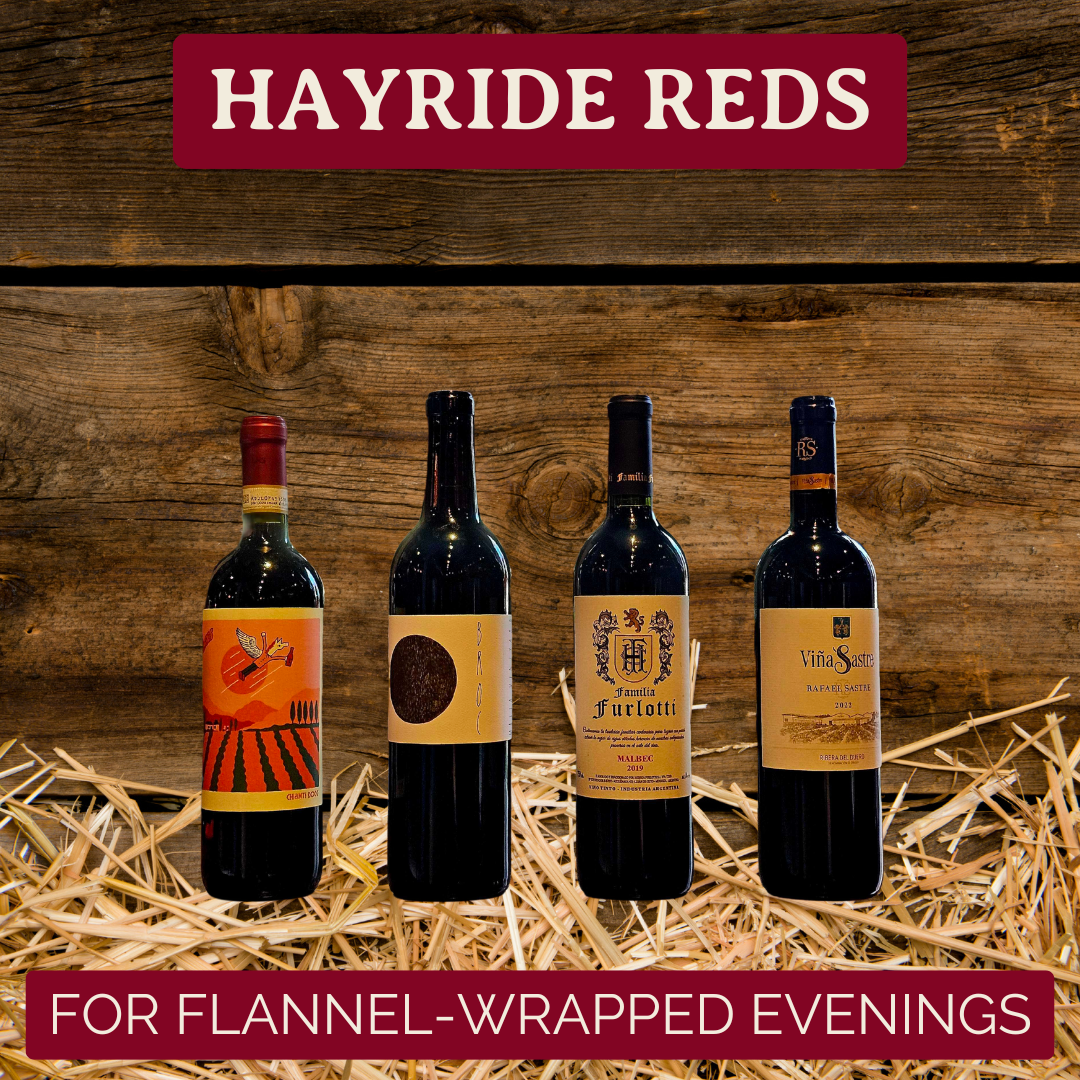
Broc Cellars ‘Le Clairet’
Grapes 75% Cabernet Sauvignon 25% Cabernet Franc
Place California
Process This Cabernet Sauvignon is a fresher style than other Cab representations. We harvest the grapes at lower brix compared to neighboring Napa Valley to help highlight the style we prefer and keep it fairly simple in the cellar. This vintage is a blend of Cabernet Sauvignon and Cabernet Franc, a combination that provides a delicious balance of dark fruits and soft tannins. Most of the Cabernet Sauvignon grapes were destemmed with the remaining grapes left whole cluster. We fermented with native yeast and pressed early to lessen the amount of tannins in the wine.
Family Broc Cellars is a Berkeley-based winery that makes refreshing and approachable wines for everyday drinking. Established in 2002 by owner and winemaker Chris Brockway, we use native fermentations and organically-grown grapes. Broc wines are made with the intention to lift you up, never weigh you down.
Chris Brockway’s winemaking journey began with California Zinfandel. The spicy, brambly fruit style drew him from his hometown of Omaha, Nebraska all the way to California. What he found, however, was that California wines had changed to fit the “bigger is better”mold of the time. Personally, he felt it was all too much – high alcohol, too big, too much everything.
Chris believed California wine could be different. From a single barrel in 2002 to now over 20 different wine releases a year, Broc Cellars makes fresh California wines to enjoy and for your table. In 2023, we extended our vision of simple and ethical winemaking into the vineyard as new owners of Fox Hill Vineyard.
Bottle: $39 | Glass: $12
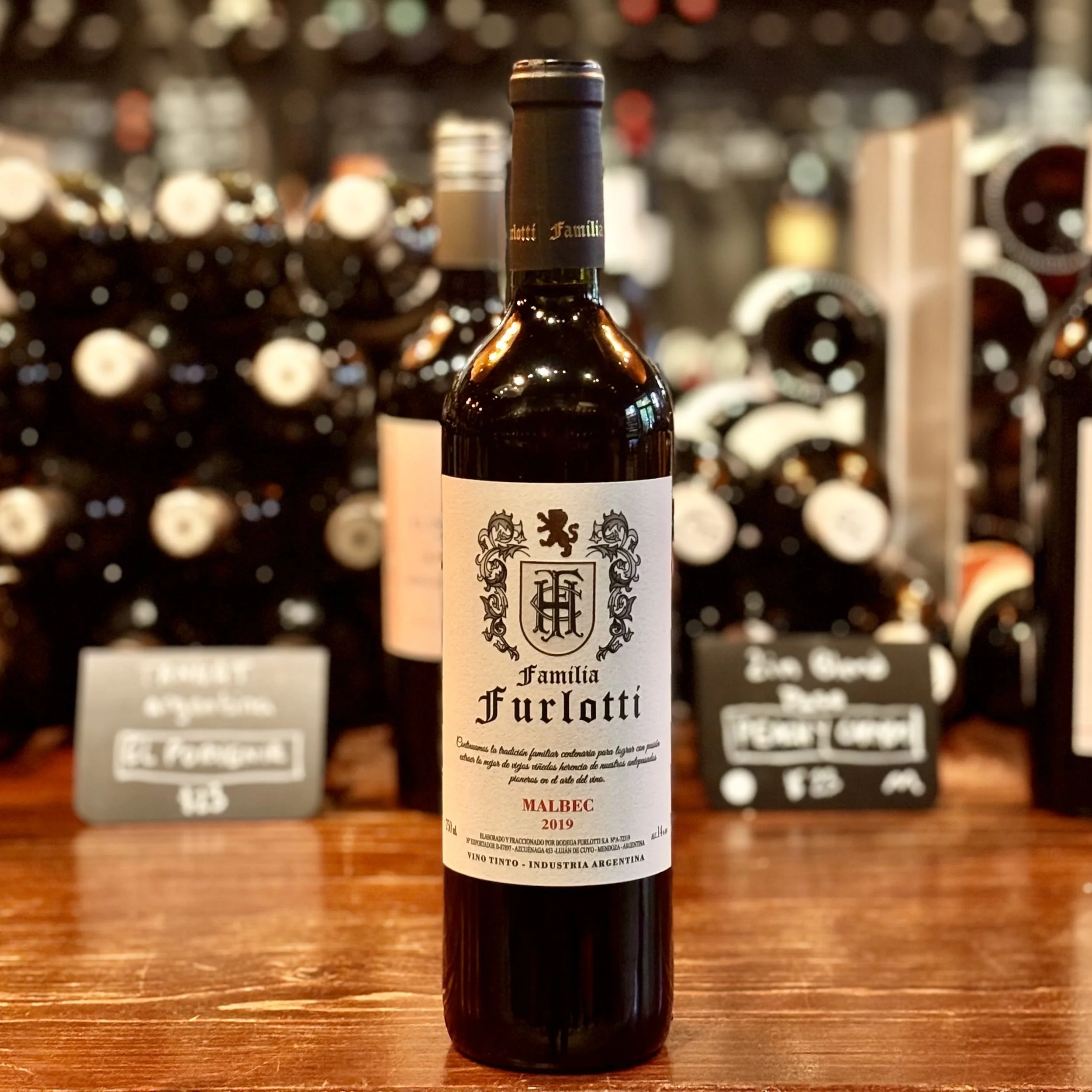
Familia Furlotti
Grapes 100% Malbec
Place Lunlunta - Mendoza - Argentina
Process This sustainably farmed, single vineyard estate wine is composed of 100% hand harvested Malbec from the Lunlunta of Mendoza.
Native yeast fermentation. 30% of the wine is aged in neutral French oak and then 12 months in bottle. 3600 Cases Produced.
Family The estate goes back three generations within the Furlotti family when they planted 0.85 hectares of primarily Malbec in 1916. Gabriela Furlotti built an eleven room boutique hotel in 2000 on the property surrounding the vineyard. The estate only makes two wines and they are both incredible. Familia Furlotti is one and Finca Aldegeisa is the other.
Bottle $27 | Glass: $17
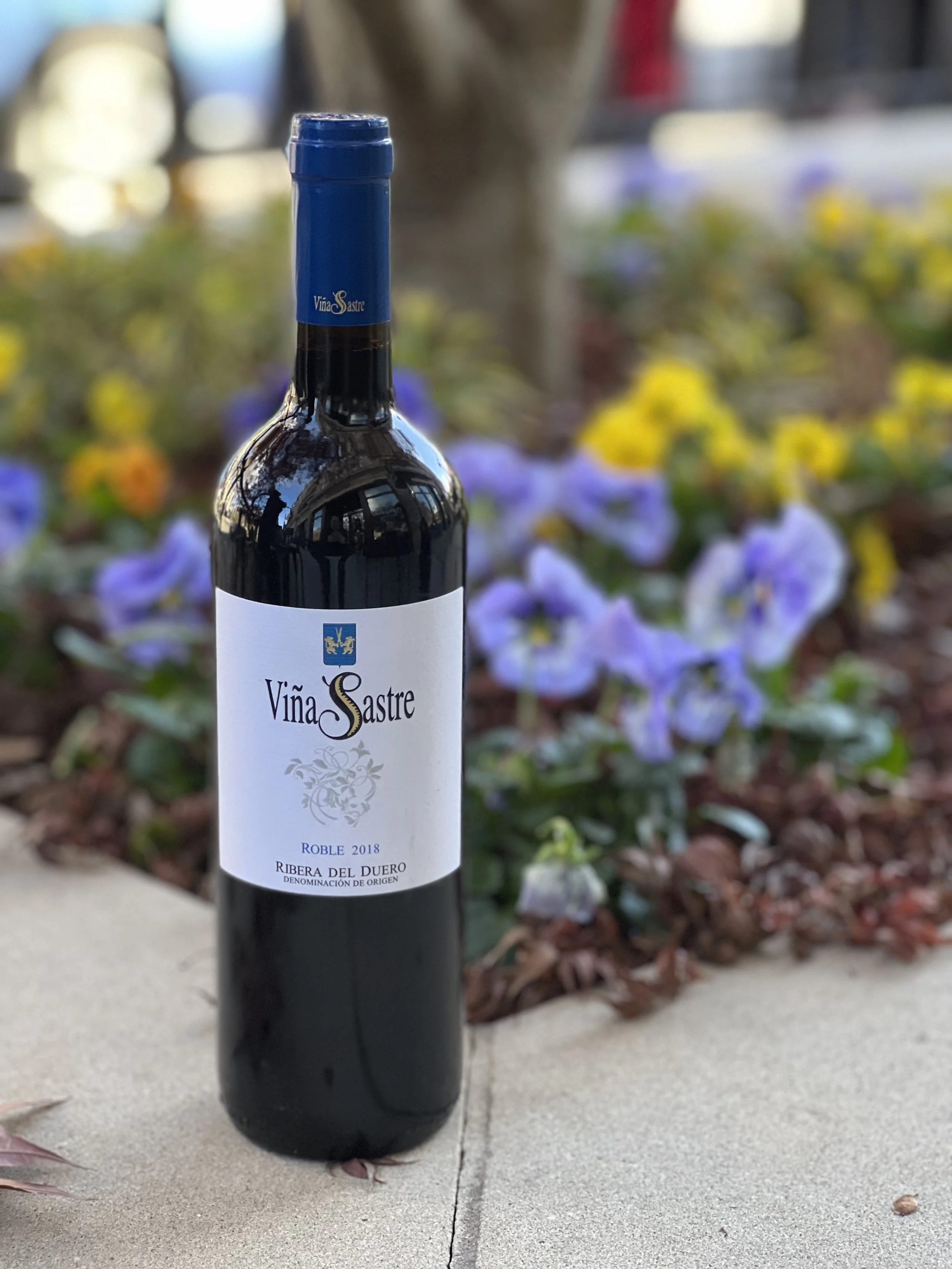
Viña Sastre
Grapes 100% Tempranillo
Place Ribera Del Duero - Spain
Process Viña Sastre’s Roble is an homage to Jesús Sastre’s late, beloved father and winemaking mentor, Rafael. As the entry into Sastre’s hand-crafted, world-class range of wines from his native Ribera del Duero, this is a wine for the people that showcases the winery’s famously high standards. Roble is made from organically-farmed tempranillo grapes from estate vineyards in La Horra, La Aguilera, and Roa from 800m to 840m in elevation. Grapes are hand-harvested into boxes with a selection in the field, followed by a very critical sorting in the winery—only the best grapes go into Viña Sastre. Jesús’s wines are always spontaneously fermented with native yeasts from the vineyard and never fined or filtered. This process is all a part of Jesús’s vision for making wine the most natural, or ancestral, way possible.
Vinification – Following a manual harvest, the wine is fermented with native yeasts and undergoes a long maceration on the skins. The wines are cold stabilized naturally by moving the wine from the barrel room to separate tanks in a part of the winery whose temperature is naturally regulated by the outdoor winter temperatures. It’s then racked into one, two, and three-year-old French and American oak barrels and aged eight months before being bottled unfined and unfiltered.
Family Viña Sastre is an iconic, family-run winery located in the heart of the Ribera del Duero, near Burgos in the town of La Horra, which is one of the most respected villages in the D.O. The village of La Horra is famous for making the powerful, distinctively structured reds from old vine tempranillo, grown near the Duero river.
Jesús Sastre is the winemaker and vineyard manager whose intuitive philosophies and winemaking talents have been a driving force of the winery since 2002, following the passing of his brother Pedro. The Sastre family have been grape growers in La Horra at least since their great-grandfather’s days, giving Jesús an unparalleled knowledge of the vineyards in his region. Jesús’ grandfather, Severiano, was a founding member of the local Asunción cooperative, and his father, Rafael, started the Sastre winery in 1992 at the urging of sons Pedro and Jesus, making 1992 the first vintage of Viña Sastre.
The family-owned vineyards are mostly in the villages of La Horra and Roa, with the average vine age being more than 60 years, all trained in the traditional goblet method. Only vineyards planted prior to 1960 are considered old by the family and are destined for the single-vineyard wines. Although he does not identify himself with any particular dogma, Jesús Sastre is committed to organic farming and biodynamic agriculture principles and he has never used chemical fertilizers or pesticides in his vineyards in his 30 years at the winery. Sastre works in a naturally privileged area for organic farming, with Ribera del Duero’s low temperatures in the winter and at night, and characteristic high altitudes (around 800m) providing large temperature variations between day and night. Pruning is done in accordance with moon cycles as it has always been done in his area. He also rarely uses copper in the vineyard because it is not good for earthworms.
Bottle: $31 | Glass: $14