
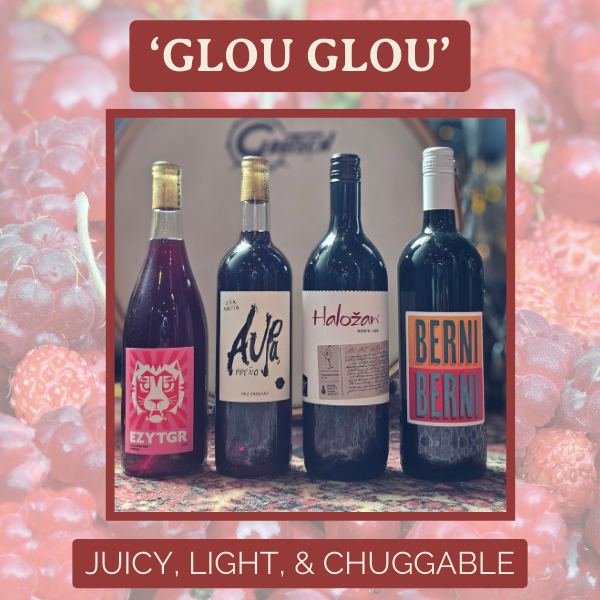
Glou Glou, a phrase used for easy-drinking, delicious and young wines. It is a term now used throughout the entire world of wine. Come enjoy these delicious and gulpable wines!
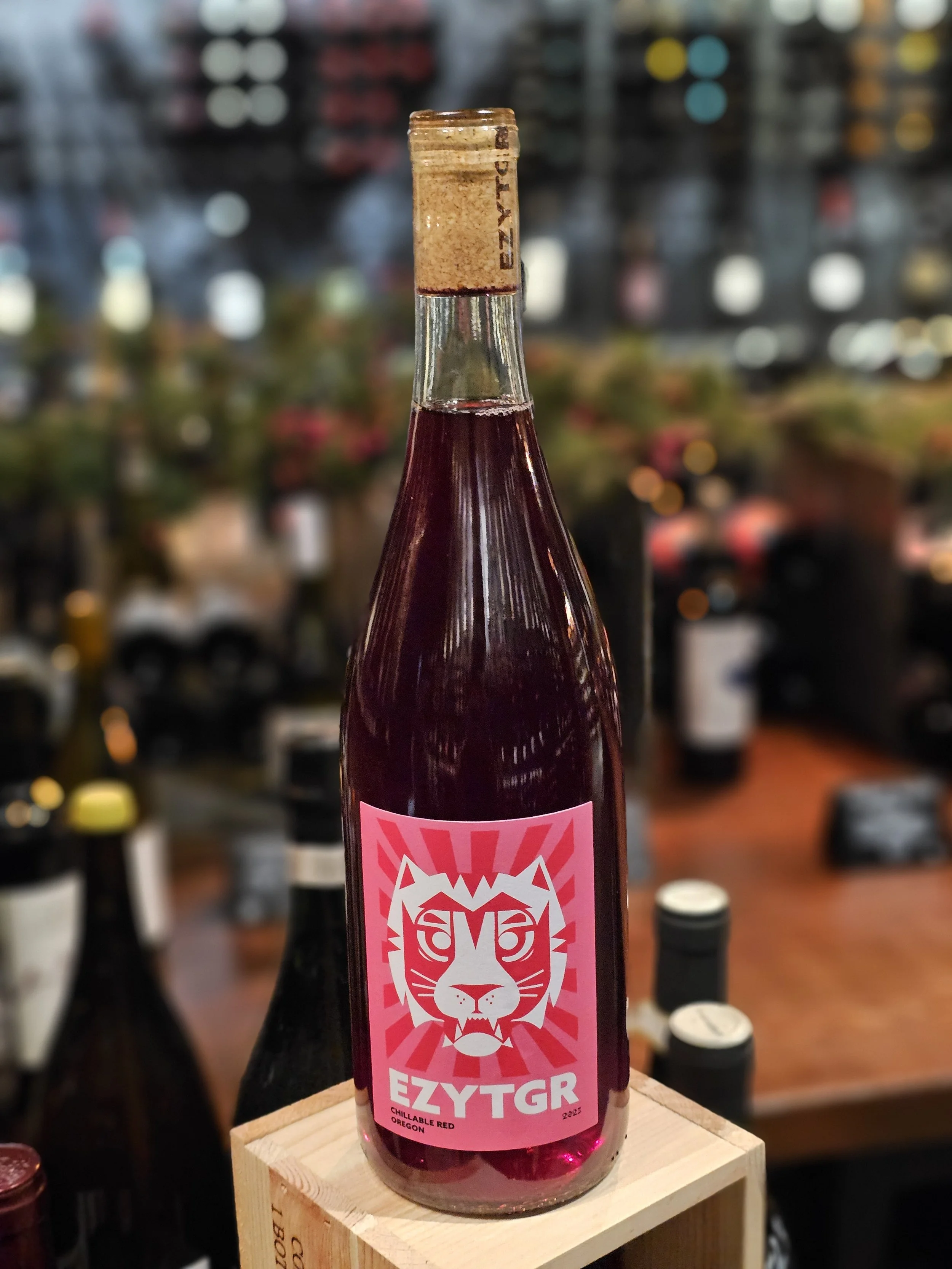
Ovum ‘EZYTGR‘ Chillable Red
Grapes: 50% Early Muscat, 50% Blend of Syrah, Cab Sauv, Pinot Noir, and Mencia (varies by vintage)
Place: Columbia Gorge & Willamette Valley, Oregon
Process: The Cabernet Sauvignon is sourced from a certified organic vineyard in the Columbia Gorge AVA. The others are sourced from vineyards in the heart of the Willamette Valley. Spontaneous fermentation in stainless steel. Aging happens in a combination of stainless steel and neutral oak. Bottled without fining or filtering.
Family: Ovum Wines was founded by John House and Ksenija Kostic House, a husband-and-wife winemaking team with deep roots in Oregon’s modern wine scene. Both founders built their reputations through hands-on vineyard work and cellar experience, developing a shared focus on balance, texture, and site expression. Their work spans both serious, age-worthy wines and more relaxed, everyday bottlings designed to broaden how wine fits into daily life.
Ovum Wines was created to explore Oregon fruit through a flexible, expressive lens, emphasizing freshness, texture, and energy over rigid varietal or appellation rules. Native fermentations, organic vineyard sourcing, and minimal manipulation are paired with a practical understanding of how people actually drink wine. The goal is wines that feel alive, versatile, and social.
Bottle: $31 | Glass: $14
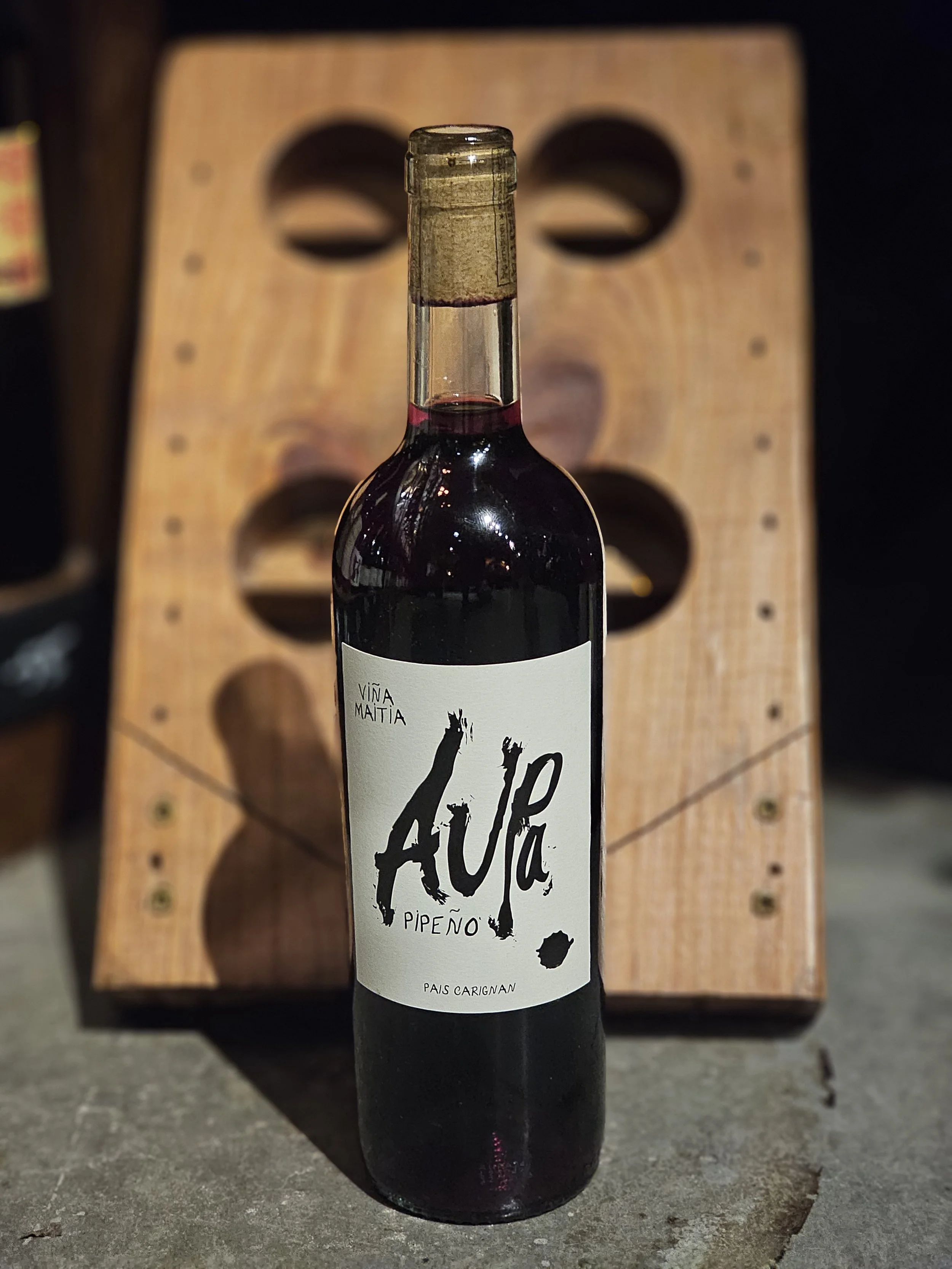
Vina Maitia
‘Aupa Pipeño‘
Grapes: 80% Pais, 20% Carignan
Place: Maule Valley, Chile
Process: This wine is made in an old style called pipeño which dates back to at least the 16th century. The grapes, sitting at an altitude of 390ft were originally planted in 1895. The vineyard practices sustainable and dry farming. This wine has a short maceration of only 5 days, uses native yeasts for fermentation and spends 5 months in cement vats afterwards.
Family: David Marcel arrived to Chile fresh off the boat from France as a twenty-two year old winemaker hungry for new terroir. After graduating with a wine degree from Montplelier, David worked for large wineries producing significant quantities of wine while simultaneously falling in love with his Chileño bride. David eventually decided to make his home in Chile, and two decades later, began producing wines primarily composed of Pais and Carignan from some of Chile’s most prized heritage old vines. David is a force and one of the most generous humans we have ever encountered. He is not only a strong voice for Viña Maitia, but he is also a tireless advocate for the artisan winemakers of Chile and continues to lead a path for his contemporaries, typically putting himself after others. David’s wines are typically understated, extremely drinkable wines of great value.
Bottle: $23 | Glass: $10
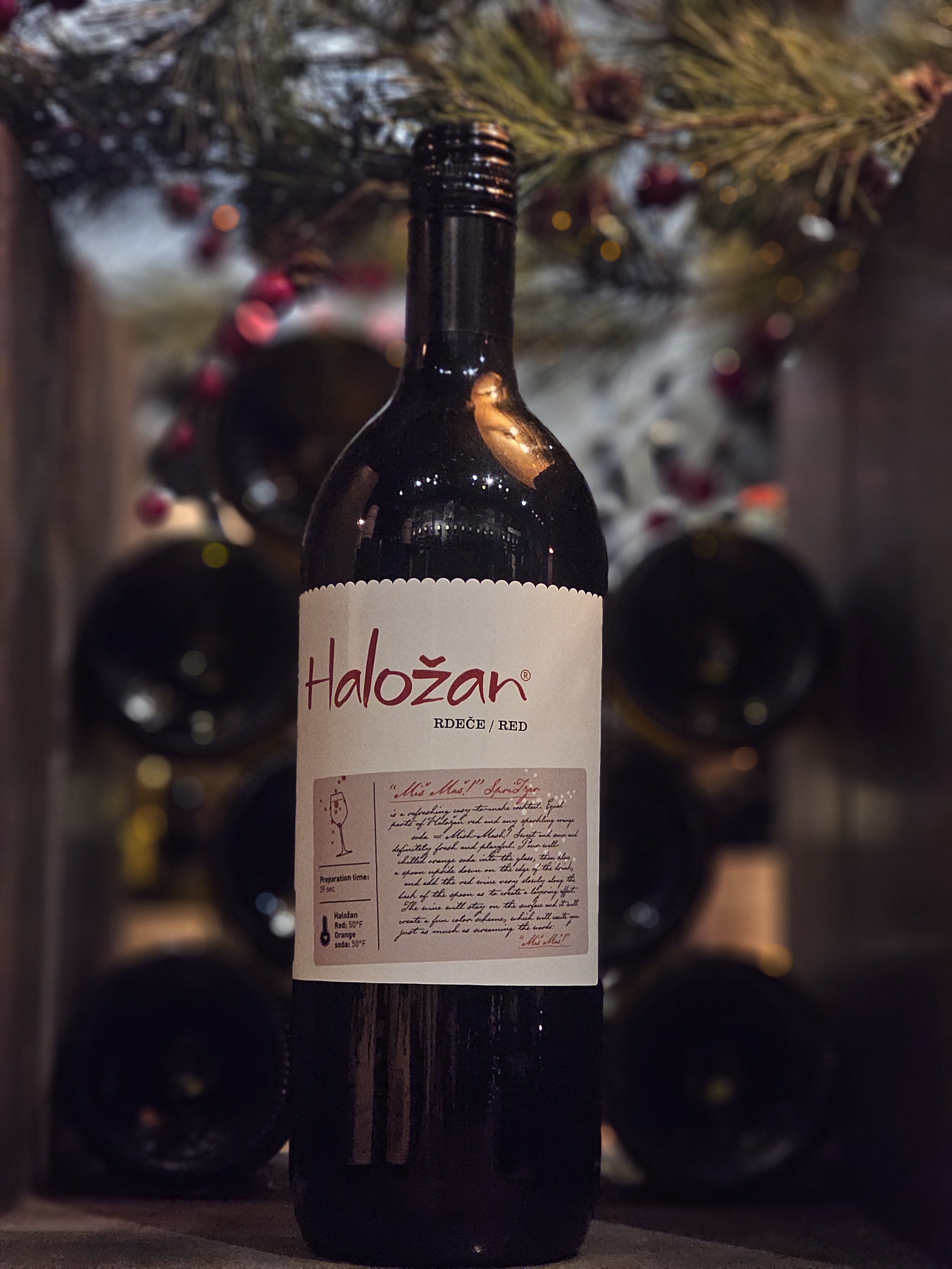
Pullus ‘Halozan‘ Red
Grapes: Blaufränkisch, Gamay, and Zweigelt
Place: Štajerska, Slovenia
Process: Made from perfectly ripe grapes that were picked by hand three times over the span of September. All varieties were picked and fermented separately. Controlled cold fermentation with 2-3 weeks of skin maceration, and undergoing full malolactic fermentation. Blended, coarsely fined and filtered before bottling.
Family: Beneath the medieval streets of Ptuj, Slovenia’s oldest town, lie the vaulted cellars first carved in 1239 by Minorite monks, where wine has quietly matured for over eight centuries in the shadow of the famed Haloze Hills.
Across the centuries, these subterranean tunnels expanded, evolving from monastic cellar to communal stronghold of local winemaking. Under Yugoslavia, Ptujska Klet became a state-owned cooperative, but after Slovenia gained independence, the facility was acquired by a large agricultural company (Perutnina Ptuj), which transitioned it into the modern winery known today. A sweeping renovation followed—modernizing production while preserving irreplaceable historical elements such as old barrels, archival tanks, and deep library stocks. Today, the cellars hold one of Central Europe’s most significant wine archives, including Zlata trta (1917), the oldest Slovenian wine preserved to this day. As a testament to their archives aging quality, in 2023 Falstaff tasted and reviewed some of their 100-year-old bottles, including their Muskatni Silvanec 1921, receiving a perfect score, hailing the wine as “a truly exceptional wine”.
A new chapter began in 2021 when three employees and close friends—Tine Kek, Maks Kadivec (Head Winemaker), and the late visionary Vinko Mandl — purchased the company and brought Ptujska Klet back into the hands of three local families with a shared commitment to authenticity, regional pride, and quality.
Since returning to local family ownership in 2021, Ptujska Klet has undergone strategic modernization, including upgrading key winery systems and introducing new technologies aimed at elevating quality and efficiency. The largest and most impactful investment was the complete renovation of the grape receiving area of the cellar, along with all three large presses. This modernization has led to a direct and measurable improvement in the quality of all wines produced at the winery, while at the same time, additional upgrades enabled them to reduce their carbon footprint by 76%, further reinforcing their long-term commitment to sustainability alongside quality production.
Bottle: $25 | Glass: $11
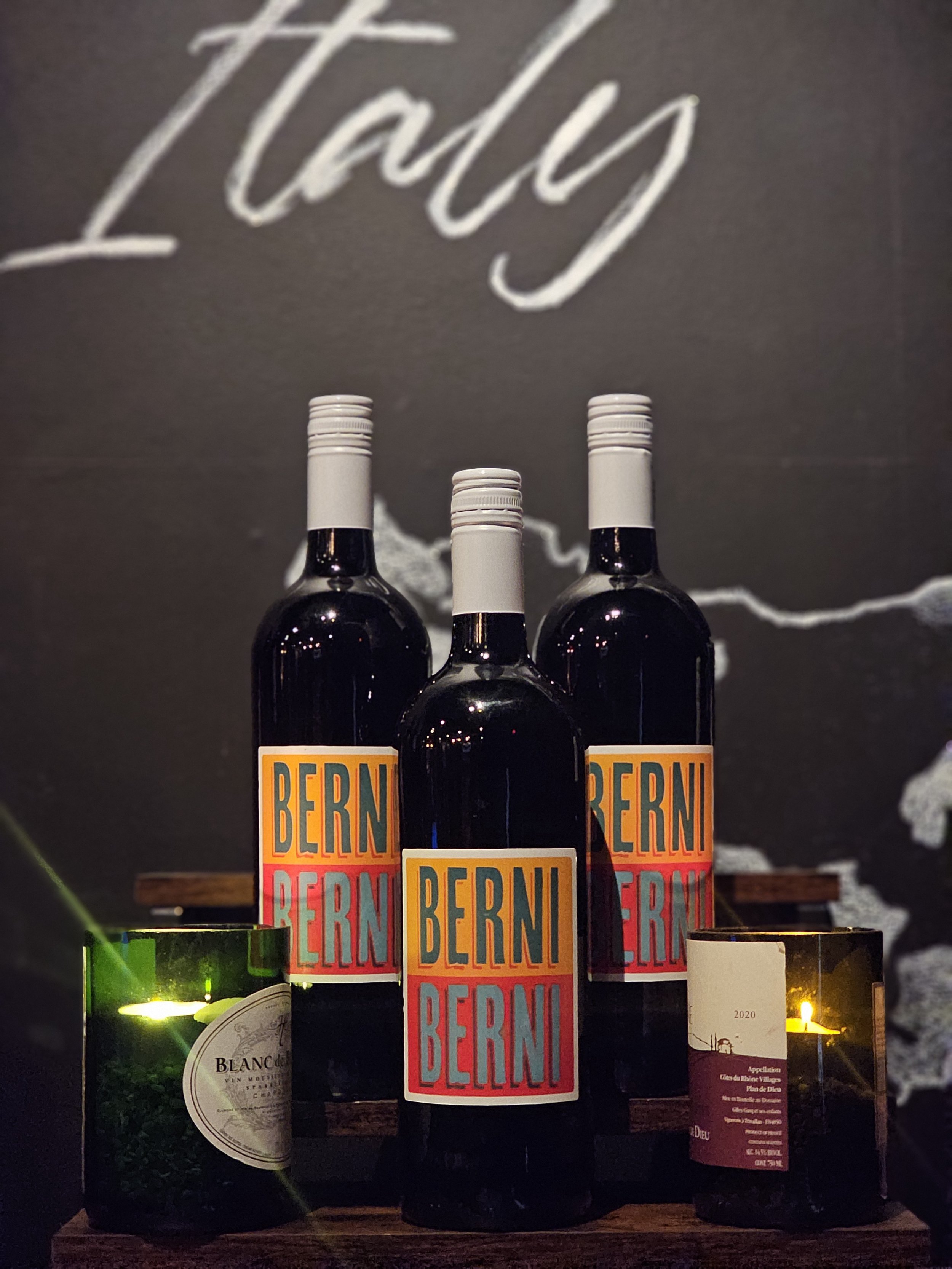
Azienda Loghi ‘Berni Berni‘
Grapes: 100% Sangiovese
Place: Tuscany, Italy
Process: Hand harvested grapes in late September. Spontaneous fermentation with native yeasts in stainless steel tanks. Aged for 4 months in, stainless steel in order to maintain a clean, fresh flavor profile without imparting too much spice or tannin influence. Sulfite use kept to a minimum to fully showcase the grapes.
Family: Azienda Loghi is a small family farm located in the province of Siena, Tuscany, situated within the up-and-coming Orcia Valley D.O.C., as well as an area called Crete Senesi, which is famous for their white truffles. The farm is a remote 54 hectares of land where much of it is covered in natural forests, and 17 hectares are dedicated to what many connoisseurs prefer to, or at least say greatly rivals, the much more popular truffles of Alba. Here, Valentino Berni, who has had 2 other generations to learn from, collects these earthly gems, yet also has an exceptional passion and knack for making beautiful wines and olive oil from their 12 hectares of vineyards and 4 hectares of olive trees. 2 of those hectares of Sangiovese grow in Montalcino only 20km south of the farm, allowing Valentino to make the 2 famous wines of Montalcino (Brunello & Rosso). As to preserve the land for the health of all ‘crops’ that he harvests, Valentino’s farming practices on his sandy clay soils are strictly pristine and completely natural.
Bottle: $25 | Glass: $11