
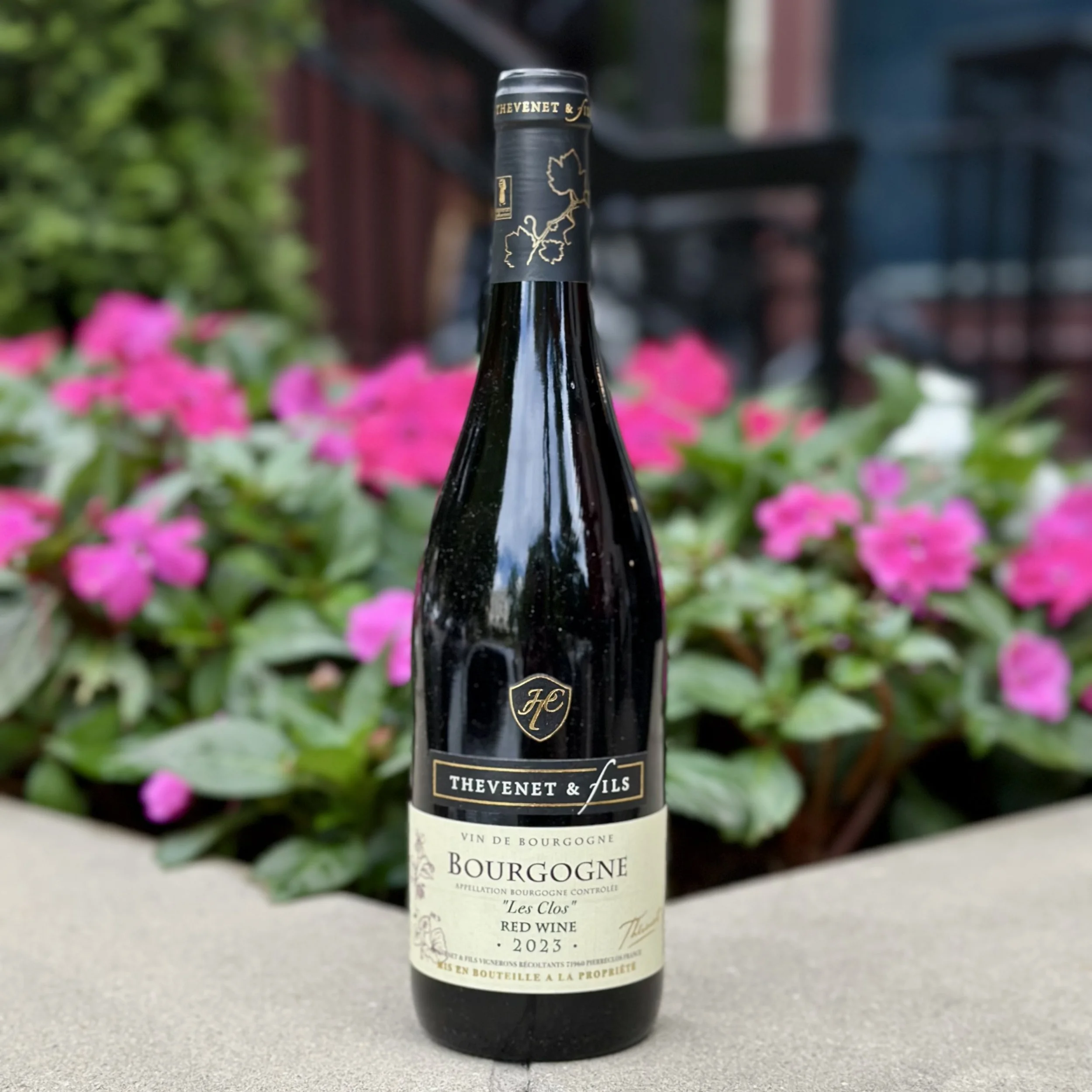
Thevenet & Fils ‘Les Clos’
Grapes: 100% Pinot Noir
Place: Burgundy, France
Process: The pinot noir for this wine is found in the village of Bussières and is sourced from the lieu-dit Les Clos. The vines are south-facing at 350 feet above sea level on gently sloping hills that are principally composed of clay. The fruit tends to ripen early due to its excellent exposure. Pigeage and remontage are practiced during fermentation. This wine is marked by notes of black, ripe berries, often a touch “sauvage”.
Family: Jean-Claude took responsibility for this family domaine in 1971 from his father, Raymond, when their holdings were a mere 3 hectares, Jean-Claude was in the process of building the domaine to its current size of 30 hectares with vineyards centered on their village of Pierreclos at the heart of the Maconnais. In addition to working their own vineyards, the Thévenet family, for three generations, has also conducted a successful nursery business producing fine quality grape vines for many family-owned domaines in Burgundy and also in the Champagne district.
Jean-Claude and his wife, Helene, and now his three sons (Benjamin, Jonathan and Aurélien), have performed at a remarkable, and consistently high, level these last 30 years - producing wines of honesty and purity and fine value. Jean-Claude passed away in 2008 at the too-young age of 54; but, we are comforted by the presence of his three talented and dedicated progeny, all functioning under the rigorous supervision of their mother, Helene.
The vineyard holdings now extend throughout Pierreclos and into the neighboring villages of Serrieres, Prissé, Bussieres and Milly-Lamartine. Chardonnay is the dominant grape and Gamay and Pinot Noir produce the red wines of the estate.
Bottle: $33 | Glass: $14
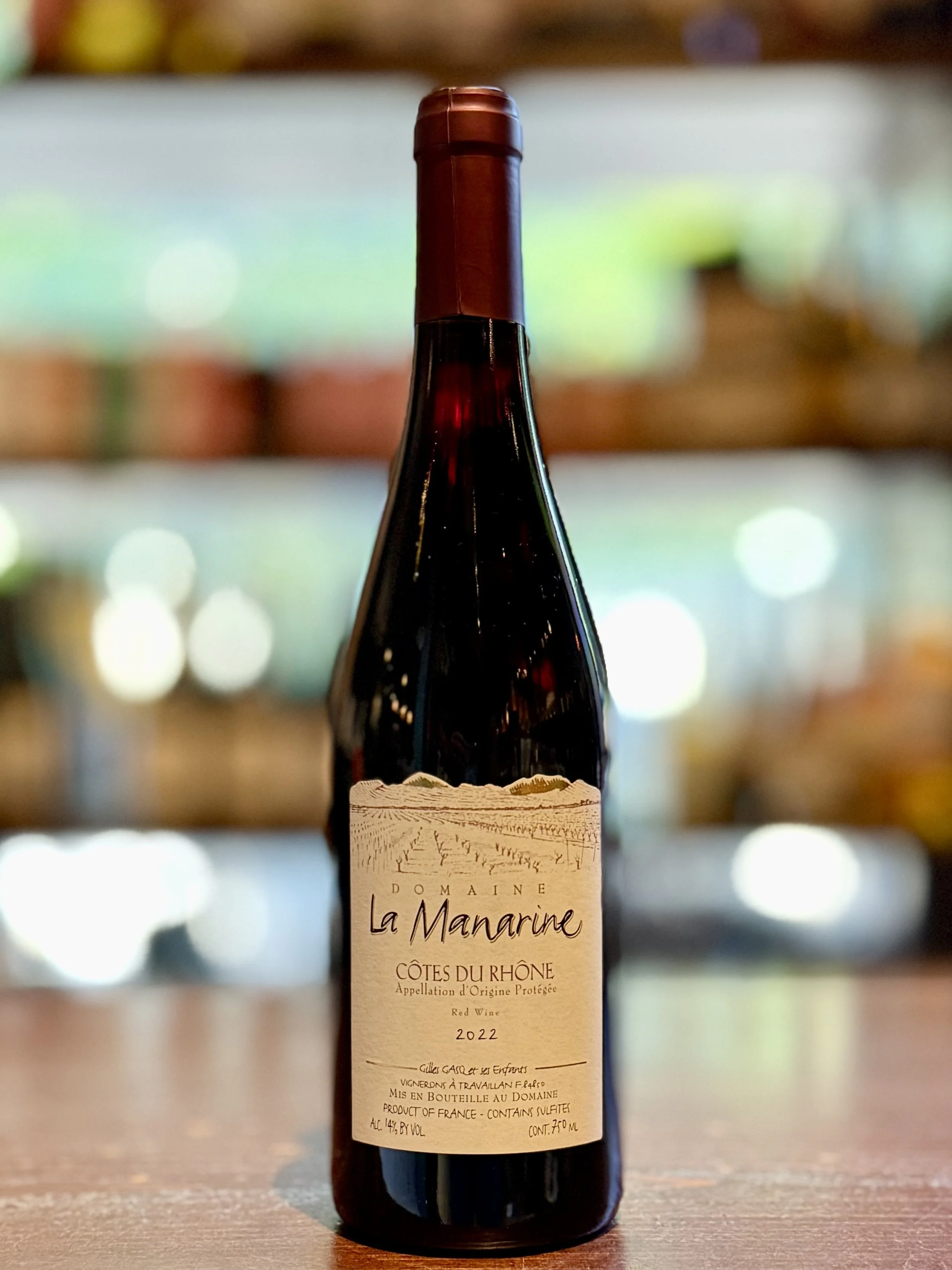
La Manarine
Grapes: Grenache, Syrah
Place: Rhone Valley, France
Process: Domaine La Manarine practices organic viticulture. Work in the cellar is minimal with little intervention. Fermentations are left to start with indigenous yeasts, with no fining and only a light filtration is utilized if needed.
Family: Domaine la Manarine was created by Gilles Gasq in April 2001. The winery and majority of his vineyards are located within the commune of Travaillan, on a splendid plateau northeast of Orange in the southern Rhone. Gilles is a talented vigneron who has honed his skills working as an assistant to Paul Jeune, the proprietor of Domaine Monpertuis in Chateauneuf-du-Pape.
Expanding his holdings each year, Domaine La Manarine now encompasses 33 hectares of vineyards situated largely on what is known as the “Le Plan de Dieu”. For generations, this specific terroir has been recognized as unique. Recent research has identified the particular character of the underlying soil: a deep layer consisting of more than 60% hard limestone “galets” (large smooth pebbles). The climate is typically Mediterranean: relatively hot and dry with an average rainfall of between 600 and 800 mm per year. The rains usually come in the form of thunderstorms in late August which provide the vines with the water necessary to finish the maturation process (which tends to shut down under stressful drought conditions). Grenache Noir is the main grape variety of the region. It performs particularly well on this type of soil and gives wines more elegance and aroma than is otherwise common. Gilles also has one hectare of Syrah vines which are used to supplement the Grenache in the “Les Terres Saintes” enabling it to bear the appellation: Cotes du Rhone Villages – Le Plan de Dieu.
Bottle: $25 | Glass: $12
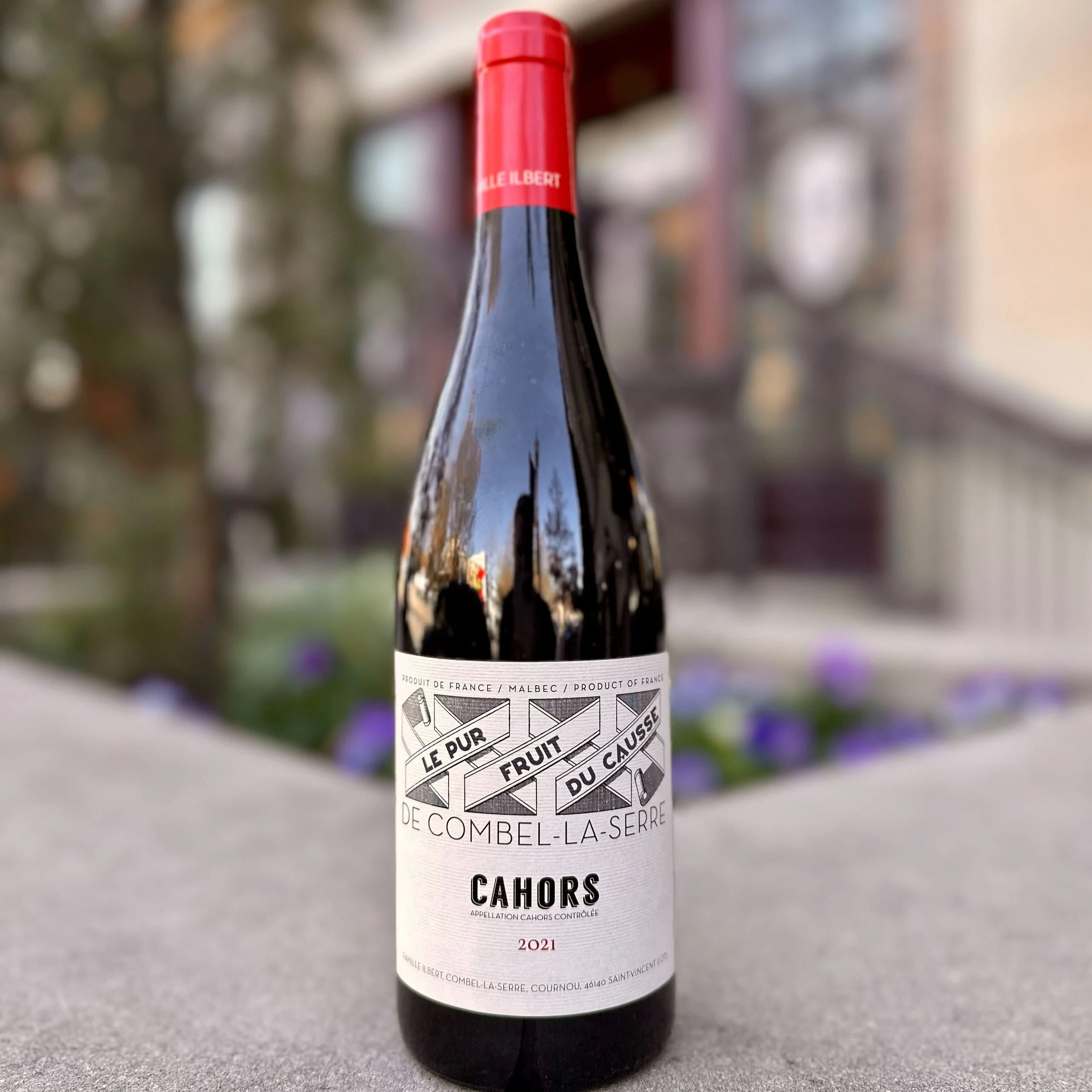
Grapes: 100% Auxerrois (Malbec)
Place: Cahors - France
Process: The fruit for the entry-level Pur comes from seven different Combel sites totalling 8.5 hectares around their home village of Cournou, which lies on the Causse Calcaire, a limestone plateau in Cahors at 320-350 meters in elevation. Planted on clay-limestone soils, the vines are certified-organic (in conversion to biodynamic farming), average 30 years old and are kept to a modest 40 hl/ha yield. The bunches are hand-harvested and mainly destemmed but with up to 20% directly pressed as whole clusters; the juice ferments at cool temperatures with indigenous yeasts in cement and steel tanks with around two week of maceration. The wine is aged on its lees in cement through the winter and bottled unfiltered in the spring. Sulfur throughout vinification and aging is minimal.
Family: Julien Ilbert is a young, charismatic vigneron with a fresh perspective on his native Cahors. Vines have been in the Ilbert family for generations, though grapes had always been sold to the local cave coopérative. In 1998, a chance meeting with Mathieu Cosse at a rugby match quickly led to a seven year relationship, with Julien being Mathieu's main source for high quality Auxerrois (aka Malbec, aka Côt).
After an amicable split in 2005, Julien was back on track to producing his own wines: Château Combel-la-Serre was born. 25 hectares of Auxerrois are planted on a diverse amount of terroirs, all within 5 kilometers of the cellar. Though a Cahors wine only needs to be 70% Auxerrois to get the appellation, Julien believes it is the only grape suitable for what he's trying to accomplish.
The estate is certified organic as of the 2015 vintage, but chemicals have not touched the vineyards for quite some time. Everything was conventionally farmed from the advent of such technology, but the death of Julien's grandfather from Parkinsons deeply affected the family's agricultural philosophy. Convinced that the chemicals he'd openly exposed himself day in and day out were at the root of his illness (on top of the vines, an additional 40 hectares of cereals were worked by the family at the time), the Ilbert stopped using these products on their land.
Bottle: $27 | Glass: $12
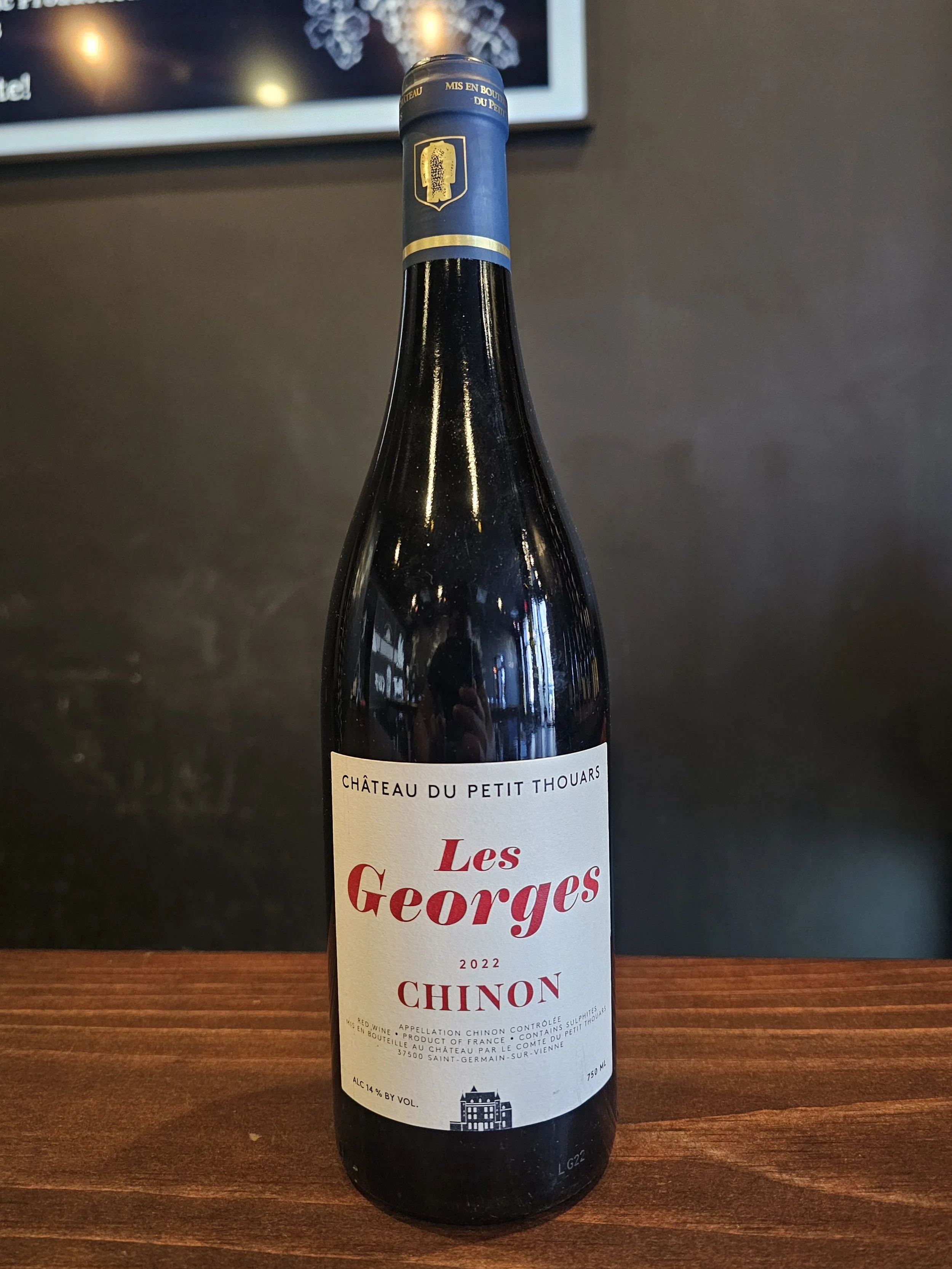
Chateau du Petit Thouars Les Georges
Grapes 100% Cabernet Franc
Place Chinon - Loire Valley - France
Process “Les Georges” is produced entirely from the free-run juice of the younger vines of Cabernet Franc, and is vinified and aged in steel tank. This cuvée comes primarily from “Les Plantes,” the thirteen hectares of Cabernet Franc immediately behind (to the west of) “Le Clos” which Sébastien’s father planted between 1978 and 1988.
Family The Chateau du Petit Thouars has an extraordinarily long and rich history. Built in the early 1500s as a sort of “low-key hunting lodge” (an amusing notion, given the house’s immensity and grandeur) for a wealthy family from the town of Thouars (hence the name “Petit Thouars”), the 150-hectare estate is run today by Sebastién du Petit Thouars, the twelfth generation to dwell here since his ancestor George purchased the property in 1636. George was a diplomat for the famous Cardinal Richelieu, and the generations who followed him managed to survive several centuries of remarkably turbulent French history; one of Sebastién’s forebears even fled the French Revolution and fought in the American Revolution. Sébastien named this cuvée in honor of his ancestors, nearly all of whom are named George (in fact, his real first name is George, too). The friendliest of the estate’s three red-wine offerings,
Bottle: $29 | Glass: $13