
Candy Company
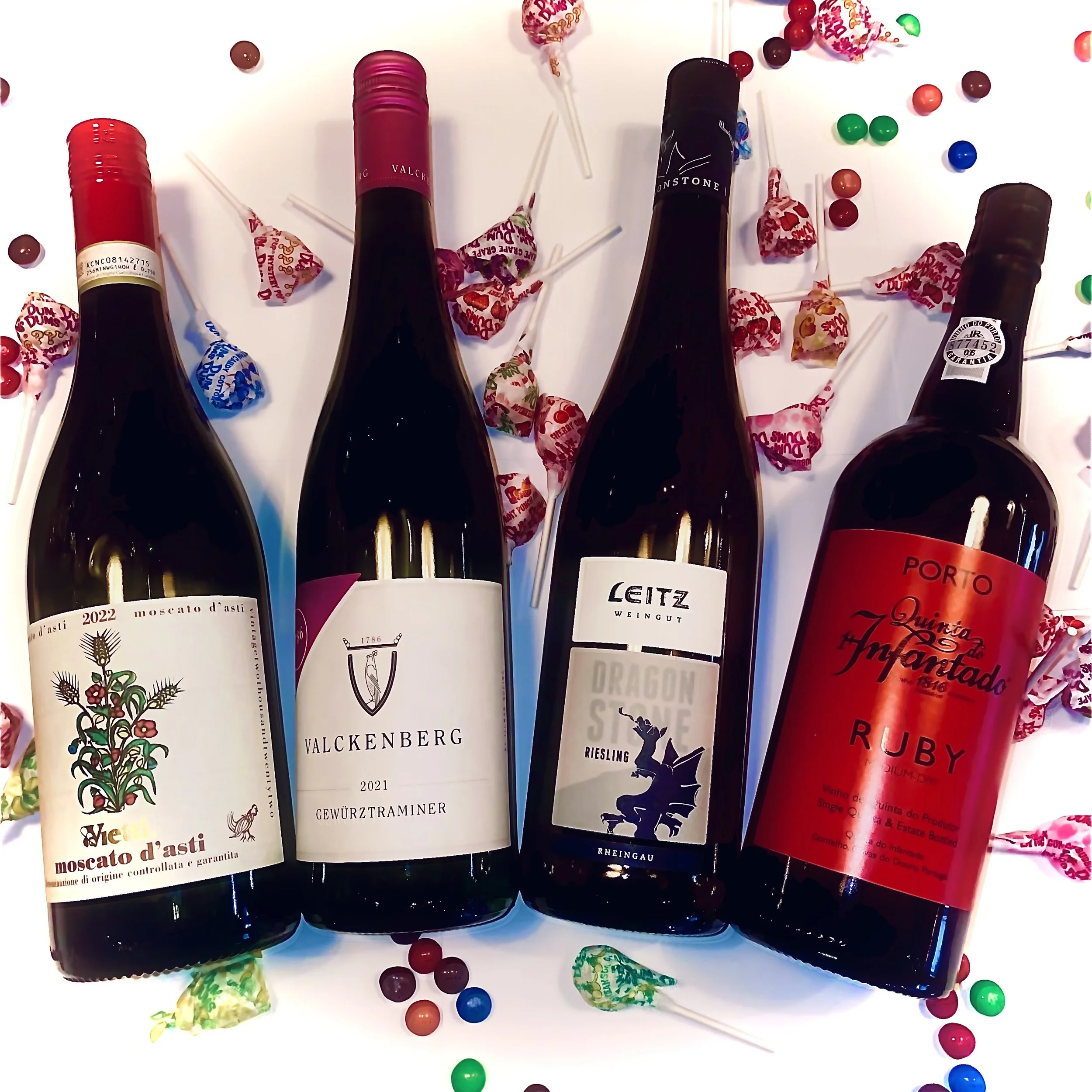
Got a sweet tooth when it comes to wine? We’ve got a few surprises for you! Four wines that are fruity, fun and all a bit on the sweet side.
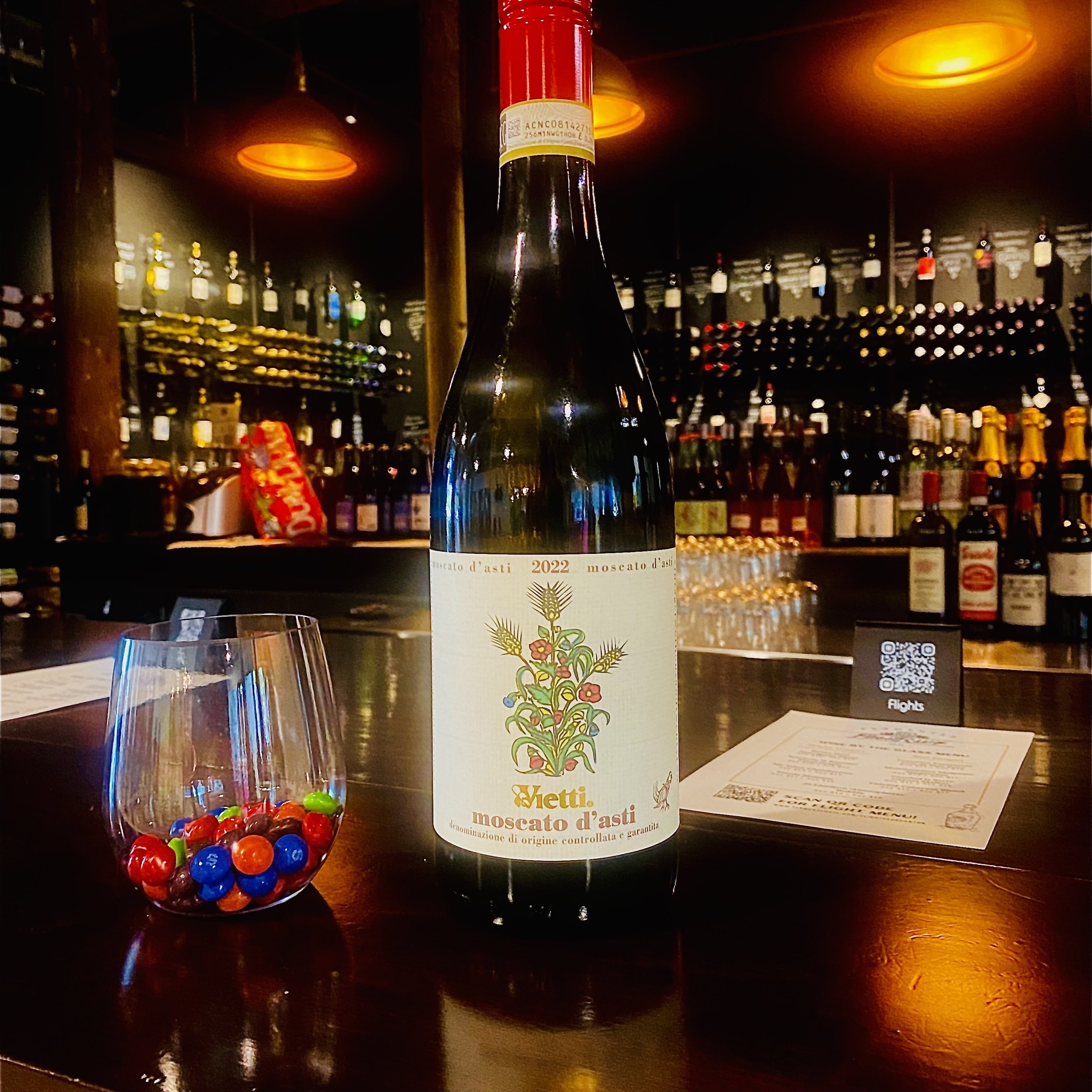
Vietti Moscato d’Asti
Grapes: 100% Moscato
Place: Piedmont, Italy
Process: Hand-picked in mid-September of 2021, the grapes were immediately crushed and pressed. Thereafter the must was naturally clarified by gravity. This still unfermented grape juice has been kept (without the addition of sulphites) in cold storage, at a very low temperature, in order to prevent an alcoholic fermentation. Over the year periodically small parcels of it have then been brought to alcoholic fermentation: for this the temperature was increased to 12°-14° C while yeast was added. This occurs in stainless steel pressure tanks to preserve natural CO2. Malolactic fermentation has been avoided in order to preserve the varietal fruit characteristics and freshness. The fermentation was interrupted at an alcohol level of about 5,5%, by lowering the temperature again and filtration. At this stage this partially fermented wine was bottled.
Family: Almost 150 years have passed since its foundation. It was the end of 1800 when Carlo Vietti started the Vietti winery, right in the heart of the Langhe, on the highest point of the medieval village of Castiglione Falletto. In the very same place where it is located today. The grapes for the production of this wine are grown in selected vineyard parcels located in and around the village of Castiglione Tinella. The soil here is made of calcareous marl. The grapevines are planted, at a density of 4,500 vines per hectare, using the Guyot trellis system. The have an average age of almost 40 years.
Bottle: $21 | Glass: $9
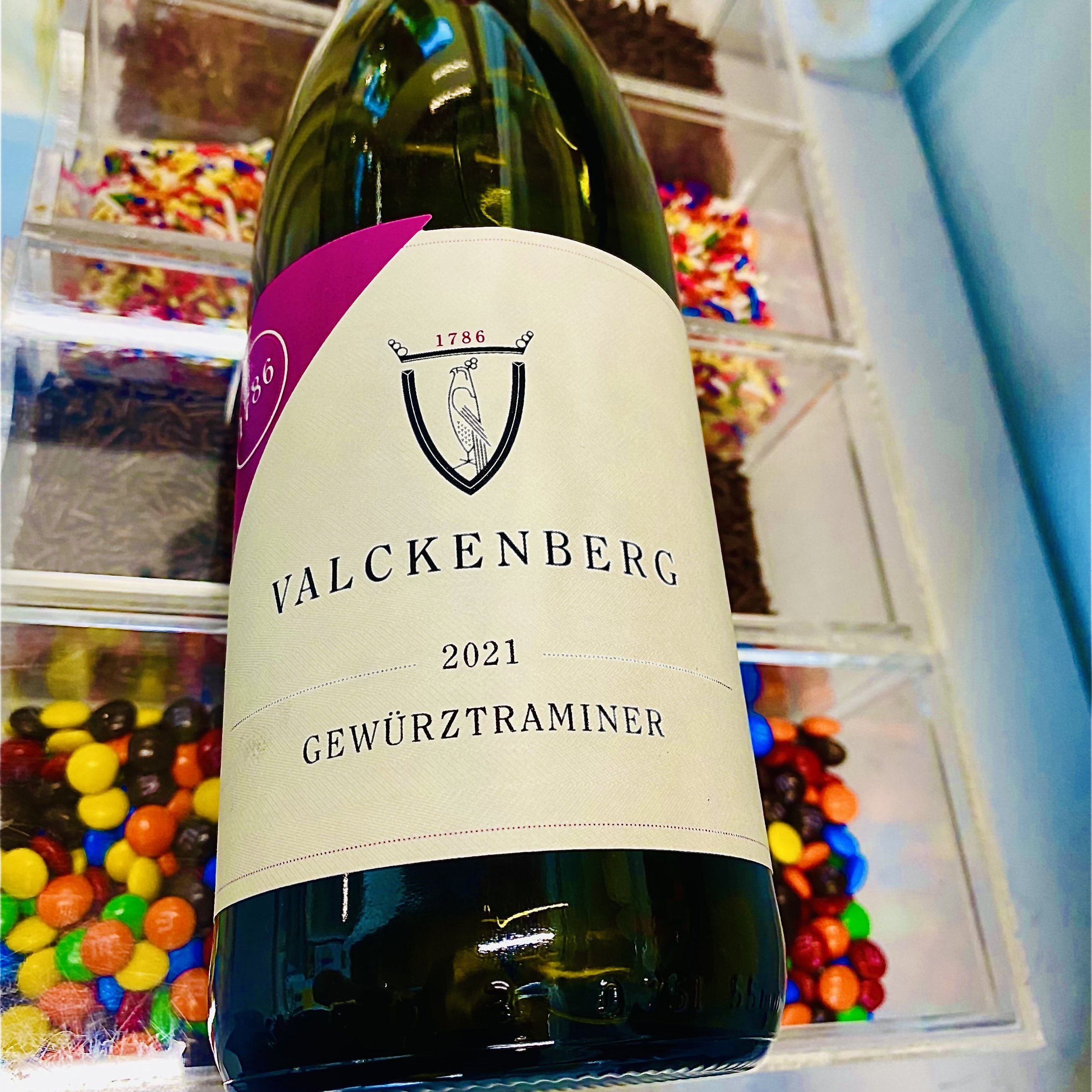
Valckenberg Gewurztraminer
Grapes: 100% Gewurztraminer
Place: Pfalz, Germany
Process: Grapes harvested fully ripe and aromatic. Destemmed and immediately pressed at low pressure. Fermentation with native yeast and gentle, reductive vinification.
Family: For over 230 years P.J. Valckenberg has discovered extraordinary German Estates and act as an ambassador of their wines. The Valckenberg Varietals represent authentic and typical German wines.
Bottle: $23| Glass: $10
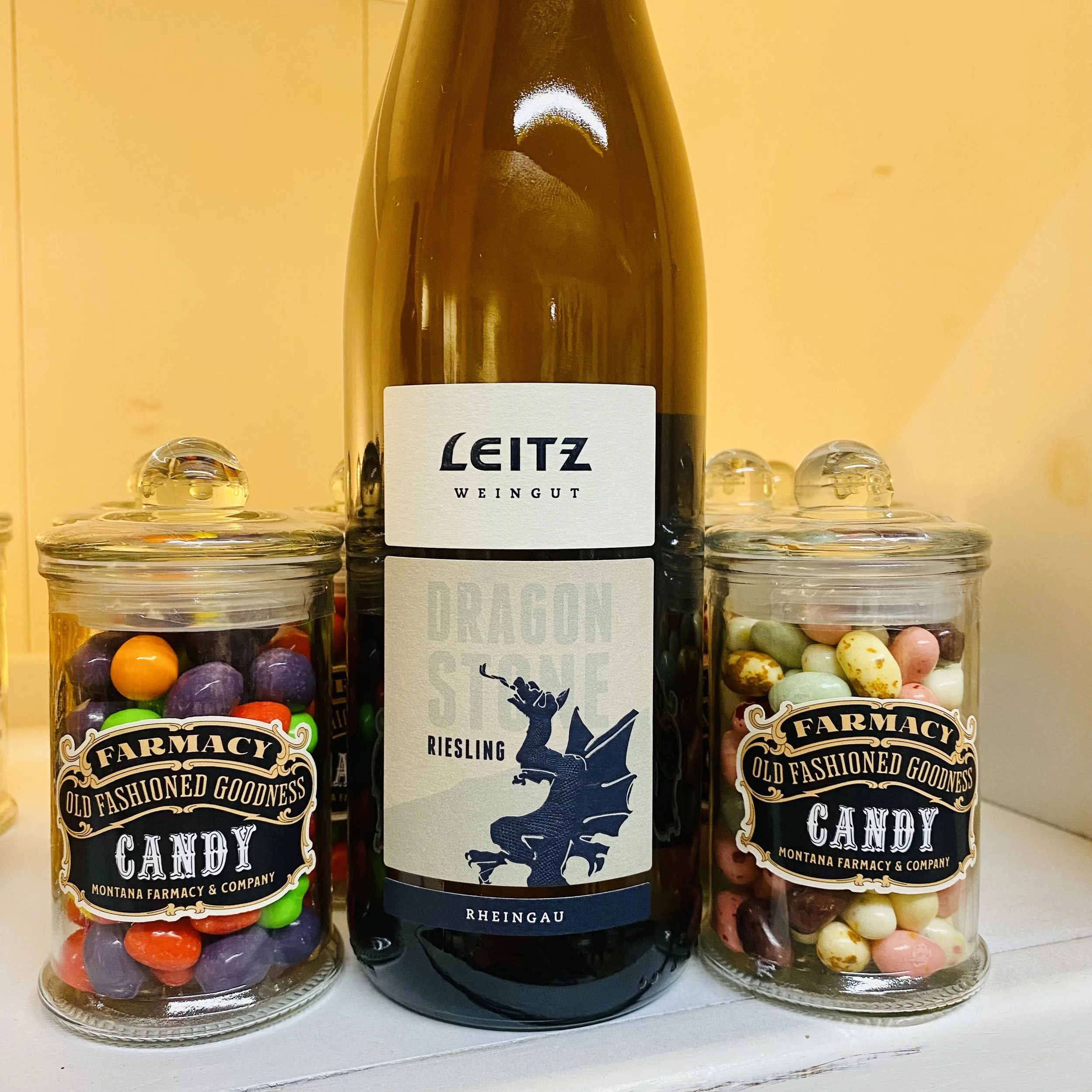
Leitz Weingut Dragonstone Riesling
Grapes: 100% Riesling
Place: Rheingau, Germany
Process: Traditional production styles in stainless steel. Fermented with 35.5 g/L residual sugar.
Family: Under the direction of Johannes Leitz, Weingut Josef Leitz has earned the reputation of being one of Rheingau’s top growers and moreover, one of the finest producers in Germany. Since taking over his family estate in 1985, Johannes has grown his holdings from 2.6 hectares to over 40, most of which are Grand Cru sites on the slopes of the Rüdesheimer Berg. Once the home of some of the world’s most sought after and expensive wines, the region fell to mediocrity in the years following the Second World War. Josi has made it his life’s work to reclaim the intrinsic quality of his native terroir and introduce the world to the true potential of the Rheingau.
Bottle: $27 | Glass: $12
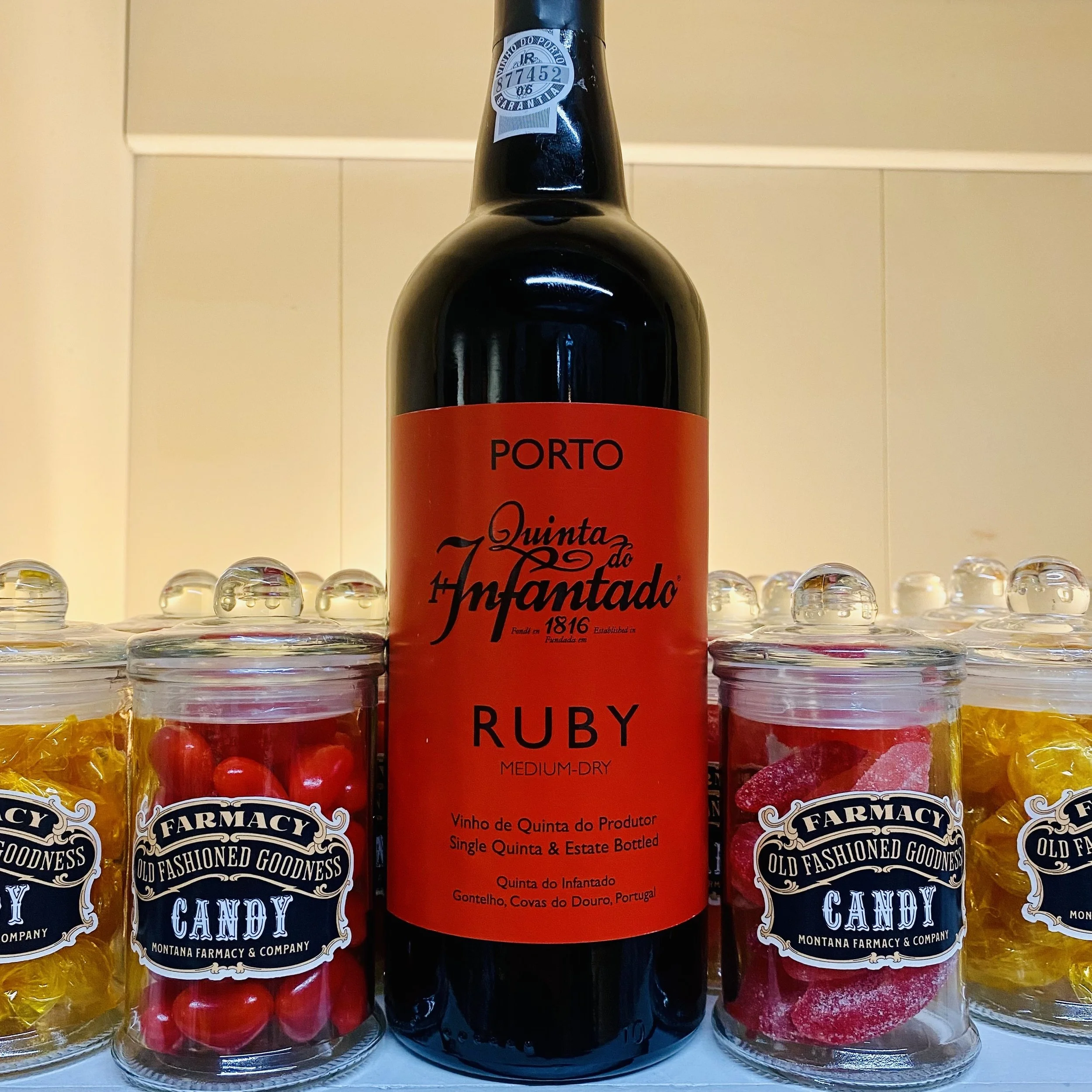
Quinta do Infantado Ruby Port
Grapes: Tinta Roriz andTouriga Nacional
Place: Duoro, Portugal
Process: From exclusively Class A parcels, totaling 11.5 hectares on poor schist soils. The fruit is hand-harvested, partly destemmed and fermented in lagar and tank; fermentation is stopped with 77-degree grape brandy. The wine is aged in a variety of tonel and balseiro, which are tall wooden tanks from 3,000-60,000 liters with thick staves that slow down oxidation. It finishes at a modest 19.5% alcohol and 70 g/liter RS, in other words considerably drier than most rubies. The average age in bottle is 2-3 years. 20,000-30,000 numbered bottles produced annually.
Family: Quinta do Infantado was founded in 1816 in the Cima Corgo sub-region of the Douro--considered its finest zone for both Port and dry wines--by the Portuguese crown heir D. Pedro IV, hence the name of the estate: “Infante” is Portuguese for "prince". The Roseira family has owned it since the end of the nineteenth century. Today, Infantado is run by third generation João Roseira (winemaker and vineyard manager) and other family members, who oversee family holdings of about forty-six hectares of vines. Quite interestingly, Infantado evolved over the last fifty years into the best kind of outlier and innovator in a wine region ruled for centuries by large-scale production and full-blown commerce.
Bottle: $25 | Glass: $11