
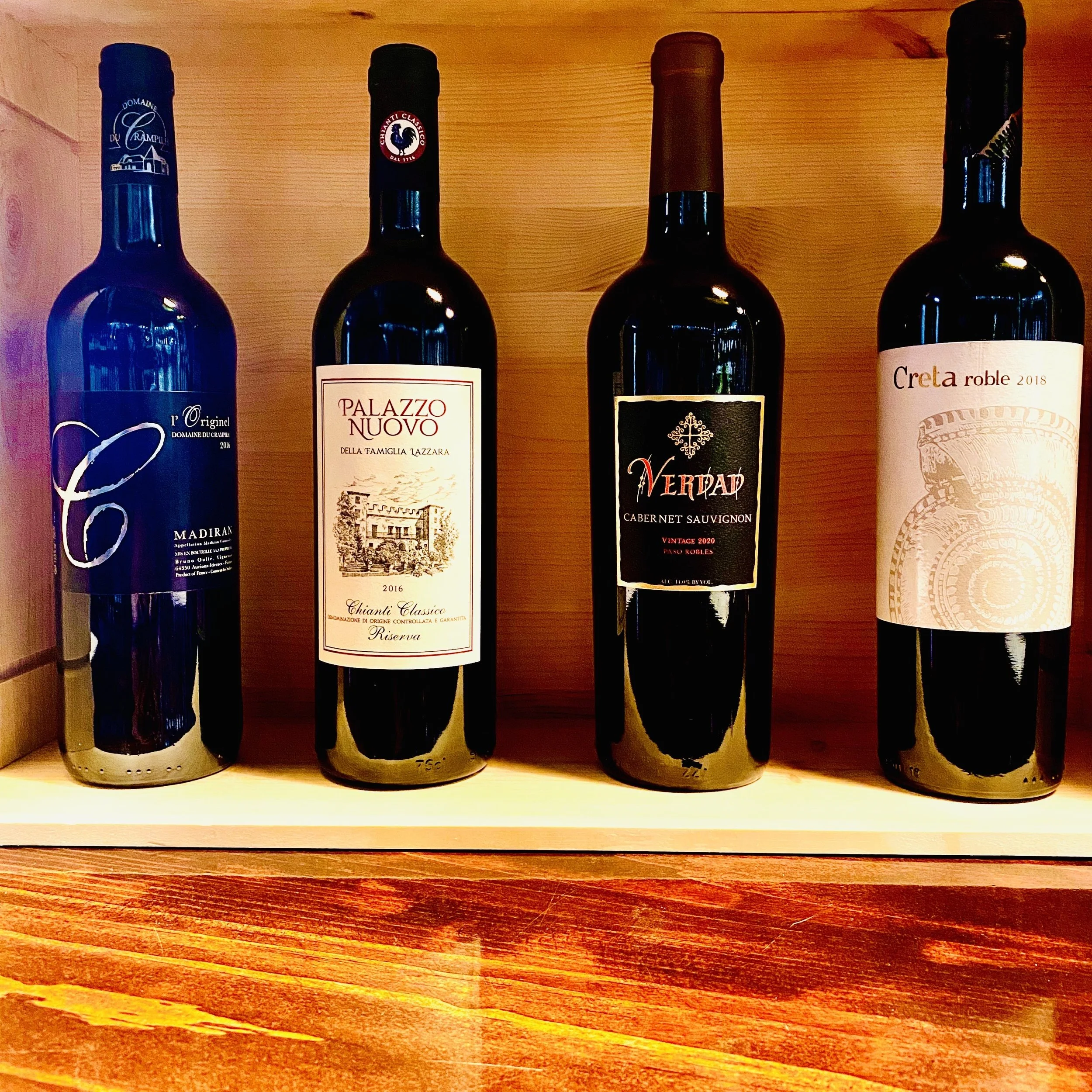
Better Off Red
Just because the weather is HOT doesn’t mean you still can’t drink Red Wine. These are full bodied reds from around the world that are great drinking inside with the AC blasting. Great for grilled steaks as well as burgers and brats!
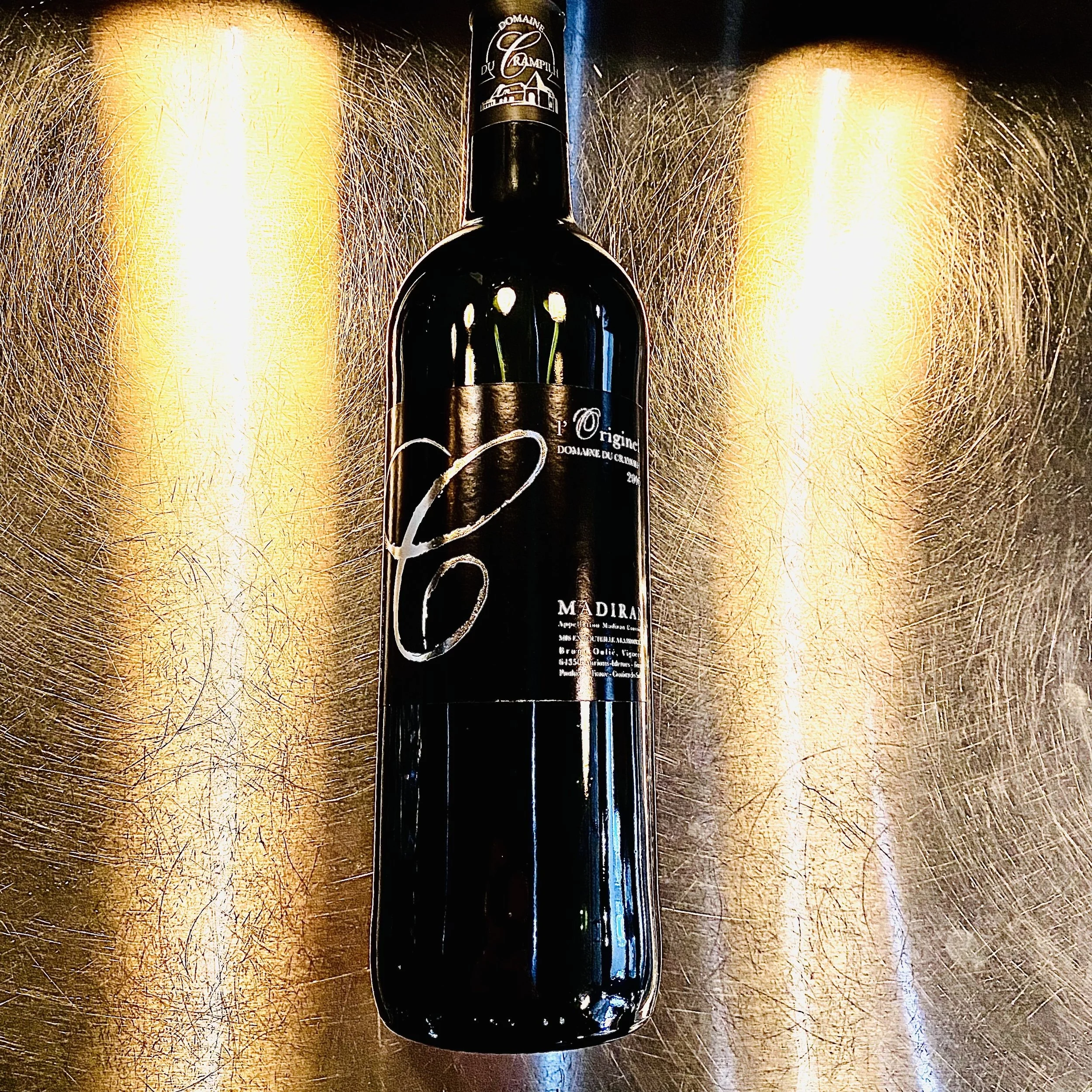
Domaine du Crampilh
Grapes: Tannat
Place: Madiran - France
Process: Natural viticulturalist Bruno Oulie creates a classic yet approachable Madiran out of his 30+ year-old Tannat vines. While still a traditional inky black color, Cuvée l’Originel has bright red and purple flecks that give it a warming glow. Fragrant blueberries and blackberries dominate the intense nose, with shades of soft dark and brown spices. On the palate, it is round and rich with soft, velvety tannins that more deeply express the flavors carried on the nose. The finish is long, fruity, with soft spices and chocolate notes. Pair with heartier dishes and cheeses.
24 months in stainless steel tanks
Family: Le Crampilh is the name of the family country house isolated on top of a hill by the Larcis River in Aurions. The estate dates from the late 1800’s, after Melanie Crampilh married Sabin Oulié, mayor of the village at the time. He started utilizing their windmill and then the land, and then gave his wife’s name to the estate. Today it is run by Marie and Bruno Oulié, the fourth generation of the family.
Phylloxera nearly wiped out the vineyards in Madiran, but since the 1950’s the region’s prosperity increased the AOP’s plantings from from just 100 acres to over 3,750, planted on hillsides on a wide variety of soils. Crampilh is mainly comprised of clayish, silica, and chalky soils. Grapes are hand-harvested, usually during the Indian summer, with 100% destemming and 21 day macerations. Wines are aged on average 18 months with regular micro-oxygenation.
Bottle: $31 | Glass: $13
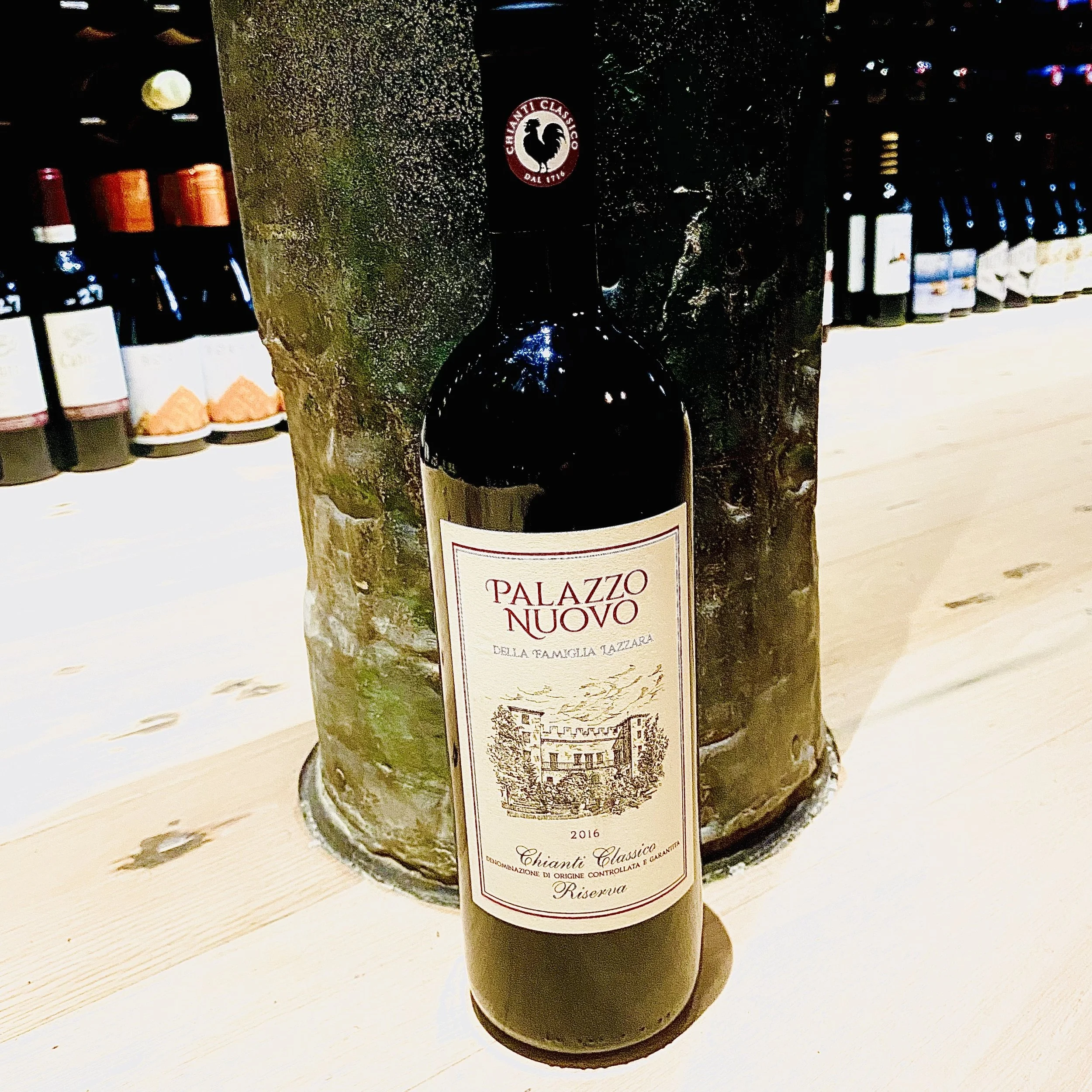
Palazzo Nuovo
Grapes: Sangiovese with other local grapes
Place: Chianti Classico - Tuscany - Italy
Process: Traditional Winemaking practices. Aged in Oak Barrels.
Family: This is a collaboration between Charles Lazzara, who founded Volio Imports and the Castellina family in Chianti. Charles first love in wine came in the Chianti Region.
Bottle: $35 | Glass: $15
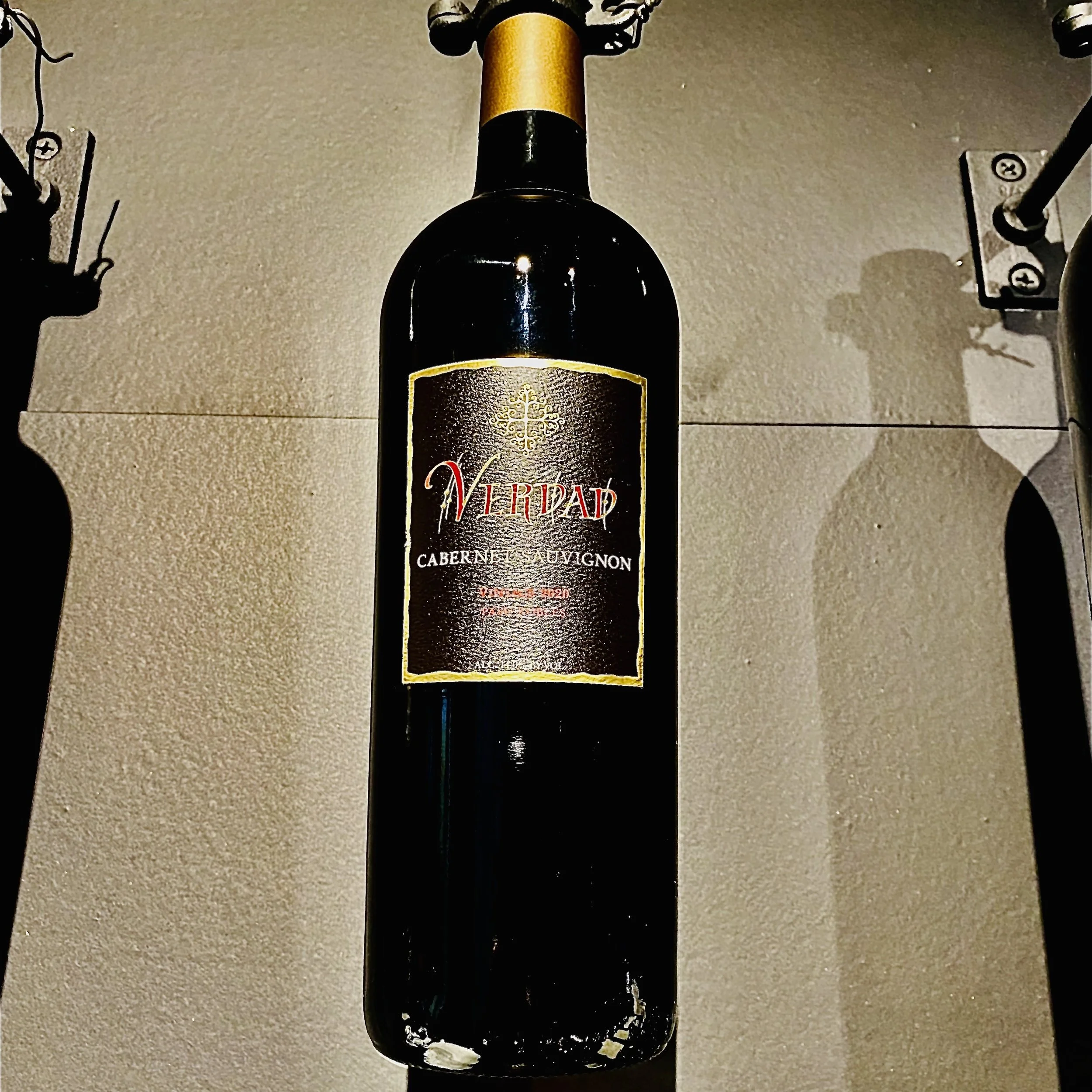
Verdad Cabernet
Grapes: 97% Cabernet Sauvignon 3% Petit Verdot
Place: Paso Robles - California
Process: The Cabernet Sauvignon and Petit Verdot grapes for this wine come from two different vineyards in the Paso Robles AVA. Whale Rock Vineyard, on the west side of Paso Robles is a very special site in the Templeton Gap District. The vineyard is riddled with ancient whale bone fossils. The soil varies from rocky river stone to limestone and clay. The vineyard is farmed using organic and biodynamic practices and is certified organic.
Jack Knife Vineyard is on the east side of Paso Robles. The vines are planted on steep hillsides. The high elevation (1300 feet) of Jack Knife allows the fruit to ripen early and shows savory dark blue-fruit flavors.The soils are a sandy clay loam with a bit of gravel.
The grapes were harvested in mid-October after a warm vintage. During fermentation the wine was punched down and pumped over once a day. The wine was aged in 40% new French oak for 18 months.
Family: Louisa Sawyer Lindquist has been producing small production, artisanal wines of great quality since 2000. She makes Spanish grape varietal wines from cool coastal vineyard sites and single vineyard Cabernet Sauvignon from Paso Robles, and has a special passion for making biodynamic wines. The wines have great structure, balance and pure flavors.
Bottle: $37 | Glass: $15
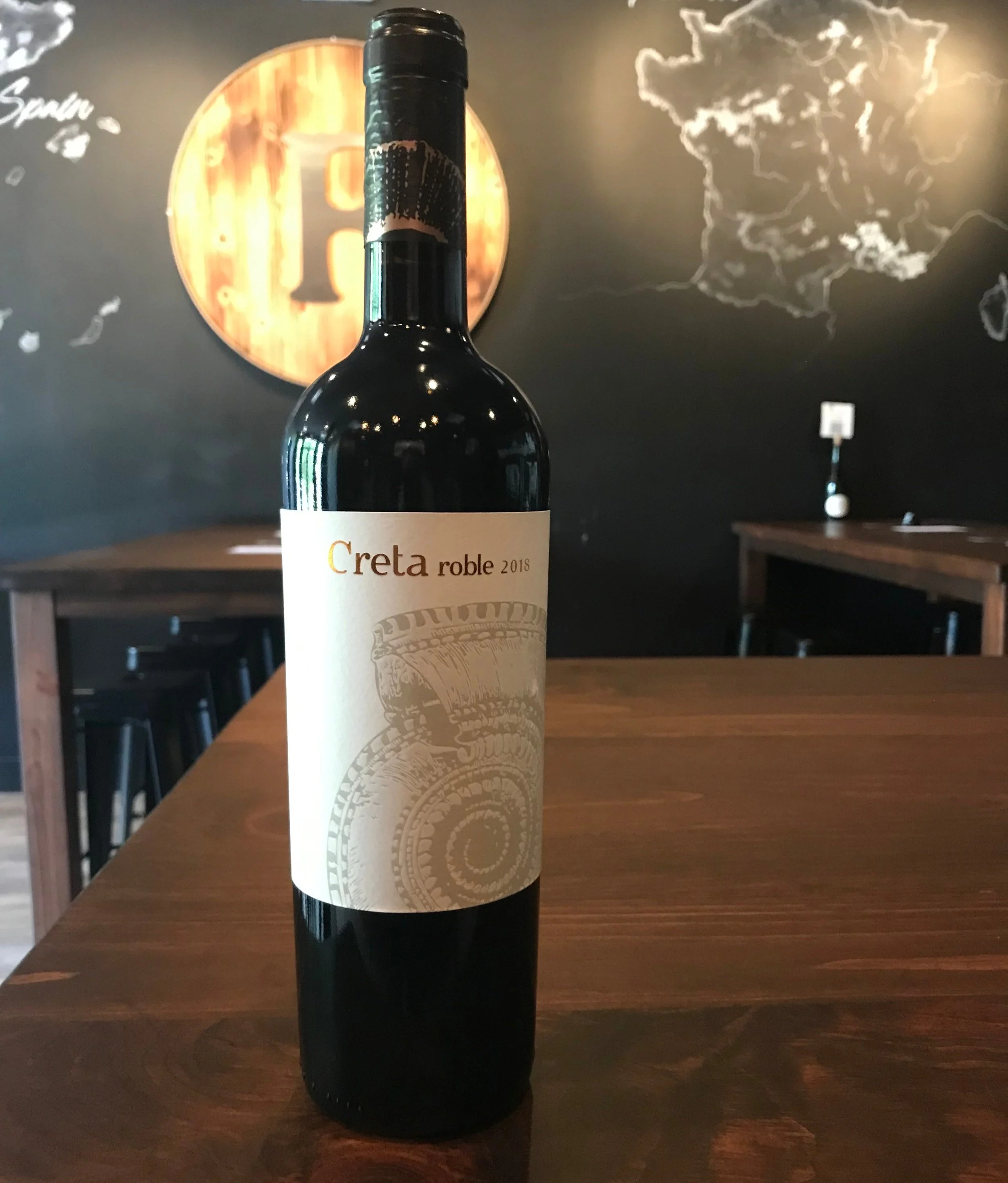
Creta ‘Roble’
Grapes: 100% Tempranillo
Place: Ribera Del Duero - Spain
Process: Harvested by hand and brought to the cellar where the grapes are destemmed and lightly crushed. A pre-fermentation maceration of 4-6 days is followed by a 10 day fermentation with pump overs to keep the cap from drying. Malo occurs
spontaneously in tank after which the wine is racked into 225L and 600L French oak barrels (mostly used) where the wines ages for 4 months before bottling.
Family: Sotillo de la Ribera is a small village of 600 inhabitants on the northern edge of the DO of Ribera del Duero. Dating back to the middle ages, many of the buildings in Sotillo date to the 18th century when grape growing and winemaking brought prosperity to the village – a tradition that continues today. After many years of experience making a custom cuvée in the DO, Eric Solomon has recently partnered with Rafael de Haan to make Creta from 30-50-year-old vines of Tempranillo grown in clay loam and chalky soils surrounding Sotillo.
Bottle: $25 | Glass: $11