
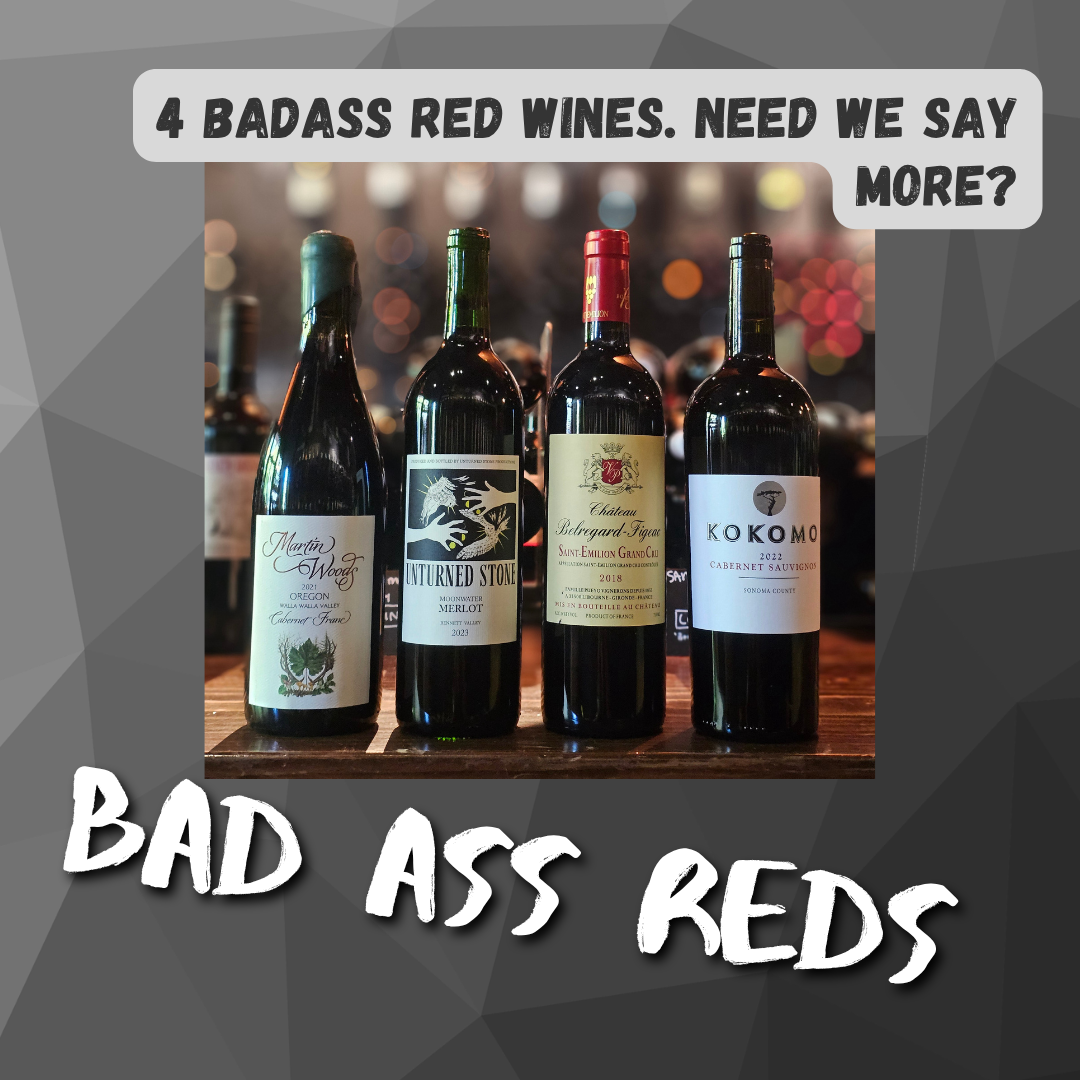
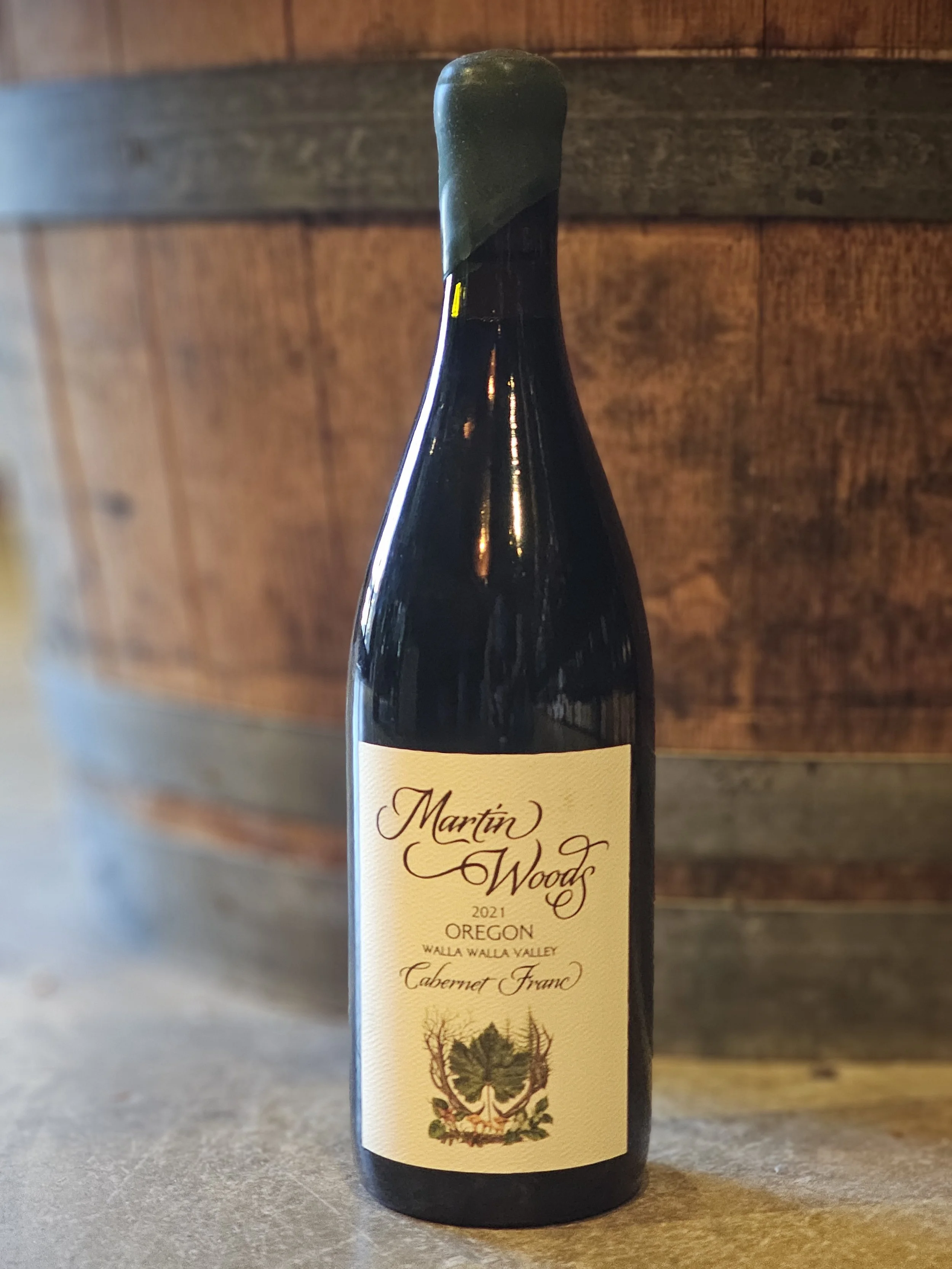
Martin Woods Cabernet Franc
Grapes 100% Cabernet Franc
Place Walla Walla Valley, Oregon
Process Harvest happens in 3 batches: September 30th, October 13th, and October 21st. The grapes are fermented in small, open-top containers for 30 days, with approximately 20% of the grapes being whole cluster. The wine is punched down daily starting from day 10 of the fermentation. The wine is then aged for 12 months in neutral oak barrels on the lees, and then another 6 months in stainless steel. The wine is bottled without fining. 500 cases produced.
Family Growing up in Indiana, family gatherings around the dinner table were a nightly ritual, with simple wine playing an important (but unspoken) role for Evan’s parents, Bill and Margo Martin. Basketball was Evan’s focus until he left Indiana for college in Durango, Colorado, seeking adventure in the mountains.
After finishing college in Seattle in 2004 Evan began frequenting a neighborhood wine shop (European Vine Selections) and for the first time started exploring with intention the world of wine. He was romanced by wine’s ability to transport him in both place and time, which fed his youthful sense of wanderlust. And so newly armed with an undergraduate degree in philosophy, Evan moved to Walla Walla, Washington, to work a wine harvest at Seven Hills winery, under veteran winemaker Casey McClellan.
His arrival in Oregon was in 2009, after a cousin helped him secure a harvest internship at Belle Pente winery with proprietors Jill and Brian O’Donnell. Evan found his home. He returned to Belle Pente again and again for harvest, then assumed the role of assistant winemaker in 2012.
As the sole winery employee, Evan studied the winemaking process from beginning to end, harvest to bottling. He gained a passion to explore other terroirs and, in 2014, enough confidence to start producing wine for himself, then he took a giant step forward in 2017 when he built his own winery on a wooded property in the coastal foothills near McMinnville.
Evan continues to build the Martin Woods “Dream Team” and he looks to the future with tremendous excitement. He believes that Oregon has arrived at a moment of time when it can produce some of the finest, more compelling, most sought-after wines in the world.
Bottle $63 | Glass $28
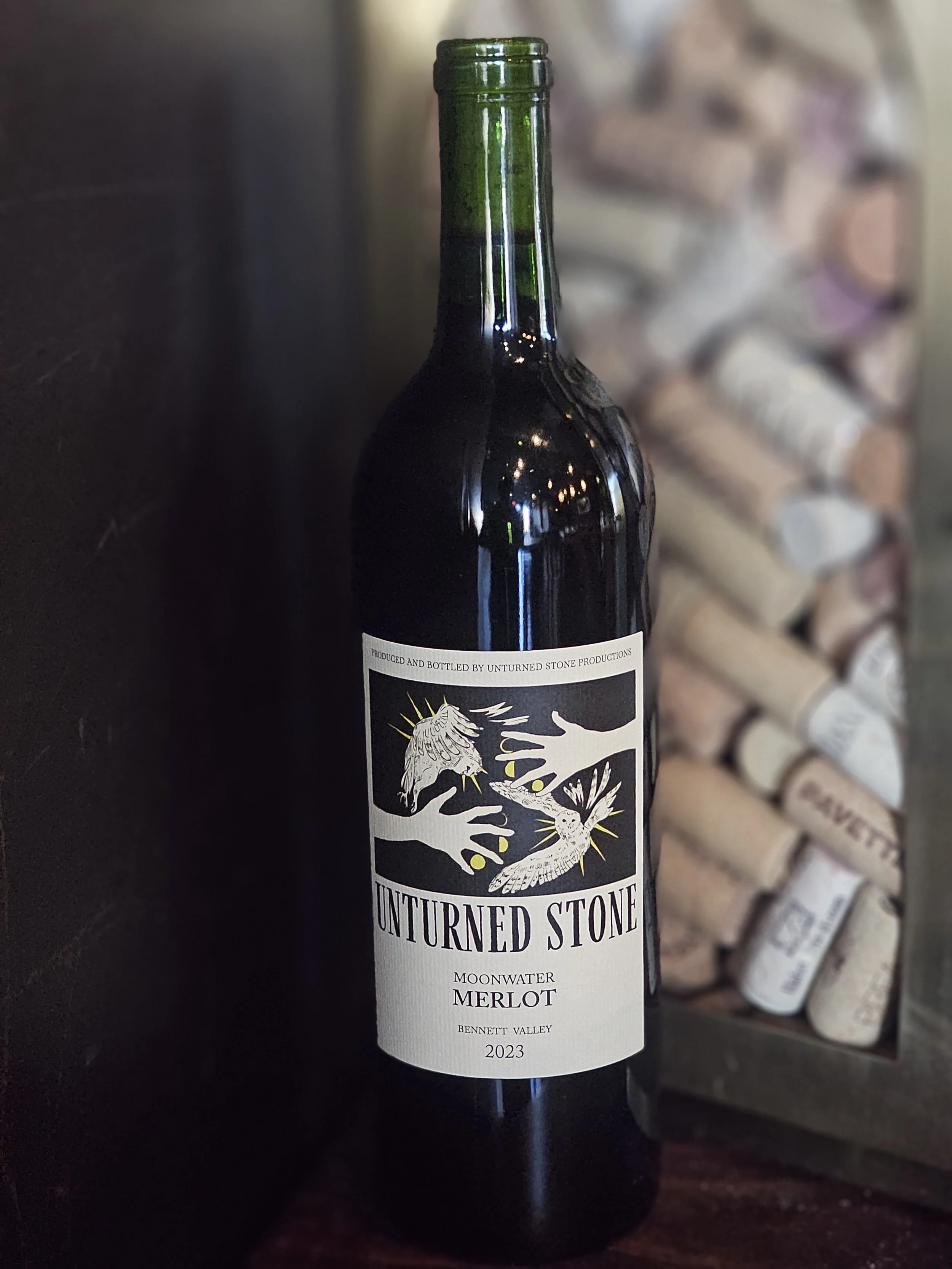
Unturned Stone ‘Moonwater‘ Merlot
Grapes 100% Merlot
Place Bennett Valley, Sonoma, California
Process Organically farmed and hand harvested grapes under a full moon (a signature detail of this cuvee). 100% destemmed before fermentation with indigenous yeasts. The grapes are gently pressed to avoid overextraction or bitterness. Aged in a combination of neutral French oak and concrete. Unfined and unfiltered with minimal sulfur (13ppm).
Family Randy Czech came to wine production in 2002 after working as a professional brewer in his native Colorado. He spent four vintages learning lab and cellar work in Napa Valley and South Africa while studying viticulture at Napa Valley College. In 2005, he found a vineyard-focused job at Flowers Vineyard and Winery on the Sonoma Coast. Five vintages later (including one in New Zealand) Randy left Flowers, committed to practicing organic farming and determined to make classic, low-intervention wines without modern additives.
He spent three years planting and training up a small vineyard near the town of Duncans Mills, and then went on to farming and harvest work at Failla Wines (2012-2015). In 2010, Randy and Erin started Unturned Stone after they were offered a ton of fruit from the beautiful Waterhorse Ridge in Fort Ross-Seaview.
They released their first wines commercially in 2015 and have grown their production to include wines from both Sonoma and Mendocino Counties. Randy is also consulting viticulturist for Gary Farrell Winery, Pigasus Vineyard, and for several other vineyard owners in Sonoma County.
Bottle: $41 | Glass: $18
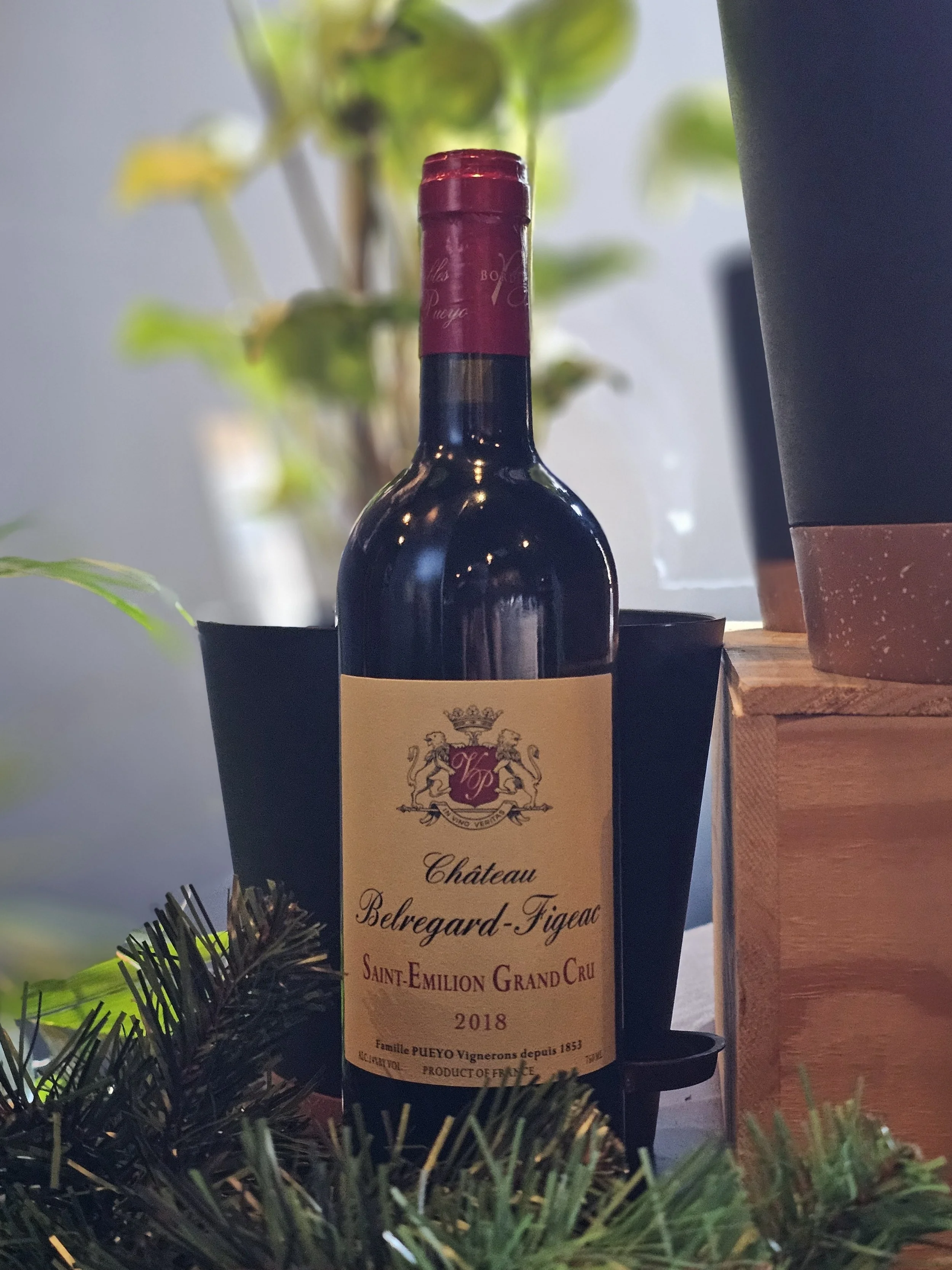
Chateau Belregard Figeac
Grapes 60% Merlot, 35% Cabernet Franc, 5% Cabernet Sauvignon
Place Saint Emilion, Bordeaux, France
Process 100% hand harvested grapes. Thorough sorting process to eliminate underripe or sunburnt fruit. Spontaneous fermentation in temperature-controlled concrete tanks. The juice is gently pumped over and VERY OCCASIONALLY punched down while fermenting in order to achieve silkier tannins and avoid an overly strong structure. The wine is aged in 25% new French oak, 25% one-year-old French oak, and 50% concrete for 12-15 months. Minimal filtering and light fining before bottling.
Family The Pueyo family has been active in the Libournais for generations and has owned Château Belregard-Figeac since 1853. Christophe Pueyo, the family's 5th generation took control of the domaine from his father and uncle in 2010 and has since converted the estate to organic viticulture and replaced many of the barriques with demi-muids and foudres (and the occasional amphora).
As is often done with the new generation, Christophe began making changes at the domaine, converting their vineyards to organic viniculture and making some dramatic changes to the elevage. Since 2012, Christophe has begun to replace the small barrique in the cellar with neutral demi-muid and foudres, which he buys from the Austrian cooperage Stockinger. Christophe has also instilled a gentler and more natural approach than was the norm with his father and uncle.
The domaine controls just 16 ha of vines the Bordeaux AOC, with 7.2 ha within the Saint Emilion AOC, and a further 1.5 ha planted to white grapes. The estate produces wines labelled Tellus Vinea, Chateau Belregard-Figeac, La Fleur Garderose, and Hellebore, Galipette, Achillea and Orchis.
Bottle: $57 | Glass: $25
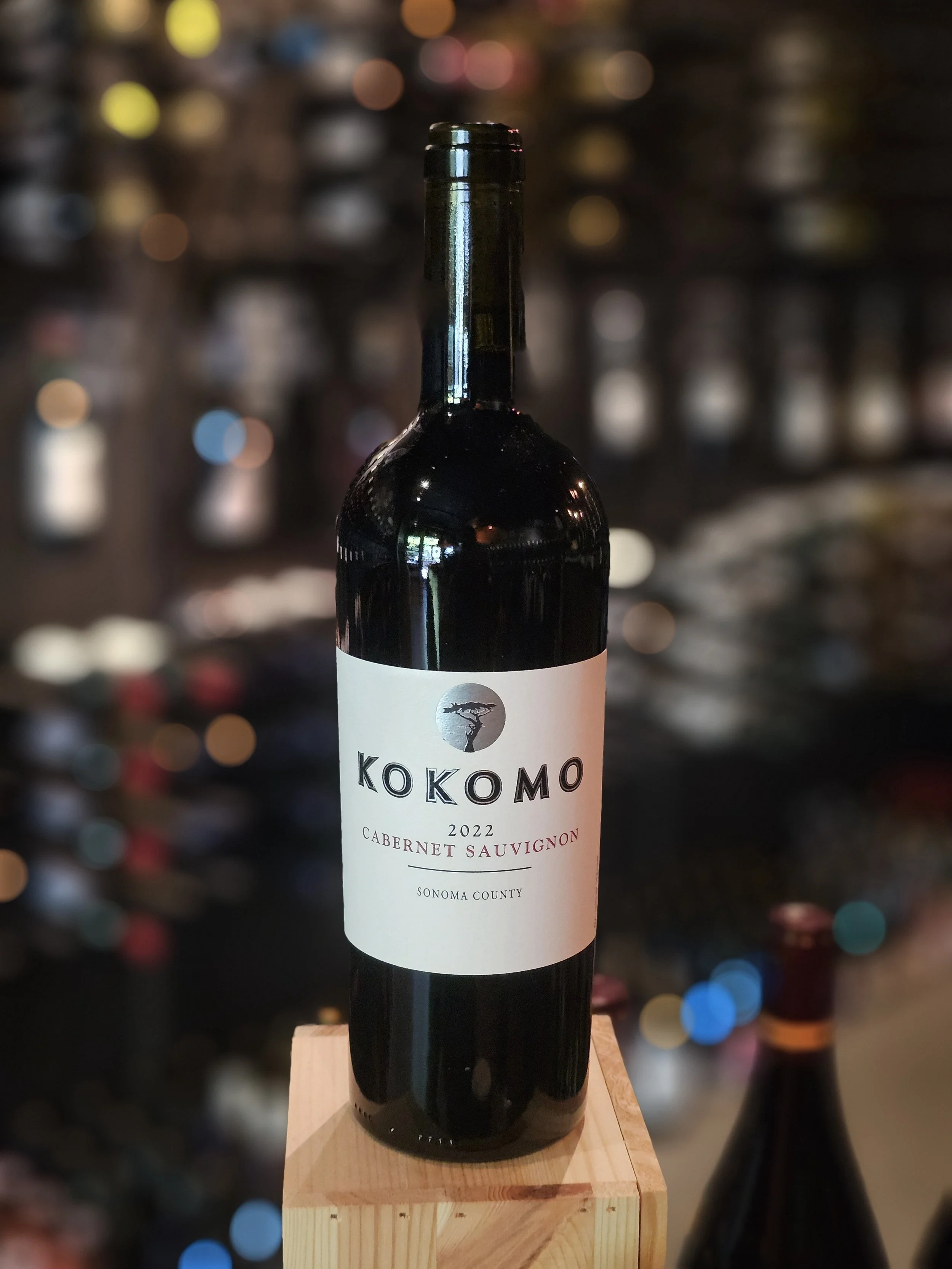
Kokomo Cabernet Sauvignon
Grapes 100% Cabernet Sauvingon
Place Dry Creek Valley, Sonoma, California
Process Sustainable farming practices. Grapes are fermented in stainless steel tanks and aged in French Oak for 11 months. 20% of the barrels are new oak barrels.
Family Kokomo Winery is perched on the East side of Dry Creek Valley amidst the 120 acres of prime benchland vineyards of Timber Crest Farms. Owner and Winemaker Erik Miller started the winery in 2004 naming it after his hometown of Kokomo, IN, and decided on a Coastal Cypress Tree as a logo to signify his move out west. Kokomo currently produces over a dozen different varietals and several single vineyard designates which are farmed by his partner in the winery, grower Randy Peters. Kokomo Winery focuses their terroir-driven wines on the three distinctive appellations of Sonoma County - Russian River, Dry Creek and Alexander Valleys.
Bottle: $49 | Glass: $21