
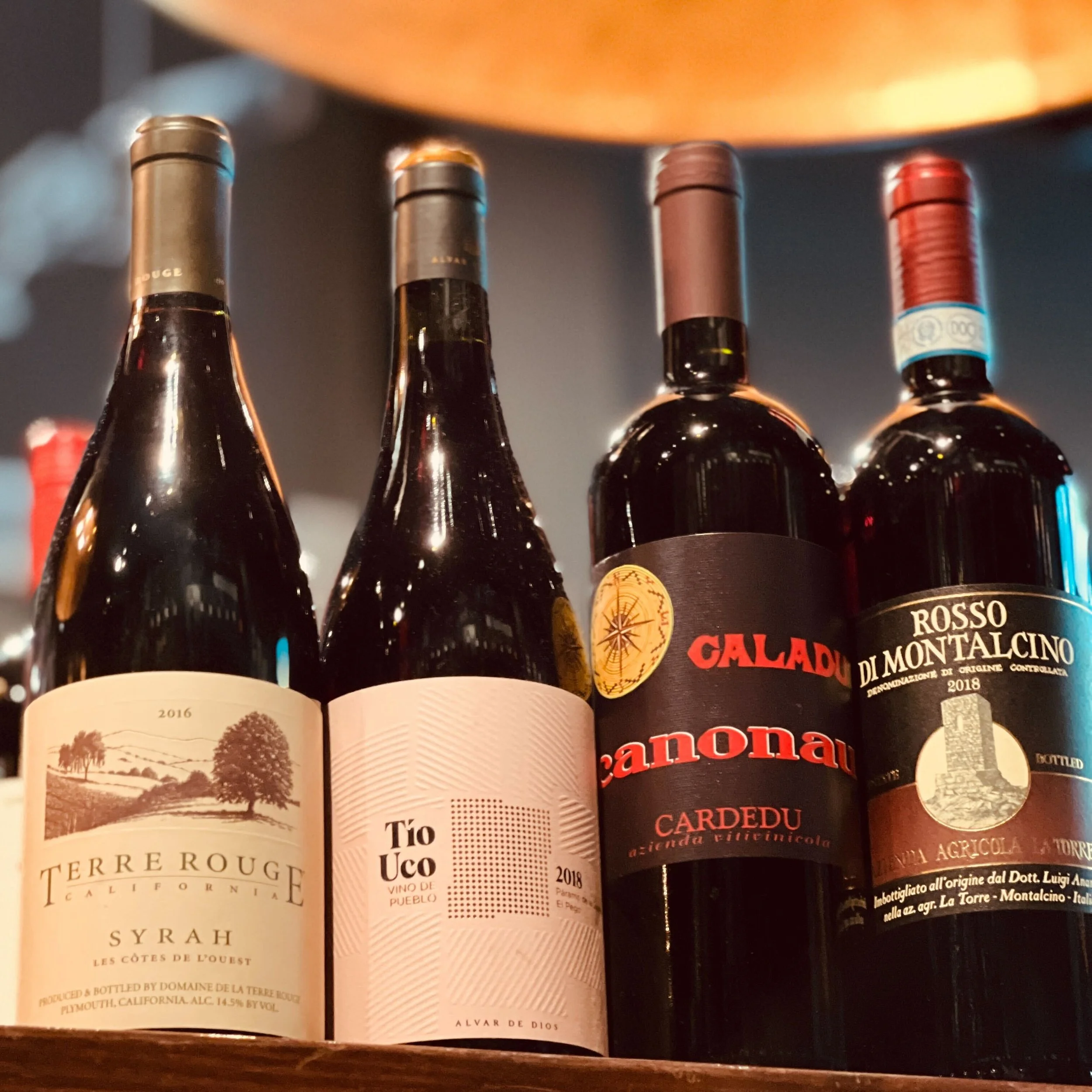
Autumn Tannins
As the weather changes outside, we are cozying up next to a fire, and going back to red wine! If you like a full body, dry finish, this is the flight for you!
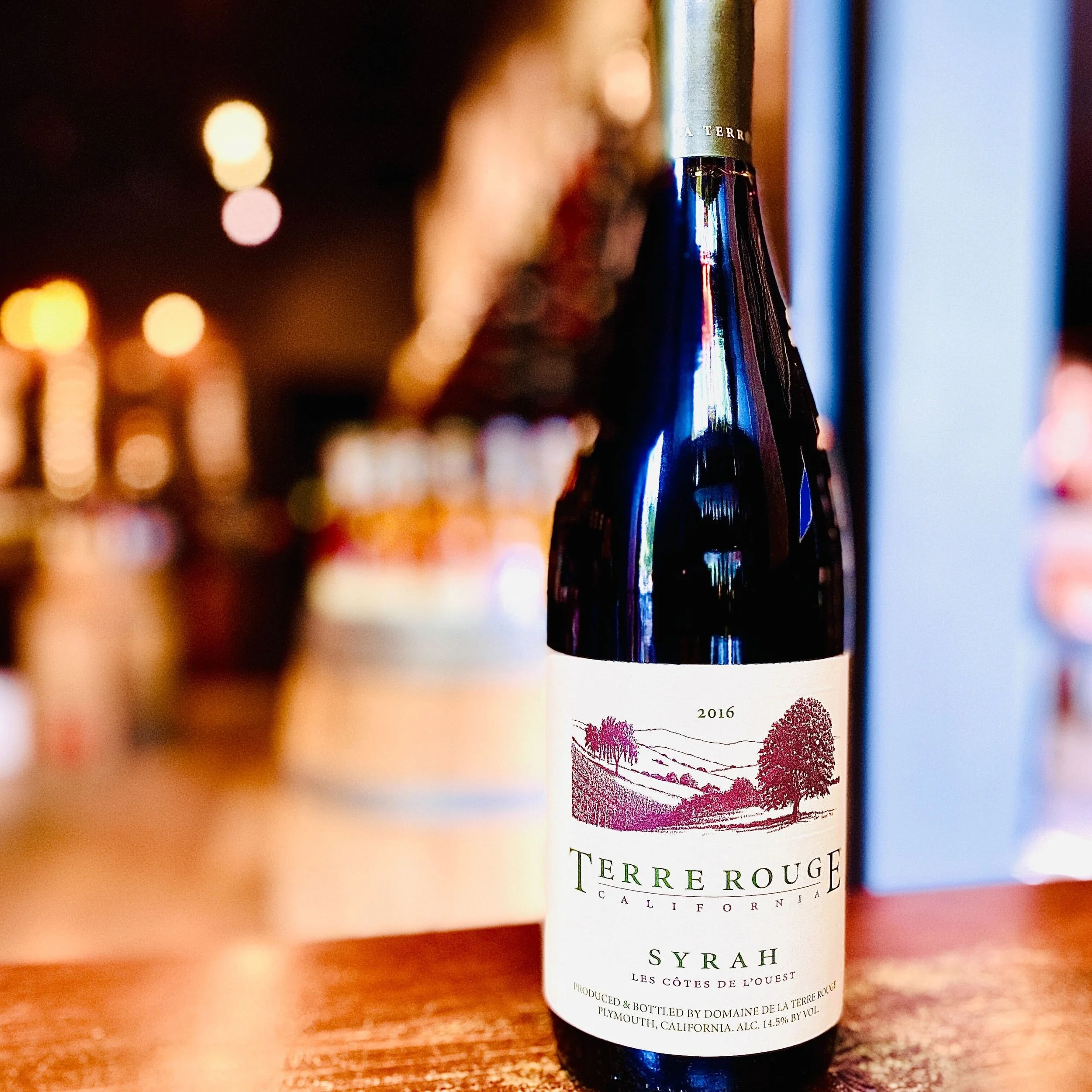
Terre Rouge Les Côtes de l’Ouest
This is the eighteenth vintage of our Les Côtes de l’Ouest Syrah. It is made from fruit grown (about 60% of the blend) at a superb vineyard site that is planted in the hills just west of the Amador County (California) line, just a few miles from the Mokelumne River in Clements Hills (a new Lodi sub-appellation). Tight spacing, vertical trellising, and upward shoot positioning give the fruit maximum sun exposure to promote full flavor development. It is blended with our mountain Syrah (the remaining 40% of the blend) grown at several other sites. We chose theses sites because of their impeccable vineyard management (some of which we farm) and their flavor compatibility. The soils at the Clements Hills site are alluvium granite rock (Monpellier & Cometa) and the climate is moderated by Delta cooling. The other sites are a variety of volcanic and granite-based soil series that develop grapes with small cluster morphology. We harvested theses Syrah sites at about the normal calendar date in 2016, which was the 14th of September at 24.5 to 25.0˚ brix. The berry size was about normal in 2016, but we decided to co-ferment the Syrah with a bit of Viognier in each fermentor to finesse the wine. The grapes were lightly-crushed and fermented in our larger tanks and irrigated to minimize tannin extraction and aged 17 months in 20% new and 80% used French oak barrels. The finished wine is 96% Syrah and 4% Viognier. It was bottled at the end of March in 2018.
Terre Rouge and Easton Wines was founded in the late 80s by husband and wife team Bill Easton and Jane O’Riordan. Winemaker Bill Easton began his career in the wine business working for small California wineries. In the late 70's he founded Solano Cellars, a wine shop in Berkeley, California, specializing in small artisan producers from around the world. From years in the shop and traveling extensively in Europe, Bill's palate and style of winemaking developed. He creates wines that are balanced and elegant, with complexity that develops as the wines age in bottle. The French call it élevage, which is "raising" the wine in the bottle. There is an art to this style of winemaking and great pleasure in a wine that is ready to drink, while still showing great promise for future aging.
Bottle: $25 | Glass: $11
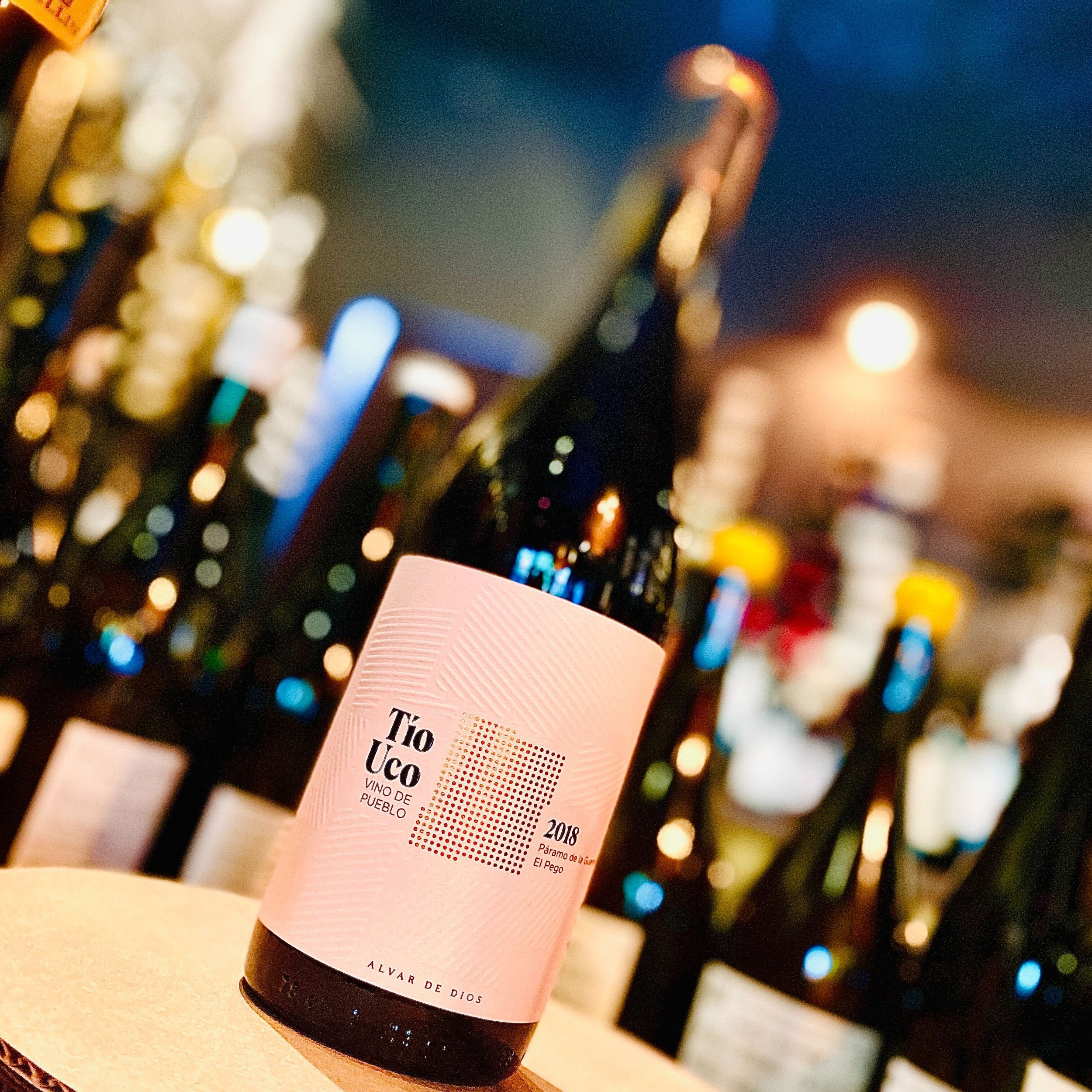
Alvar de Dios “Tio Uco”
Toro is like the 1980s – big shoulder pads, teased hair, and flashy energy that seems to be chemically enhanced. It’s a DO that, in most regards, is caught in a time warp, much like that mauve and teal bathroom you’ve meant to remodel. But, having built its reputation on a style of wine that is now decidedly out of fashion, Toro is long overdue for a breath of fresh air – or fresh wine in the case of Alvar de Dios. Alvar was born and raised in the village of El Pego near the southern boundary of DO Toro. His family had tended vineyards in the village for generations, but Alvar didn’t stay in Toro to learn his trade; instead, he fell in with a pair of vinous rebels working in the Sierra de Gredos – Fernando Garcia and Dani Landi. While working as the cellar master for Fernando at Bodega Marañones, he began acquiring vineyards of his own in and around his native DO, splitting his time between the Gredos and Toro. While assembling his vineyards in Toro, Alvar became interested in the nearby and newly created DO of Arribes and the surrounding area. Officially recognized in 2007, Arribes is where the Duero becomes the Douro as it carves a steep valley out of the granitic mountains forming the border between Spain and Portugal. Here he found not only soils reminiscent of the Gredos – granitic sand with a lot of mica – but a range of indigenous varieties capable of expressing elegance and freshness.
Alvar has assembled 5 hectares from 36 separate vineyard parcels from which he makes a village wine and two parcel wines. Tio Uco In addition to his single-vineyard wines, Alvar makes wine from three plots of vines and some purchased fruit located in the northwestern part of Toro. Ranging in age from 25–40 years old, these Tempranillo and Garnacha vines are grown on a variety of sandy soils. Named Tio Uco, this wine like those from his single vineyards, is made from organically farmed grapes, fermented whole cluster with indigenous yeasts, sees only a gentle maceration with pigeage by foot, and is aged primarily in neutral French oak foudres ranging in size from 1000-3500L. Formerly pure Tempranillo, Tio Uco since the 2016 vintage includes about 10% Garnacha in the final blend.
Bottle: $25 | Glass: $11
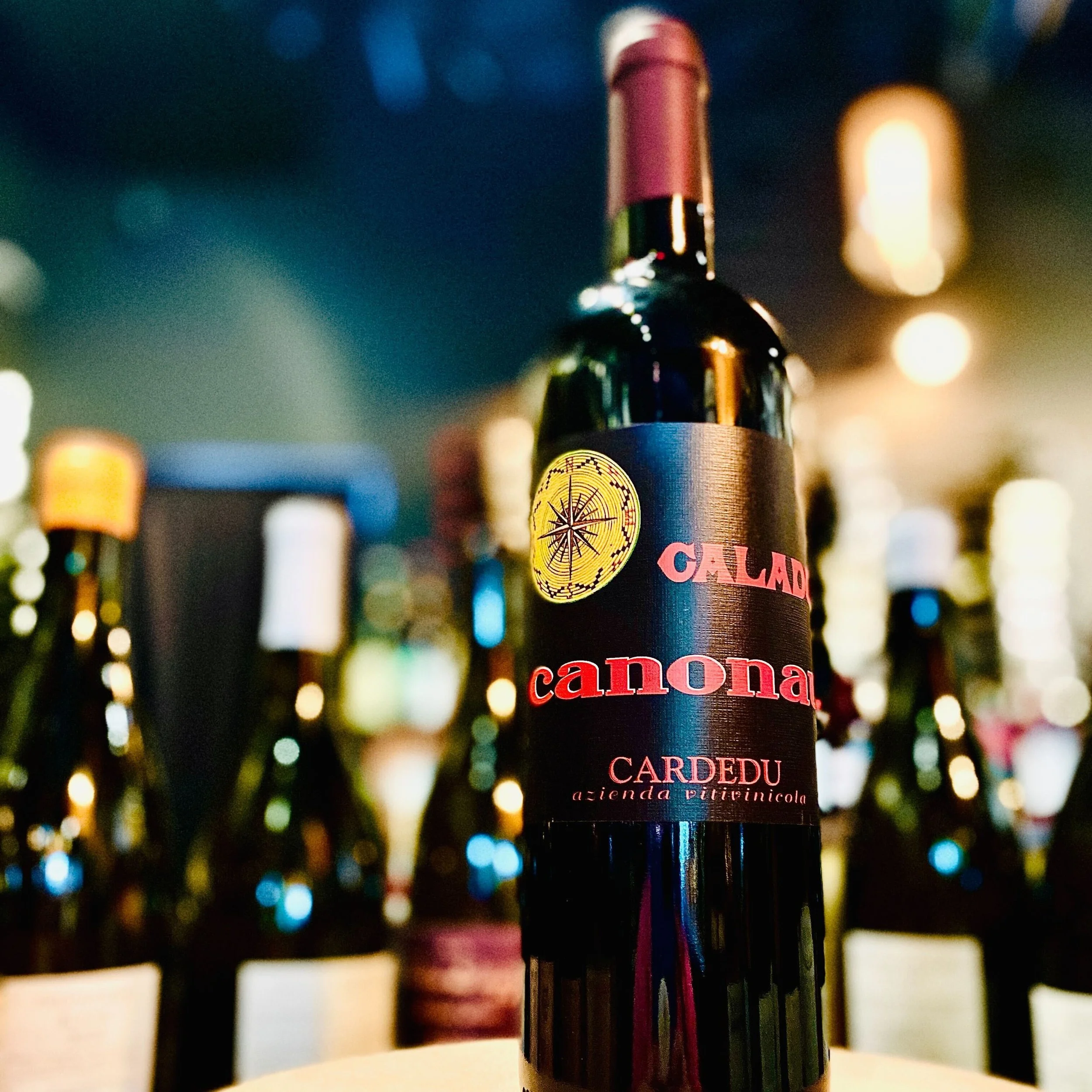
Cardedu Caladu
Sergio Loi is a 4th generation traditional Sardinian producer, whose family winery from the early 900s has always practiced no chemical farming and minimum intervention in the cellar. The Cardedu [car-DAY-do] vineyards are located on the island’s sparsely populated Southeast, on crumbling granite soils near the coast, and schist in the ragged-dry hills and cliffs around Jerzu. Cannonau (Cardedu uses old spelling with one ‘N’) is a biotype of Grenache, most likely from Spain but growing in Sardegna for hundreds of years.
From 30 year old vines on crumbling granite soils with high levels of quartz, especially feldspar, that gives the soils a reddish tint. 11 days fermentation in cavernous cement tanks from 1950’s. Then, at least an additional 3 years in cement for elevage. Unfiltered.
Bottle: $23 | Glass: $10
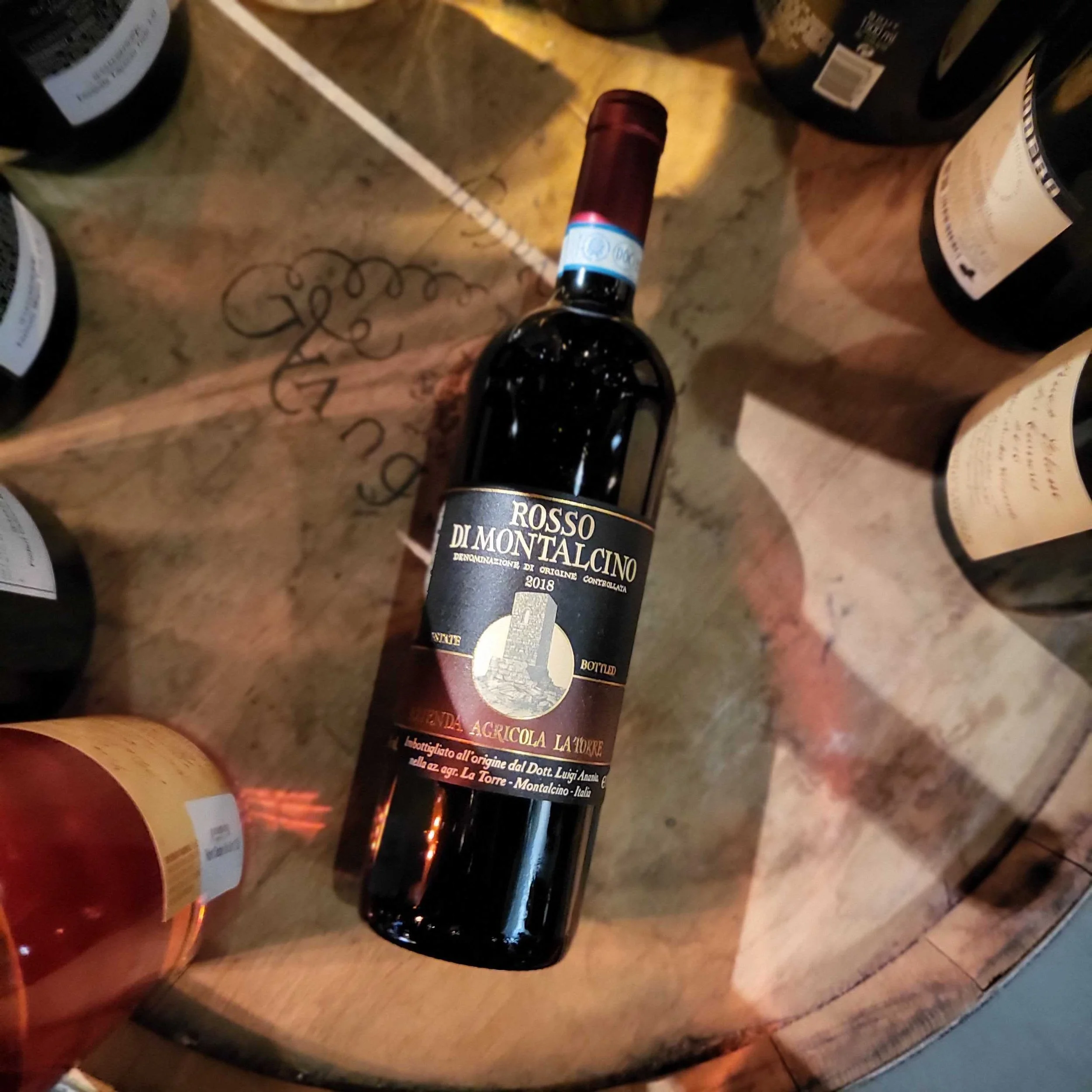
La Torre Rosso di Montalcino
100% Sangiovese aged for 18 months in large oak casks of French origin with about 10% of the ultimate cuvée being aged in small French barrels. The vines for this wine also face full-south. One thousand or so cases of the Rosso di Montalcino are produced annually. Certified Organic 2015
The Anania family originally comes from Calabria in the south of Italy where they farmed for many years producing a fine “bufala mozzarella” among other agricultural products. Giuseppe Anania, the father of Luigi Anania, the present owner and producer of the wines of La Torre, purchased the La Torre property in 1976. The estate is located in the commune of La Sesta, approximately 8 kilometers south of Montalcino in the highest altitude section of the Brunello appellation, quite near to the lovely village of San Angelo in Colle. The first vintage at La Torre was the fabled 1982 which set a fine precedent for the future work. The estate comprises 36 hectares of which 5.6 hectares are devoted to the vine. The vineyards are planted almost entirely to the Sangiovese Grosso grape and have a full southern and southwestern exposure. Small parcels of Ciliegiolo and Alicante complete the mix of grape varieties. Wines from three appellations are produced: Brunello di Montalcino, Rosso di Montalcino, and Rosso di Toscano and Rosso di Toscano “Ampelio”.
Bottle: $49 | Glass: $21